
Livraison le jour même ou le lendemain

Qualité garantie

Débloquez vos offres de bienvenue: Livraison GRATUITE | Jusqu'à -80 % | 30 jours d'essai gratuits à JoyPlus
Téléchargez l'application
Protecting what matters most—important documents, family heirlooms, professional equipment—is a top priority. In this field, a Master Lock safe often stands out as the benchmark. However, with such a vast product range, it's easy to make an unsuitable, or even useless, purchase. To avoid falling into this trap, it's crucial to know how to decipher spec sheets and focus on the criteria that truly matter to you.
Here are the 3 classic mistakes to avoid when buying a safe:
To avoid buying blind, you need to understand a few technical concepts. These will determine the true level of security your future safe provides.
Steer clear of vague promises. Demand certifications issued by independent laboratories like UL (Underwriters Laboratories) or ETL (Intertek). These labels are your guarantee of tested and approved performance.
The choice of mechanism should align with your daily use, balancing the need for quick access with the level of security.
A safe's resilience comes down to its design. Features like solid steel construction, steel locking bolts (ideally pry-resistant to withstand sawing), and a pry-resistant hinge bar are all defences against break-in attempts. For models weighing less than 100 kg, solid anchoring isn't an option—it's a must.
To give you a concrete idea of how these criteria apply, here are a few user profiles and the Master Lock solutions tailored to them.
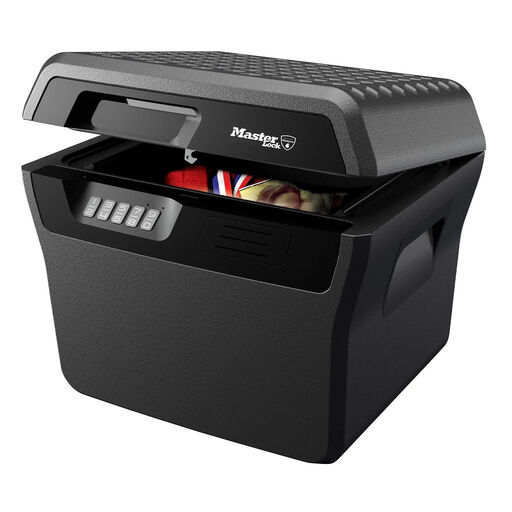
Why it's the right fit: Ideal for protecting essential documents (ID cards, deeds, passports) and digital media (USB drives, hard drives) from the two worst household disasters: fire and water. Its capacity allows for storing A4 documents without folding.
This model doesn't just offer a vague claim. It has clear UL and ETL certifications for fire and water resistance, including for digital media, thereby preventing any nasty surprises.
Dual certified protection (fire and water). Programmable digital combination lock for keyless access.
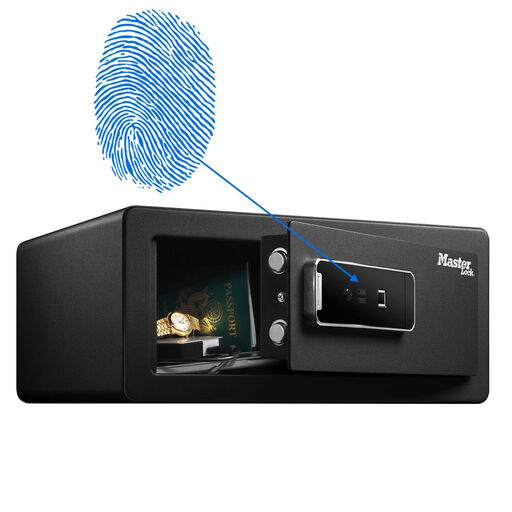
Why it's the right fit: Perfect for those who want instant, secure access to their everyday valuables (jewellery, cash, laptop) without the hassle of a key or a code.
It solves the problem of an ill-suited lock by offering fingerprint access (up to 30 stored prints), while still including an override key for complete peace of mind.
Fast biometric access. Steel construction with two motorised bolts and a concealed hinge for enhanced protection against break-ins.
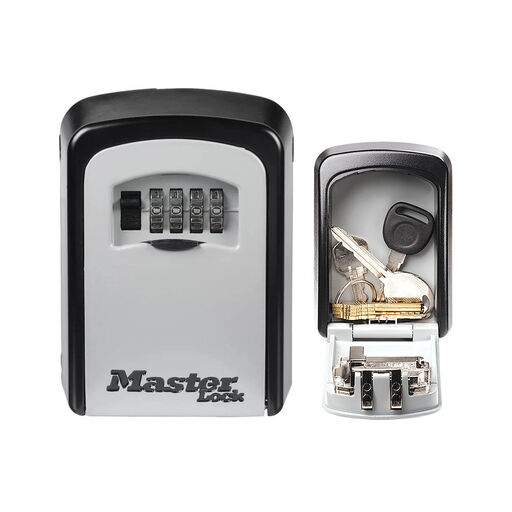
Why it's the right fit: Essential for homeowners, Airbnb-style rental managers, or families who need to share access. It allows you to securely provide keys to a home care worker or a tradesperson with confidence.
This secure key box puts an end to the bad idea of hiding a key under the doormat. Anchored to the wall and protected by a 4-digit code, it offers a sharing solution that is both safe and controlled.
Weather-resistant metal body. Resettable 4-digit combination for thousands of possible codes.
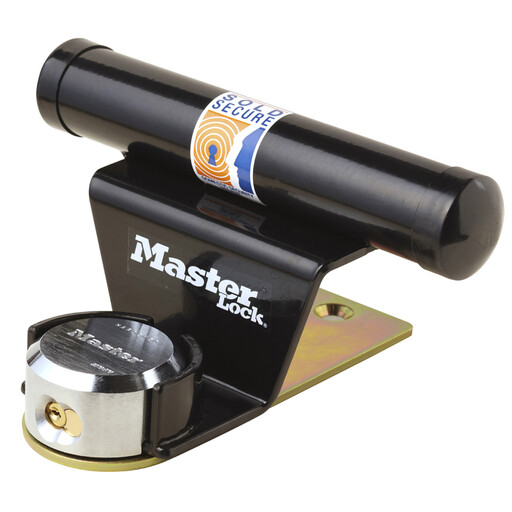
Why it's the right fit: For those who want to armour-plate the security of their garage door, often the weak link in a home's defence. Ideal for all types of doors (with a concrete floor), it protects vehicles, tools, and valuable equipment.
This garage lock is in a different league from standard bolts. Its demanding certifications, Sold Secure and Secured by Design (a UK police-preferred specification), are a true guarantee of resistance against brute-force attacks.
Solid hardened steel construction. Ground-anchored for maximum resistance. 6-pin cylinder resists picking.
Beyond safes, your home's security also depends on high-performance locks. Discover our selection of tested and approved cylinder lock models.
For a safe weighing less than 100 kg, anchoring is simply essential. Most models even come with an anchoring kit. An unbolted safe is an easy target: burglars can just carry it away to open it at their leisure later. Be careful, however: on some waterproof models, drilling can void the water protection. Always read the manufacturer's instructions carefully.
Generally, a set of batteries (often alkaline AAs) lasts between one and two years with typical use. Most electronic safes have a low-battery indicator light to warn you well before they run out of power. Our advice: change them once a year as a precaution for total peace of mind.
Not necessarily, and this is a common trap to avoid! Digital media (USB drives, hard drives, etc.) are infinitely more fragile than paper and can be destroyed at temperatures as low as 50-60°C. To truly keep them safe, it is imperative to choose a safe with a specific certification for "digital media," such as the ETL verification.