
Livraison le jour même ou le lendemain

Qualité garantie

Débloquez vos offres de bienvenue: Livraison GRATUITE | Jusqu'à -80 % | 30 jours d'essai gratuits à JoyPlus
Téléchargez l'application
An electronic safe can keep cash, jewellery, passports, contracts, hard drives and small devices secure. But a digital display or fingerprint reader doesn’t tell you everything about how well it protects your belongings. At home or in the office, easily overlooked details can turn a good idea into a disappointing purchase.
A digital keypad or fingerprint reader makes a safe more convenient to open, but it’s no substitute for a robust construction and proper fixing. A safe that’s simply placed in a cupboard can still be carried away, even if it has a code that’s impossible to guess.
Check for metal locking bolts, a reinforced door, protected hinges and holes for fixing the safe to the floor or wall. The fixing method must be suitable for the type of safe. Some fireproof or waterproof models may lose some of their stated protective properties if they’re installed without following the manufacturer’s instructions.
A 22 L or 33 L safe won’t necessarily offer the same amount of usable space as its stated capacity suggests. The thickness of the walls, locking bolts and any compartments can quickly reduce the space available.
Measure the items you want to store, especially A4 documents, envelopes, electronic devices and jewellery boxes. An adjustable or removable shelf can also make a real difference in everyday use.
An electronic keypad safe usually runs on batteries. Before placing your order, check the power source, how to access the battery compartment and whether a spare key is included. Keep it somewhere separate and secure, never right next to the safe.
Models with an alarm can alert you to several incorrect codes or an attempt to tamper with the safe. It’s a useful extra layer of security, but the feature alone doesn’t prove that the safe can withstand a break-in.
A fireproof safe offers a different level of protection from a basic steel safe. Check the stated duration and temperature on the product specifications, as well as the type of documents you need to protect. Some Master Lock models are stated to be UL-certified to withstand a fire reaching 927 °C for one hour, while others claim a two-hour rating, depending on the model.
ETL waterproofing claims also need a little scrutiny. On some safes, resistance to immersion applies only before the safe is fixed to the floor. Bolting it in place may therefore affect this feature. Don’t just skim the manufacturer’s instructions.
A wall safe or compact model designed for home use may be enough for jewellery, cash and passports. For documents or digital storage media, it’s better to allow for more internal space, a shelf and a door that opens wide enough.
For an office safe, check the weight, the space needed around the door and the types of fixing it supports. In a hotel or shop, emergency access, an alarm and an easy-to-reset code may matter more than capacity alone.
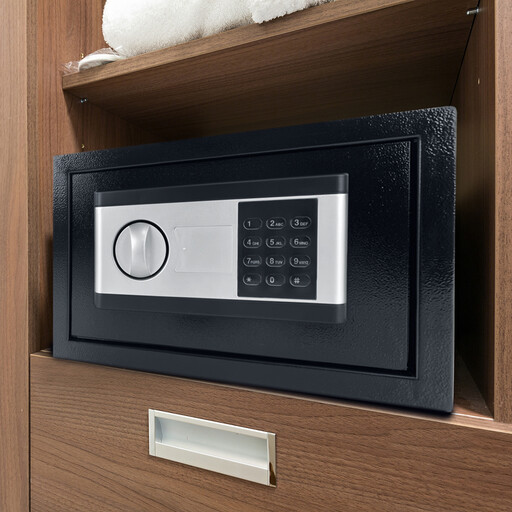
Why it suits this profile: With a 12 L capacity, it offers plenty of room for cash, ID documents and a few valuables, at home or in the office.
It combines an electronic code, a spare key and an alarm, helping to prevent problems if the battery runs low or you forget the code.
Two opening methods, a built-in alarm and power via an external battery box, according to the product description.
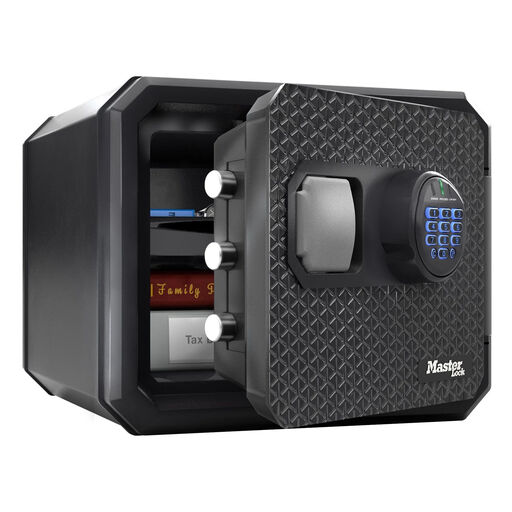
Why it suits this profile: Its mid-sized design is ideal for homes and offices that need to protect documents while keeping everything neatly organised inside.
The product listing specifies UL classifications and detailed ETL testing. However, you’ll need to follow the stated fixing requirements.
Backlit keypad, three locking bolts, adjustable shelf, interior light and a stated fire-resistance rating of one hour at 927 °C.
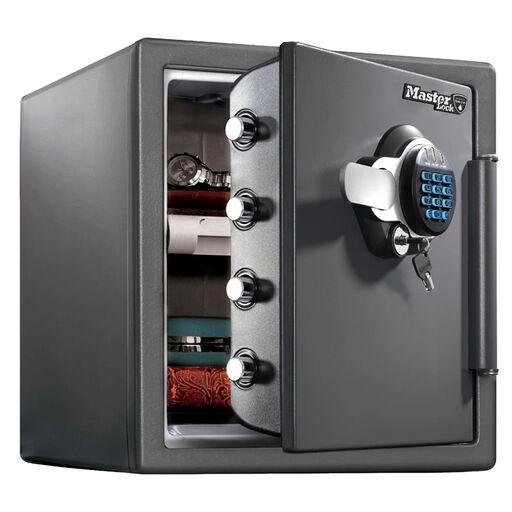
Why it suits this profile: Its dimensions provide plenty of room for documents, digital storage media and valuables, at home or in a business.
The product listing explains the conditions for water resistance and notes that installation can affect this protection. Check this before fitting the safe.
33 L capacity, four locking bolts, backlit keypad, shelf and a stated fire-resistance rating of two hours at 927 °C.
Explore our comprehensive, regularly updated selection of products that meet these demanding criteria and European safety standards.
Choose a stable surface and check the door dimensions, the position of the fixing holes and the type of surface you’ll be mounting the safe on. Use the supplied fittings if the manufacturer recommends them, then test the code with the door open. If you have a fireproof or waterproof safe, follow the installation restrictions in the instructions to the letter.
It depends on how often you use the safe, the type of keypad, whether it has an alarm and the quality of the batteries. Replace them as soon as the low-battery indicator appears, and keep the spare key somewhere separate. On some models, an external battery box makes this much easier.
Yes, as long as you choose a model with suitable capacity, secure fixing, emergency access and a clear process for changing the code. In a shop, a compartmentalised cash drawer can complement the safe and help you keep cash separate during day-to-day transactions.