
Livraison le jour même ou le lendemain

Qualité garantie

Débloquez vos offres de bienvenue: Livraison GRATUITE | Jusqu'à -80 % | 30 jours d'essai gratuits à JoyPlus
Téléchargez l'application
Back pain, a stiff neck after a day at the office, muscles aching from hours of driving… Does this everyday discomfort sound familiar? A massage seat is a practical solution for finding comfort at home. But in a market saturated with promises that aren't always kept, how do you navigate the options and avoid buyer's remorse?
As a product expert at Joybuy, I'm here to help you make sense of it all. Let's cut through the marketing jargon and get straight to the point. This guide breaks down the pitfalls to avoid and the essential criteria for choosing a device that will truly deliver on its promises.
Before you're tempted by a flashy product page, be wary of these three common pitfalls that can turn a feel-good purchase into a real headache.
To make the right choice, a few technical specifications make all the difference. Here they are.
This is fundamental: understanding the different technologies to find the one that suits you.
Beyond the type of massage, certain options can transform your experience.
There is no one-size-fits-all "perfect" product, but rather a seat adapted to your use and your needs. Here are some targeted recommendations.
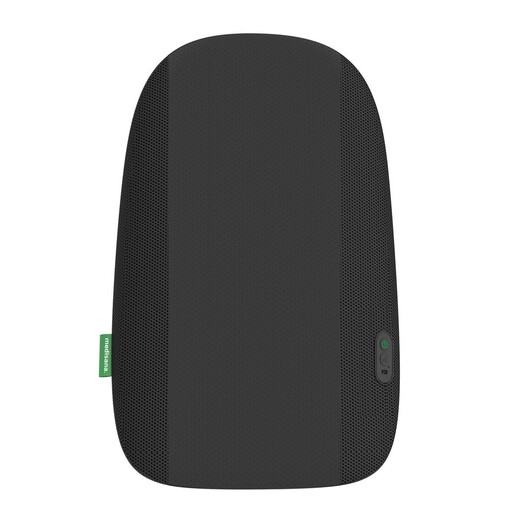
Why it's a great match: Perfect for those who are often on the move. Its slim design, light weight, and especially its integrated rechargeable battery allow you to use it at the office, at home, or on holiday, far from any power outlet.
It tackles the problem of often-disappointing battery life in cordless devices, with a battery that offers great flexibility after a 2.5-hour charge.
Maximum portability: Ultra-slim and lightweight design. Targeted Shiatsu massage: Ergonomic design that follows the contours of the back and waist.
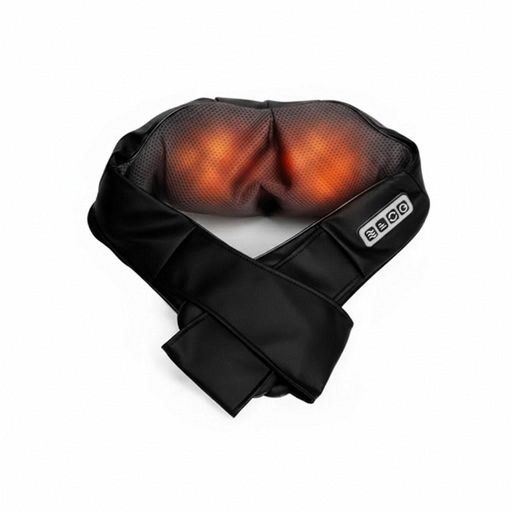
Why it's a great match: It's not a seat in the traditional sense, but an ultra-versatile massage cushion. Perfect for those who want to precisely target the neck, shoulders, back, and even calves or feet, without the bulk of a large device. Its mains and car adapters make it portable.
It avoids the trap of fixed, poorly placed heads. Its cushion format allows you to position it manually with great precision, exactly where the tension is, for a consistently effective massage.
Multi-zone massage: Can be used on many parts of the body. 8 massage heads: Bi-directional rotation for a complete Shiatsu massage, plus an infrared heating function.
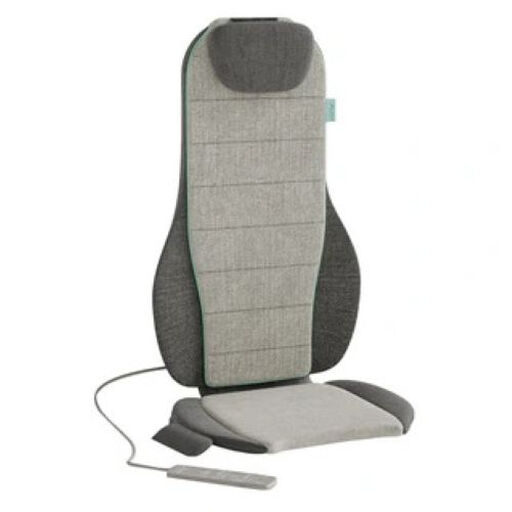
Why it's a great match: For those seeking an experience worthy of a professional massage chair. It combines three types of massage (Shiatsu, percussion, rolling), a heat function, zone targeting, and even a "spot" function for highly advanced customisation.
It solves the problem of imprecise massage by offering not only multiple technologies but also adjustments for intensity, head width, and a "spot" function for pinpoint accuracy on stubborn knots.
3 massage technologies: Shiatsu MAX, percussion, and rolling for a complete experience. Advanced customisation: Intensity, zones, spot function, and a removable comfort flap to adjust pressure.
We've compiled a complete and up-to-date selection of products that meet our selection criteria and safety standards.
Yes, daily use is possible, but it's best to follow a few simple rules. Most manufacturers recommend sessions of 15 to 20 minutes maximum to avoid overworking your muscles. The automatic shut-off, found on almost all models, is a welcome safety feature. Most importantly, listen to your body: if you feel any discomfort, space out your sessions. In case of a medical condition (back problems, etc.) or any doubt, consulting your doctor is essential before use.
The lifespan of an electric back massager depends, of course, on its build quality and how often you use it. A well-maintained model can work without issues for several years. To preserve it, stick to the recommended session times, don't put your full weight on it, and clean it according to the manufacturer's instructions. The warranty (usually 2 years) is also a good indicator of the product's reliability.
No, their electricity consumption is very reasonable. The power of these devices is most often between 10 and 40 W. For comparison, a standard LED light bulb consumes about 10 W. The automatic shut-off function after 15 or 20 minutes also helps to control consumption. The impact on your electricity bill will therefore be negligible, even with daily use.