
Livraison le jour même ou le lendemain

Qualité garantie

Débloquez vos offres de bienvenue: Livraison GRATUITE | Jusqu'à -80 % | 30 jours d'essai gratuits à JoyPlus
Téléchargez l'application
After a run, swim, fitness session or Pilates class, massage and muscle recovery devices can complement your stretching and relaxation time. But product descriptions often pile on promises that are hard to compare: "deep massage", "professional power", "accelerated recovery" or "heating technology". To choose a device that's genuinely suited to your needs, it's best to stick to concrete criteria.
A large amplitude or high speed isn't necessarily suitable for every part of the body. A powerful massage gun can be great for your thighs after training, but uncomfortable on your arms, shoulders or calves. Multiple intensity levels let you gradually increase the pressure and adapt it better to each area.
A heated massage gun can feel pleasant, especially before a mobility session or during a moment of relaxation. But the temperature, the heated area and the warm-up time need to be clearly stated. Heat doesn't turn a massage device into a medical appliance, and it isn't suitable for every situation.
A device that's too heavy quickly becomes tiresome to hold for several minutes, especially when you're trying to massage your own back or legs. Conversely, a small battery can limit your sessions when you're on the go. For a portable massage device, check the weight, the charging type, the stated battery life and whether a carry case is included.
Amplitude refers to the depth of the massage head's movement. Some models, for example, claim 10 to 12 mm: this figure should be considered alongside the available speeds and the pressure applied. Three speeds can be enough for daily use, while five levels offer more flexibility to fine-tune the intensity.
The attachments also play a very practical role:
At home or on the move, weight remains a key factor. A model weighing 300 to 400 g will generally slip into a sports bag more easily than a bulky device. A non-slip handle and an ergonomic shape also make self-massage more comfortable.
The noise level, measured in decibels, is worth checking if you plan to use the device at the office or in a shared room. When provided, a reading below 45 dB is a far more useful benchmark than simply saying "quiet".
A muscle recovery foam roller is used with your body weight, so it requires more control. PVC, PE and EVA are among the most common materials. A high-density structure limits deformation, while a hollow core can make the whole thing lighter.
A 30 cm roller works well for legs, calves and many sessions at home. A 61 cm model offers a longer contact surface, which is handy for your back and floor exercises, but it will take up more space in your bag. For myofascial release, move slowly and avoid joints, bones, the spine and any areas that are painful due to injury.
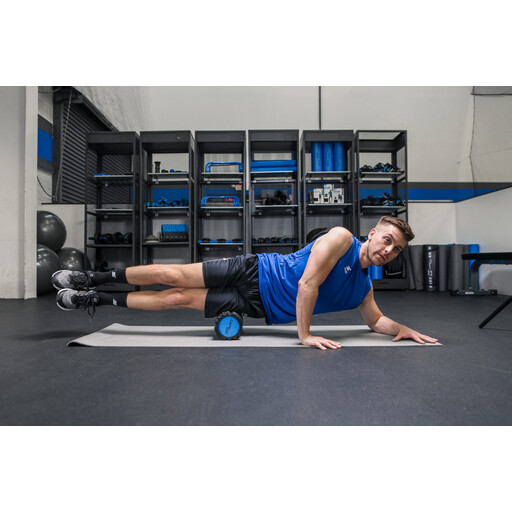
Why this choice suits this profile: This 30 cm roller lets you get started with sports recovery without batteries or electronic settings, at home, in the gym or on the go.
Its dimensions, high-density PVC/PE material and nylon carry bag are all specified, rather than relying solely on a performance promise.
33 x 13 cm format, described as non-deforming and easy to clean with a damp cloth.
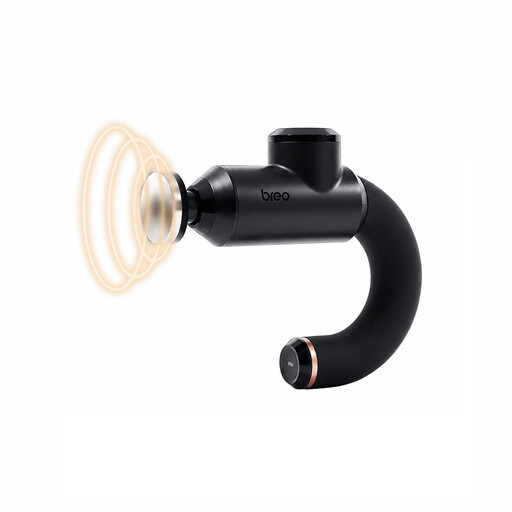
Why this choice suits this profile: Its settings and six interchangeable heads are designed for those who want to tailor their routine to different muscle groups.
The product page clearly states the 12 mm amplitude, four speeds from 1,400 to 2,600 rpm and the heating function, with a warm-up time claimed at five seconds.
Non-slip silicone handle, USB-C charging, heated head and attachments suited to different uses.
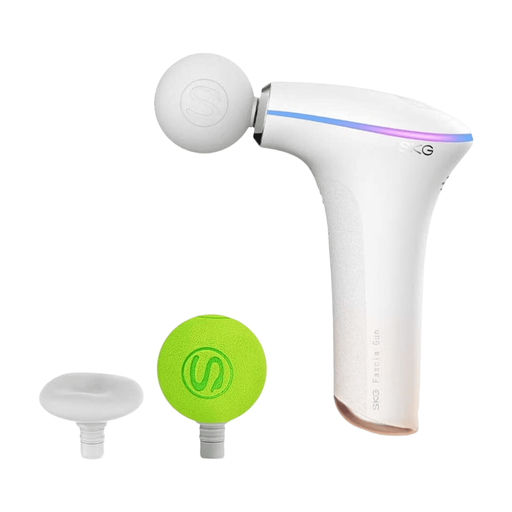
Why this choice suits this profile: Its compact size suits athletes who move between home, the gym, the office and travel.
The stated specifications are all numbered: 300 g, three speeds from 1,800 to 3,200 rpm, 10 mm amplitude and a claimed battery life of over six hours.
Heated handle with three claimed levels, from 40 to 53 °C, brushless motor and USB-C cable included.

Why this choice suits this profile: This 0.4 kg model, supplied with a carry case, is aimed at runners, office workers and athletes who want a portable massage after a busy day.
The three intensity levels, three silicone attachments and recommended usage time of one to two minutes per area encourage measured use.
Ergonomic 7-shaped design, heating claimed up to 45 °C and easy transport thanks to the included carry case.
We've put together a comprehensive, real-time updated list of products that meet these strict selection criteria and European safety regulations.
Always start with a low intensity and slow movements. A massage gun should not be used on the head, throat, spine, joints, bones, bruises or any swollen area. With a recovery roller, position yourself on a stable surface and avoid staying on a tender spot for too long.
Read the instructions and check the safety information, the identity of the responsible party established in the European Union and the charging guidelines. If you are pregnant, have a circulatory problem, diabetes, wear an implanted medical device or have a known injury, seek advice from a healthcare professional before use. These products are designed for massage and relaxation, not for diagnosing or treating a medical condition.
To start, one to two minutes per muscle group is a reasonable guideline, following the recommendations for your specific model. Avoid holding the head in one spot and stop immediately if you feel sharp pain, numbness or unusual discomfort.
Yes, as long as you control the pressure with your arms and legs. Start with large muscles, such as thighs or calves, without going directly over joints, bones or the spine. A shorter model is generally easier to store and carry.
The price depends on the type of equipment, battery life, number of attachments, heating function and materials used. A manual roller avoids the costs associated with batteries and charging. An electric device may cost more, but offers intensity settings and more targeted action. Compare verifiable specifications rather than general performance promises.