
Livraison le jour même ou le lendemain

Qualité garantie

Débloquez vos offres de bienvenue: Livraison GRATUITE | Jusqu'à -80 % | 30 jours d'essai gratuits à JoyPlus
Téléchargez l'application
After a workout, a day spent on your feet, or several hours in front of a screen, muscle tension can quickly make movement less comfortable. A muscle massage gun can complement a recovery or relaxation routine at home, but not all models are created equal or designed for the same needs.
Before buying, three common pitfalls are worth keeping in mind:
Amplitude refers to the theoretical depth of the massage head’s movement. A model offering 10 to 12 mm may be suitable for larger muscle groups. A more moderate amplitude is often easier to control on the arms, shoulders, or calves.
The number of speed settings also matters. Three settings may be enough for occasional use, while five or eight levels allow you to increase intensity more gradually. Always start at the lowest level, avoid pressing hard, and do not stay on the same area for more than 1 to 2 minutes.
Speeds expressed in RPM — revolutions per minute — are primarily useful for comparing operating ranges. On their own, they do not provide a complete measure of the effectiveness of a deep-tissue massage.
A massage gun with interchangeable attachments offers greater versatility. The most common shapes include:
Pay particular attention to how easily the attachments can be replaced and to the quality of their material. Silicone attachments generally provide gentler contact and can be cleaned with a slightly damp cloth, in accordance with the manufacturer’s instructions.
For a portable massager, weight is a highly practical consideration. A device weighing 300 to 500 g fits easily into a bag and places less strain on the wrist during a session. A corded model, which is often heavier, may nevertheless be suitable for stationary use at home.
The advertised noise level in decibels is also worth checking if you plan to use your quiet massage gun at the office or while watching television. Some manufacturers consider levels below 50 dB to be discreet, but perceived noise also depends on the selected speed and the surface being massaged.
Finally, compare the charging method, battery capacity, and whether a USB-C cable is included. Good battery life is convenient when travelling, but always check the charging requirements and avoid using the device while it is plugged in.
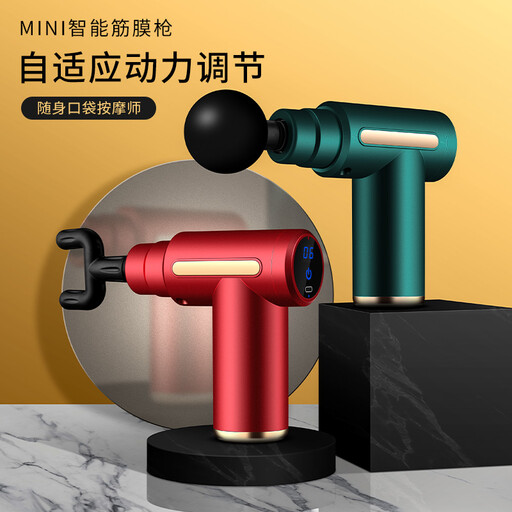
Why it suits this profile: its mini format is ideal for anyone looking to try muscle massage at home, at the office, or after light activity.
Its six levels let you increase intensity gradually instead of being limited to a single setting. Its 1,200 mAh battery and USB-C charging make storage and transport simple.
Six power levels, four attachments, and an advertised range of 1,800 to 3,200 RPM.
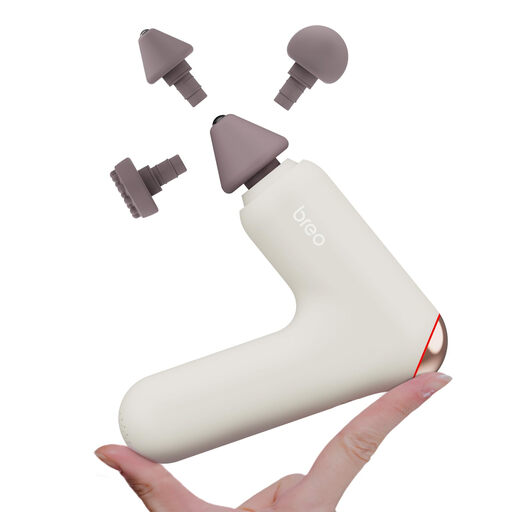
Why it suits this profile: weighing a claimed 0.4 kg and supplied with a case, this portable massager fits easily into a gym or work bag.
Its compact design keeps bulk to a minimum. The heating function, rated at 45 °C, operates independently of the three massage levels, so you can activate either function or both depending on the session.
0.4 kg, three interchangeable silicone attachments, and three intensity levels.
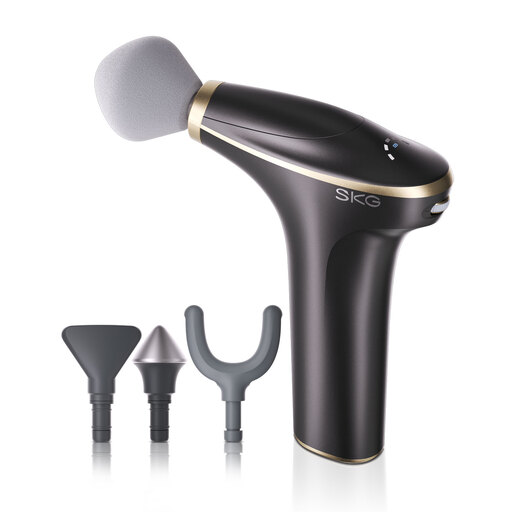
Why it suits this profile: its five speeds adapt to the different stages of a fitness routine, all in a format advertised at 350 g.
The five settings prevent an abrupt jump from a gentle sensation to high intensity. The four heads let you target several muscle groups.
Advertised 10 mm amplitude, five speeds, and four interchangeable attachments.
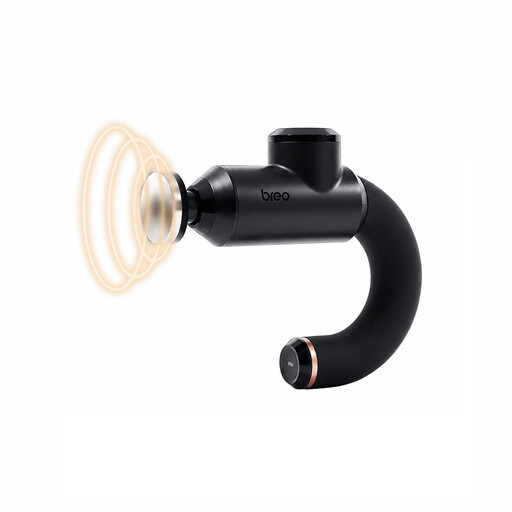
Why it suits this profile: its advertised 12 mm amplitude, six heads, and heated head are designed for users seeking more adjustment options.
The four advertised speeds, ranging from 1,400 to 2,600 RPM, let you tailor the intensity to each session. Heat does not replace mechanical adjustment and should be avoided on injured or swollen areas.
Advertised 12 mm amplitude, six attachments, USB-C charging, and a heated head.
Explore an updated selection of products with different intensity levels, formats, attachments, and features to compare the devices available in France.
A massage gun should be used on muscle tissue with slow movements and without applying excessive pressure. Avoid the head, throat, spine, bony joints, bruises, wounds, and irritated areas. Do not use the device in water, and switch it off before changing attachments.
If you are pregnant or have a circulatory condition, diabetes, thrombosis, a medical implant, or a known medical condition, seek advice from a healthcare professional before use. These devices are designed for comfort and muscle relaxation, not to treat illness.
To help preserve the battery, use the supplied cable, follow the charging instructions, and store the massager in a dry place. Also consult the instructions in English, the manufacturer’s information, and the warranty terms applicable in the European Union.
A short session is generally sufficient for a given area. Follow the duration specified in the instructions and avoid staying in the same spot for more than 1 to 2 minutes. Extending the session or increasing the pressure will not necessarily make the massage more effective — or more comfortable.
Energy consumption depends on the motor’s power, the duration of use, and the heating function. A rechargeable model mainly consumes energy while its battery is charging. To compare devices, check their wattage, battery type, and advertised battery life.
A round attachment is generally suitable for the large muscles in the legs. A flat attachment can be used on different fleshy areas, while a U-shaped attachment should remain on either side of the spine and never be applied directly to the vertebrae. Start at the lowest speed and stop the session if you experience pain, numbness, or unusual discomfort.