
Livraison le jour même ou le lendemain

Qualité garantie

Débloquez vos offres de bienvenue: Livraison GRATUITE | Jusqu'à -80 % | 30 jours d'essai gratuits à JoyPlus
Téléchargez l'application
Stiff neck after a day of remote work, post-workout soreness, or an aching back? This familiar pain doesn't have to be your reality. The massage gun, a personal electric massage device, has emerged as the ideal solution for self-massage, allowing you to precisely target sensitive areas and relieve muscle tension without leaving your living room.
But with a dizzying array of options, how do you make the right choice? This guide is here to shed some light with practical advice and help you find the perfect model for your needs, whether you're an athlete seeking sports recovery or simply looking for a moment of relaxation.
Before diving into our top picks, let's review the key technical criteria that make all the difference in performance.
This is the trio that defines your device's impact. Percussion amplitude (the depth of the head's movement) is crucial: the deeper it is, the more the massage reaches deep tissue. This is an essential criterion for athletes. The different speed levels, meanwhile, allow you to adjust the intensity, whether for a gentle warm-up or a targeted attack on the most stubborn muscle knots.
A detail that's anything but minor, especially if you plan on using it solo. The device's weight and grip are critical for your comfort. For back self-massage, an extended handle or a particularly ergonomic design is a game-changer. Most models come with an arsenal of interchangeable attachments, offering impressive versatility:
To stand out, some guns have a few extra tricks up their sleeve. A hot and cold massage gun offers real therapeutic value: heat prepares the muscle for activity, while cold helps calm post-exercise inflammation. Finally, silence is golden. A quiet massage gun, equipped with a brushless motor, guarantees a relaxing session... without the sound of a power drill in your living room.
Enough theory, let's get practical. Here are the models that caught our eye, each standing out for a specific user profile.
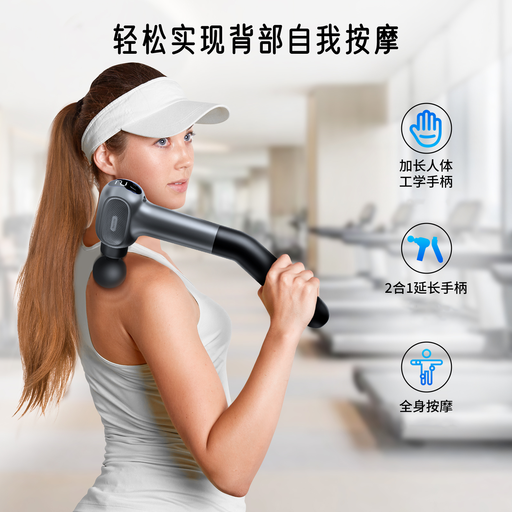
Why it stands out: Its key feature: an ingenious telescopic handle that finally makes back and shoulder self-massage accessible, even without assistance.
Pros:
Who is it for? For people living alone, remote workers with knotted shoulders, or anyone who struggles to reach their mid-back.
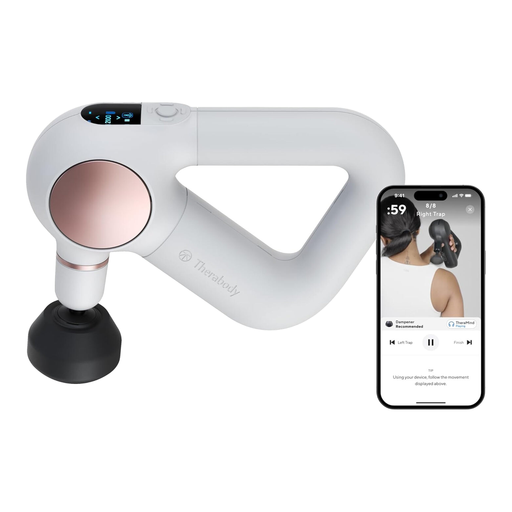
Why it stands out: Much more than just a massage gun, this model combines percussive therapy with guided breathing exercises via its app for a holistic approach focused on stress management and well-being.
Pros:
Who is it for? For those looking to go beyond simple deep tissue massage and want a wellness coach to reduce stress and sleep better.
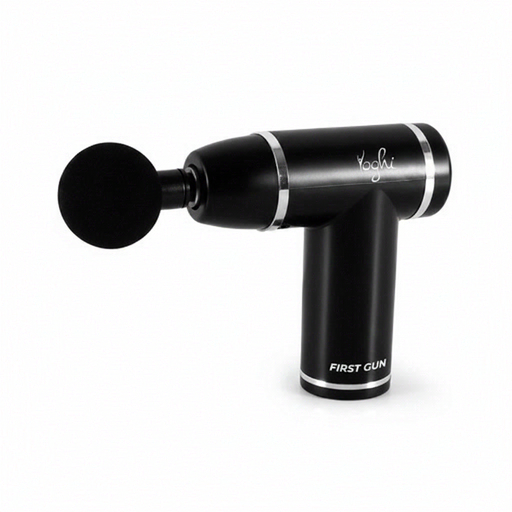
Why it stands out: The Yoghi gets straight to the point: the essentials, and nothing more. A simple, effective, no-frills device perfect for daily use.
Pros:
Who is it for? The ideal choice for a first-time buyer or for those who want a high-performing muscle massage gun without getting lost in superfluous options.
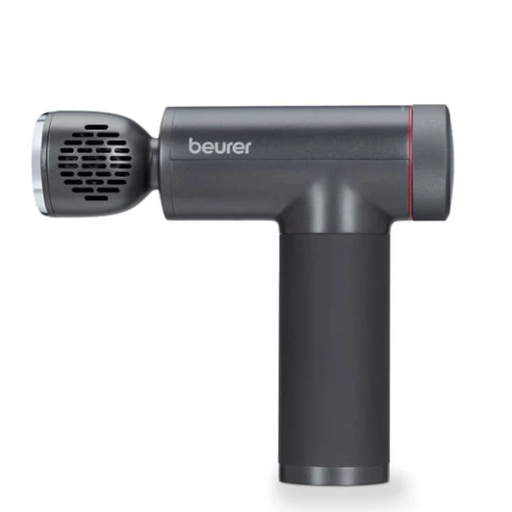
Why it stands out: The Swiss Army knife of recovery. Its secret weapon? A dual heating and cooling function that makes it incredibly versatile. Heat relaxes muscles before activity, while cold soothes and reduces swelling afterward.
Pros:
Who is it for? The ultimate ally for athletes and active individuals who want an all-in-one tool to optimize their sports recovery by combining massage and thermotherapy.
Our selection highlights very different profiles, but your dream model might be waiting elsewhere. To explore more options, compare other features, or find a device that fits your budget, take a look at our full catalog.
? Discover Our Full Range of Electric Massage Guns
The massage gun is a versatile tool. Here are the best times to use it:
Yes, and it can be very effective for muscle-related back pain by relaxing tense areas (lower back, trapezius muscles...). For back self-massage, choose a device with an ergonomic handle or an extension. The absolute golden rule: never apply it directly to the spine or bones. And of course, in case of chronic, acute, or suspicious pain, consulting a healthcare professional is essential.
Far from being mere gadgets, these attachments each have a specific role. The round head is the universal tool for large muscle groups. The flat head distributes pressure over a larger surface area. The fork (or "U" shape) is perfect for working around sensitive areas like the spine. Finally, the cone (or "bullet") head is a precision weapon for breaking up knots and trigger points.