
Livraison le jour même ou le lendemain

Qualité garantie

Débloquez vos offres de bienvenue: Livraison GRATUITE | Jusqu'à -80 % | 30 jours d'essai gratuits à JoyPlus
Téléchargez l'application
After a day of working from home, a workout or several hours behind the wheel, a massage device can help ease tension at home. The key is choosing the right model. Massage guns, neck massagers, heated cushions and vibrating massage balls are designed for different areas and offer different sensations.
Before placing your order, focus on the technology used, the available settings, battery life and safety precautions. Here are the criteria that will help you compare models without being swayed by manufacturers’ promises.
Very powerful vibration or a large amplitude is not suitable for every part of the body. A massage gun designed for the thighs and glutes may be far too intense for the neck or forearms. Conversely, a device with few settings may not offer enough precision for everyday use.
It is better to choose a model with several intensity levels and start each session on the gentlest setting.
A heated massage device can make your massage more comfortable, but heat should not be used as a simple marketing selling point. Check the stated temperature, the recommended usage time and whether the function can be switched off. People with reduced skin sensitivity should be particularly careful and avoid prolonged sessions.
A device that is difficult to hold, too heavy or awkward to recharge will often end up at the back of a cupboard. Check its weight, handle shape, charging method and how easy it is to clean. For a massage cushion, also look at the straps, stability on a chair and the cover material.
For a muscle massager intended for sports recovery, the speeds and percussion amplitude play an important role. The Breo Sport-M0500, for example, offers an amplitude of 12 mm, four speeds from 1,400 to 2,600 revolutions per minute and six attachments. This information helps distinguish a device designed for large muscle groups from a model intended more for gentle relaxation.
Never use a vibrating device on the head, throat, spine, bones or an injured area. A vibrating massage ball should also only be used on accessible muscles, starting at the lowest speed.
The temperature should be stated clearly. The Breo Lucky 7 offers a heating function that can reach 45 °C, while the Breo P2 has two heat levels, ranging from 40 to 45 °C. This information allows you to adjust the sensation to your comfort level, but heat should not be confused with medical treatment.
When using a heated massage cushion, do not fall asleep during the session and avoid prolonged contact with sensitive skin. Unplug the device after use and never immerse it in water.
For a portable model, USB-C charging makes it easier to use at work, at the gym or while travelling. The Medisana VC 150 has a 1,400 mAh lithium-ion battery, recharges in under four hours and offers a stated battery life of more than 60 minutes.
Battery safety also deserves your attention. Use a certified, compatible charger, do not operate the device while it is charging and stop using it if the casing or charging port is damaged.
A massage device can never replace suitable bedding. If your priority is to sleep better, compare the density, thickness, ventilation and dimensions of a memory foam mattress instead. A 2.5 cm memory foam mattress topper, such as the Mendale model in 90 × 200 cm, can improve the comfort of an existing mattress, but it will not fix a base that is misshapen or too soft.
The EGO HOME mattresses featured here are built with a three-layer structure, a removable 3D mesh cover and support distributed across seven zones. Always check that they are compatible with your bed base and review the unpacking instructions.
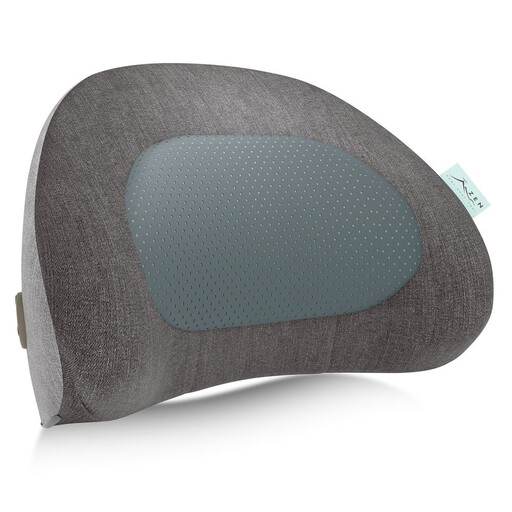
Why this choice suits this profile : This cushion can be placed on a chair or sofa and offers two speeds, soothing heat and a rechargeable USB-C battery, making it suitable for use at home or in the office.
The two speeds and separately activated heat mean you do not have to rely on a single, overly intense programme.
Portable design, two speeds, heating function and a label designed for aromatherapy.
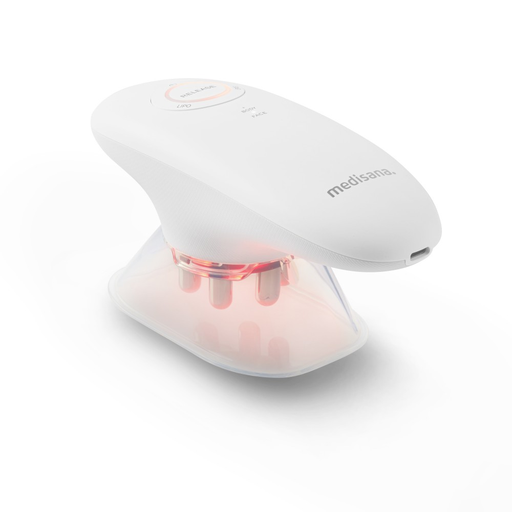
Why this choice suits this profile : This model combines cupping massage, EMS stimulation and red light in a 230 g design, with separate settings for the body and face.
The suction and EMS levels are shown separately, allowing you to increase the intensity gradually.
Three suction levels, six EMS levels, USB-C charging and a cupping lock mechanism.
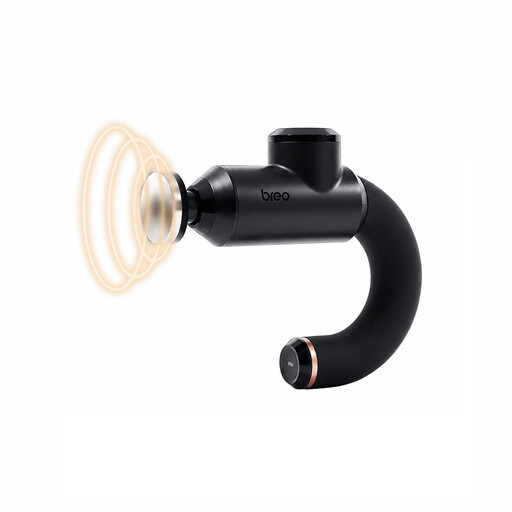
Why this choice suits this profile : Its six attachments, four speeds and USB-C charging make it suitable for people who alternate between training, travelling and muscle recovery at home.
The amplitude, speeds and attachments are detailed rather than being reduced to a simple promise of power.
12 mm amplitude, four speeds, six heads and a heating function reaching 45 °C.
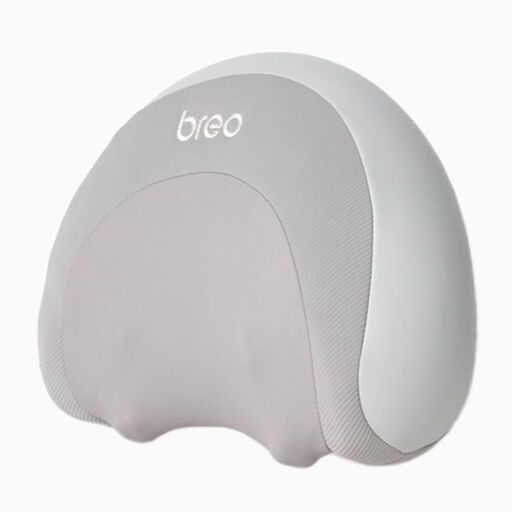
Why this choice suits this profile : Its wave-shaped design and three modes can be used while sitting or lying down to target the neck, shoulders or lower back.
The relaxation, powerful and sleep modes are clearly differentiated, with two adjustable heat levels.
Ergonomic wave-shaped design, rotating massage and adjustable heat from 40 to 45 °C.
Start with a short session and low intensity. On some models, the maximum recommended duration for the same area is 15 minutes. With a massage gun, keep moving the attachment continuously and avoid staying in the same place for more than one or two minutes.
USB-C rechargeable models mainly use the energy required to charge their battery. Actual consumption depends on its capacity, the number of sessions and how often the heating function is used. Unplug the charger once the battery is full and use a compatible adapter.
A neck and shoulder massager generally has a shape that wraps around or supports the neck area, while a massage gun targets muscle groups through localised percussion. For the neck, only choose a model whose instructions explicitly authorise use on this area, and never apply percussion directly to the vertebrae.