
Livraison le jour même ou le lendemain

Qualité garantie

Débloquez vos offres de bienvenue: Livraison GRATUITE | Jusqu'à -80 % | 30 jours d'essai gratuits à JoyPlus
Téléchargez l'application
Neck tension after a day of working from home, sore muscles after a Sunday workout, or just the need to unwind? We've all been there. But with an overwhelming number of massage devices on the market, making the right choice can be a daunting task.
To help you navigate this landscape, this guide breaks down the different technologies on the market and presents our selection of the best products. Whether you're looking for a tool for sports recovery, a solution for muscle pain, or simply a relaxation companion, you've come to the right place.
To ensure you make the right choice, here are a few key criteria to review before you pull out your credit card.
The market is divided into several major categories of devices, each with its own approach:
If you plan to take it to the gym or on the go, a lightweight, compact model with good battery life will naturally be more convenient. For stationary use at home, these criteria are less critical. Be sure to check the connector type (USB-C, now the standard, is a plus) and the manufacturer's stated battery life.
The variety of included accessories is often a good indicator of a device's versatility. A massage gun might include various shaped heads (round, flat, fork) for large muscles, joints, or the spine. Similarly, a neck massager will be specifically designed to fit the contours of the neck, offering much more precise treatment than a general-purpose device.
Here are four devices we've selected, each representing a different technology and use case, to meet various wellness and recovery goals.
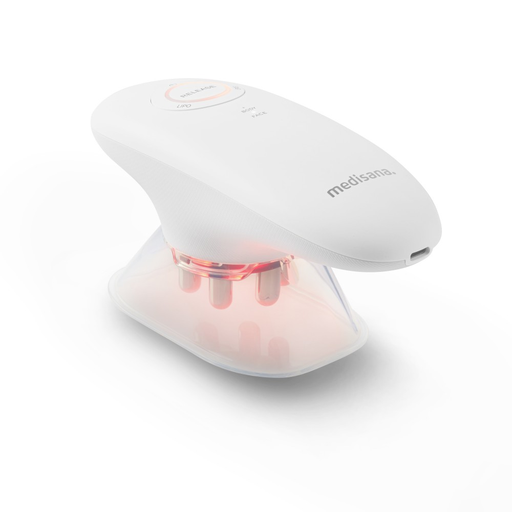
Why it stands out: This clever 3-in-1 model combines cupping massage, electrical muscle stimulation (EMS), and red light therapy. It offers a versatile approach to body and facial care.
Key features:
Who is it for? For those who want to explore the benefits of cupping with a modern device, and improve skin elasticity or stimulate tissue from the comfort of their sofa.
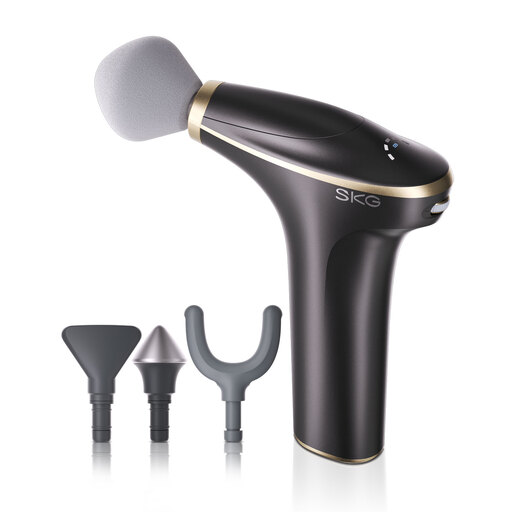
Why it stands out: The SKG FS700 stands out for its ultra-compact design and feather-light weight of 350 g, making it an ideal companion for on-the-go use without compromising on power.
Key features:
Who is it for? Ideal for athletes and active individuals who need a high-performance, easy-to-carry massage gun for sports recovery and muscle pain relief post-workout.

Why it stands out: This foldable neck massager is specifically designed for the neck. It combines electrostimulation (EMS+TENS), a heating function, and vibration massage for targeted relaxation.
Key features:
Who is it for? The perfect ally for people who spend their days in front of a screen and suffer from neck tension. A high-tech solution for a precise self-massage of the neck.

Why it stands out: This foam roller is a timeless classic, the essential tool for myofascial release. Its high density allows for firm, consistent pressure for a deep tissue massage.
Key features:
Who is it for? For everyone, from seasoned athletes to complete beginners, who are looking for a simple and cost-effective way to massage large muscle groups (back, legs, thighs) and improve flexibility.
At-home massage technology is constantly evolving, with devices becoming ever more specialised. Didn't find your perfect match in this selection? Don't worry, the market is full of other gems.
Explore our full collection of personal manual massagers to discover other models and find the device that will meet your needs.
1. What is the difference between a massage gun and an electrical muscle stimulation (EMS) device?
A massage gun has a mechanical action: it uses percussion (rapid pulses) to massage muscles deeply. EMS, on the other hand, sends small electrical impulses to cause muscles to contract. It's a method often used for recovery or passive strengthening. The sensations and goals are therefore completely different.
2. How often can you use a massage device per week?
The frequency of use depends on the device, your tolerance, and your goals. In general, it's best to start with short sessions (10 to 15 minutes per area), a few times a week, to see how your body reacts. The most important thing is to always read the device's manual and, above all, to listen to your body. If you experience pain, stop immediately.
3. Can a massage device replace a consultation with a healthcare professional?
Absolutely not. These devices are tools for comfort, well-being, and recovery assistance. They are in no way a substitute for medical advice or treatment. For any acute, chronic, or injury-related pain, consulting a doctor, physiotherapist, or other healthcare professional is essential.