When planning your marathon fuelling, start with the carbohydrates provided by all the products you consume during the race, rather than focusing on the format of a single bar. A bar or mini chocolate bar may work as a treat or an additional source of energy if you have already tried it in training; it should not automatically be treated as a complete fuelling option. World Athletics says that for exercise lasting more than 2 h 30, intake can be as high as 90 g of carbohydrate per hour, with a combination of carbohydrates recommended for higher intakes.
Who is this choice for?
Runners counting their carbohydrates
When preparing for a marathon, you want to know how many carbohydrates each portion provides, as well as the total from your fuelling plan. World Athletics’ guidance is based on intake per hour of exercise, not on choosing a single bar.
Runners who care about ingredients and format
You want to check the ingredients and allergens for the exact product, then try the portion and texture on a long run before taking it along on race day.
Shoppers looking for an individual treat
You’re mainly looking for a bar or mini chocolate bar to take with you for a chocolatey break, without automatically treating it as a fuelling product.
What should you look for first?
For a marathon, first distinguish between calculating your carbohydrate intake, choosing a recipe you’ve already tried, and simply wanting a chocolate treat. An individual format alone won’t meet all three needs.
| What matters |
What to check |
Who it matters to |
| Carbohydrates during exercise |
Check the carbohydrates per portion and add together those in the food and drinks you plan to have each hour. World Athletics recommends 30 to 60 g per hour for 1 to 2 h 30 of exercise, and up to 90 g per hour for longer than 2 h 30. |
When I’m planning a long race, I want to be able to count every source of fuel in my fuelling plan. Around 46% of consumers prioritise this carbohydrate calculation. |
| Ingredients and portability |
Read the ingredients and allergens for the product you’ve chosen, and try its portion and texture in training. |
If I’m taking a bar with me during the race, I’d rather choose a recipe and format I’ve already tried. Tolerance and portability come first for around 36% of consumers. |
| A chocolate treat |
Compare the portion size, then check the nutritional information and ingredients. Any Nutri-Score shown is no substitute for the nutrition table. |
A small chocolate treat to take with me is first and foremost something to enjoy, rather than my main source of fuel. This is the priority for around 18% of consumers. |
What should you avoid?
-
Relying on a single bar for the whole marathon
An individual portion alone doesn’t tell you how many carbohydrates you’ll consume per hour. To compare specific products, Nestlé Céréales France lists 16.7 g of carbohydrates in a 25 g Nesquik cereal bar and 16.4 g in a 25 g Chocapic bar.
Count the portions of each product and the carbohydrates in your drinks as part of the same plan, then try that plan in training.
-
Treating Nutri-Score as a requirement or a race plan
According to the European Commission, nutrition declarations are required for the vast majority of prepacked foods, while front-of-pack nutrition information is voluntary under current European Union rules. A score on the pack doesn’t tell you, by itself, how many carbohydrates are in the portion you plan to take with you.
Check the carbohydrates, sugars, fat and portion size in the nutrition table. Use any Nutri-Score shown as additional information when comparing similar products.
-
Choosing by brand instead of checking the exact recipe
A chocolate cereal bar, a hazelnut bar and a filled chocolate bar won’t necessarily have the same ingredients or allergens. You can’t tell what they contain from the brand name alone.
Check the packaging of the product you buy, especially if you have an allergy, and avoid trying a new product on race day.
Which brands should you look at?
These brands are a starting point for comparing specific formats, without making assumptions about how suitable they are for your fuelling plan.
Milka
Carrefour France includes Milka chocolate bars in its range, including milk chocolate and hazelnut varieties.
- Bars and mini formats may suit anyone looking for an individual portion.
- Before including one in your fuelling plan, check the portion size, recipe and nutritional information for the specific product you’ve chosen.
Lindt
Lindt France features, among others, the 35 g Noccio Lait Noisettes chocolate bar and the 33 g Nuxor Lait Noisette bar.
- The weight of these products makes it easy to identify an individual portion.
- Their format doesn’t tell you the carbohydrate content or allergens for each recipe.
Nestlé
Nestlé Céréales France publishes nutritional information for its Nesquik and Chocapic chocolate cereal bars.
- The carbohydrates listed for each 25 g bar make it easy to include these portions in a race plan.
- These figures apply to the products specified, not to every chocolate or cereal bar made by the brand.
Côte d’Or
Carrefour France includes Côte d’Or chocolate bars in its range.
- An individual bar may suit a portion-controlled chocolate break.
- Check the nutrition table and ingredients for the exact product before counting its carbohydrates.
Carrefour
Carrefour France’s range includes chocolate bars from its own-label brand.
- The products offer different formats and recipes to compare.
- Don’t assume that the ingredients or nutritional values of one recipe apply to another.
E.Leclerc / Marque Repère
E.Leclerc features Marque Repère chocolate products and chocolate cereal bars, including products from the Grainea range.
- These categories offer different formats to consider for your intended use.
- A chocolate cereal bar and a chocolate bar can’t be compared by name alone: check the product information for each one.
Two individual formats on Joybuy
These two products are suited to anyone looking for a bar or a small chocolate treat to take with them. For a marathon, compare their portion sizes and labels with the other fuel you plan to consume during exercise.
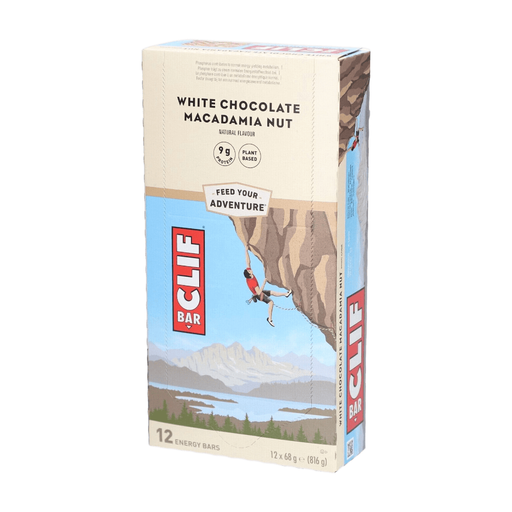 Image unavailable
CLIF BAR Macadamia Nut and White Chocolate, 12 × 68 g
If you’re considering an individual bar as part of your fuelling plan, this pack contains 12 bars, each weighing 68 g. Check the carbohydrates per bar, ingredients and allergens before adding it to your plan and trying it in training.
View on Joybuy
 Image unavailable
Nestle KitKat Strawberry Short Cake, 9 pieces, 104.4 g
If you fancy a chocolate treat in smaller portions, this pack contains 9 pieces and weighs 104.4 g. Check the nutritional information per piece and the allergens before deciding whether a portion belongs in your fuelling plan.
View on Joybuy
Frequently asked questions
Can a chocolate bar be enough to fuel you during a marathon?
Don’t rely on its format alone to cover your fuelling needs: consider the carbohydrates in each portion and in all the other products you consume during exercise. World Athletics provides hourly guidelines that vary according to duration; try your combination of products in training.
Which carbohydrates should you compare in a chocolate bar and a chocolate cereal bar?
First compare the carbohydrates per portion, then the portion’s weight, ingredients and allergens. Nestlé Céréales France lists 16.7 g and 16.4 g of carbohydrates respectively for its 25 g Nesquik and Chocapic cereal bars; these figures don’t apply to other recipes.
Is Nutri-Score compulsory on a chocolate bar?
No. According to the European Commission, front-of-pack nutrition information is voluntary under current European Union rules, while a nutrition declaration is required for the vast majority of prepacked foods. To compare portions, start with the nutrition table and ingredients list.
Does the so-called ‘soda tax’ apply to chocolate bars and chocolate slabs?
No, not to solid bars or slabs. In the version of Article 1613 ter of the General Tax Code dated 1 July 2026, published on Légifrance, the levy applies to drinks and liquid preparations for drinks intended for human consumption. This provision therefore isn’t a factor when choosing between these chocolate formats.


