Who are these options for?

Runners who want to measure their fuelling

If your priority is knowing how much carbohydrate you consume during a race, check the amount per serving of the product you take with you. The Gatorade Sports Science Institute looks at carbohydrate intake during exercise lasting more than 60 minutes; wanting white chocolate is a separate consideration.

White chocolate fans looking to limit added sugars

For a snack or recipe, the ‘no added sugars’ claim can help guide your choice, but it doesn’t tell you everything about the product’s sugars, carbohydrates or fat. Callebaut, for example, offers a white chocolate recipe made with maltitol.

Runners mindful of digestive tolerance

If you’re considering a recipe containing polyols such as maltitol, check the ingredients and make sure you know how you tolerate it before race day, rather than trying it for the first time during a marathon.

What should you check before buying?

Carbohydrate fuelling for exercise

Consider this: when your choice depends on the carbohydrate listed per serving and how the product fits into your fuelling plan.

Bear in mind: this option may not satisfy a craving for white chocolate or help you cut down on added sugars.

White chocolate with no added sugars

Consider this: if you want the taste of white chocolate in a snack or recipe separate from your main fuelling plan.

Bear in mind: the claim doesn’t tell you the carbohydrate content per serving; some recipes use polyols.

Classic white chocolate

Consider this: if you’re mainly looking for a bar to enjoy or an ingredient for baking.

Bear in mind: the Galak and ECO+ bars described by Auchan and E.Leclerc contain sugar in their recipes, so they aren’t suitable if you’re looking for white chocolate with no added sugars.

What matters to you What to check Who this is for
Carbohydrate during the race The carbohydrate per serving you take with you and how to fit that serving into your fuelling plan. During a marathon, I want to be able to count the carbohydrates in what I take with me, rather than relying on a claim about sugars. Around 36% of consumers put this measurable intake first.
Tolerance to polyols Whether the ingredients include maltitol or other polyols, and any warnings on the packaging. Before a long race, I’d rather know how I react to a sweetened recipe than try it on race day. Digestive tolerance is the priority for around 29% of consumers.
Added sugars The exact wording of the claim, followed by the sugars and carbohydrates in the nutrition information. For a snack separate from my fuelling plan, I’m looking for the taste of white chocolate while limiting added sugars. This distinction is the main consideration for around 21% of consumers.
Taste and cooking A format that suits the recipe or occasion, as well as the ingredients and allergens. If I’m making a dessert, the format and its culinary use matter more to me than whether it can be used during a race. Around 14% of consumers prioritise this need.

Which common misconceptions should you avoid?

  • Assuming ‘no added sugars’ means it’s suitable for race fuelling

    A recipe may replace sugar with a sweetener, but this claim doesn’t tell you how much carbohydrate a serving provides. For exercise lasting more than 60 minutes, the Gatorade Sports Science Institute discusses fuelling with measured amounts of carbohydrate.

    Choose a product for your race based on its carbohydrate content per serving and intended use. Consider any white chocolate separately, as a snack or recipe ingredient.

  • Trying a maltitol recipe on marathon day

    Polyols can have a laxative effect, and it’s particularly important to know how you tolerate a new recipe during a long race.

    Read the ingredients and any warnings, then try the portion you’re considering during a comparable training session.

  • Making your decision based only on the fizzy drinks tax or Nutri-Score

    In France, the levy described by Légifrance applies to drinks and liquid preparations for drinks, not solid bars of white chocolate. The French Ministry of the Economy explains that displaying Nutri-Score is optional.

    To compare white chocolates, read the nutrition information, particularly the values per 100 g, followed by the ingredients and allergens.

Brands and products to know

Callebaut

Callebaut describes MALCHOC-W-123 as white chocolate with no added sugars, made with maltitol and supplied in a 5 kg catering pack.

  • An option for a preparation or recipe that calls for white chocolate with no added sugars.
  • The 5 kg pack isn’t well suited to an individual race portion; this product isn’t presented as a marathon fuelling product.

Nestlé (Galak)

The 100 g Galak bar listed by Auchan is a classic white chocolate.

  • The bar format suits buying it to enjoy or use in cooking.
  • Auchan lists sugar and glucose syrup among the ingredients, as well as 57.4 g of sugars per 100 g. It doesn’t meet the ‘no added sugars’ requirement.

ECO+ (E.Leclerc)

E.Leclerc offers this classic white chocolate in a pack of 4 × 100 g.

  • Its product information lets you check the ingredients and nutrition information.
  • E.Leclerc lists sugar in the recipe and 67 g of sugars per 100 g, so this isn’t an option with no added sugars.

A Joybuy option for fuelling

The product featured here is a fruit purée to consider for fuelling during exercise, not white chocolate for enjoying or baking.
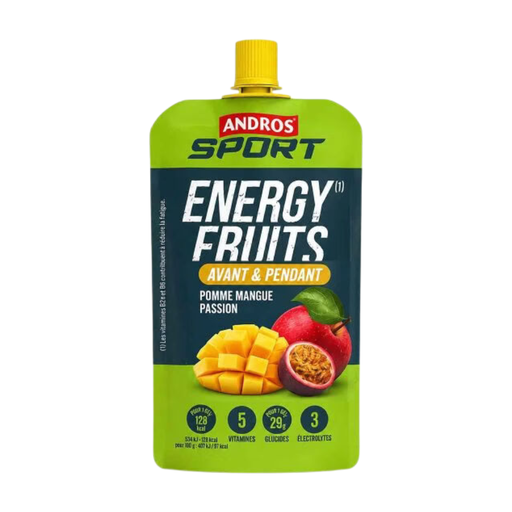
Andros Sport Energy mango fruit purée, pack of 18 × 114 g pouches

Andros Sport Energy mango fruit purée, 18 × 114 g

If you’re considering fruit purée during exercise, check the carbohydrate content per pouch and try a serving in training before adding it to your fuelling plan. This product comes in a pack of 18 portions of 114 g; it isn’t suitable if you’re looking for white chocolate.

View on Joybuy

Frequently asked questions

Can white chocolate with no added sugars replace my marathon fuelling?

Not on the basis of this claim alone: it doesn’t tell you how much carbohydrate is in the portion you’ll eat. The Gatorade Sports Science Institute covers carbohydrate intake during exercise lasting more than 60 minutes. To choose your race fuelling, check the carbohydrate content per serving and try the product in training.

Does ‘no added sugars’ mean ‘sugar-free’?

No. Check the sugars and carbohydrate content in the nutrition information, as well as the ingredients list. A recipe with no added sugars may, for example, use a sweetener.

What should I check if white chocolate contains maltitol?

Look for polyols and any warnings on the packaging. They can have a laxative effect, so if you’re thinking of eating this chocolate around a race, check how you tolerate your chosen portion before race day.

Does the fizzy drinks tax apply to a bar of white chocolate in France?

No. The levy set out in the General Tax Code, published by Légifrance, applies to drinks and liquid preparations for drinks intended for human consumption, not solid bars of white chocolate.

Is Nutri-Score compulsory on white chocolate in France?

No. According to the French Ministry of the Economy, displaying it is optional. Nutrition declarations are generally required for prepacked foods, as the DGCCRF points out. Whether or not Nutri-Score is shown, check the nutrition information, ingredients and allergens.