Organisers planning a get-together
You’d like to hand out chocolate after the race or at a team meal. The number of pieces and whether allergen information will be available matter more than the size of the bag alone.


If you’re handing out chocolate at a marathon, choose individually portioned chocolates if you want to serve several people easily. A large bag is better suited to sharing before or after the race. During the event, don’t replace your tried-and-tested fuelling plan with chocolate without first checking the quantity you plan to eat, how well you tolerate it and how you’ll store it.
You’d like to hand out chocolate after the race or at a team meal. The number of pieces and whether allergen information will be available matter more than the size of the bag alone.
You’re thinking of having a few pieces during or after the race. If you plan to eat them while running, whether they’re suitable depends on your fuelling strategy and what you’ve already tried in training, as the International Olympic Committee points out.
You compare the ingredients, allergens, sugars and fat in specific products, rather than assuming what they contain based on the brand or Nutri-Score alone.
First decide whether the chocolate will be shared around the event or taken along during the race: each use calls for different checks.
| What matters | What to check | Who is it for? |
|---|---|---|
| Fuelling during the race | The planned carbohydrate quantity per portion and how well you tolerate that product on long runs. | If I’m planning to eat chocolate while running, I want to know how it fits in with what I’ve already tried. Around 36% of consumers would put this compatibility with their fuelling plan first. |
| Sharing portions | The number of pieces and whether each one is individually wrapped. | If I’m serving a team without handling every piece, I need portions that are easy to hand out. This would be the main concern for around 29% of consumers. |
| Ingredients and allergens | The ingredients list, allergens and nutritional information for the exact product. | When several people are helping themselves, I want to be able to show them the packaging so they can check the recipe for themselves. Around 21% of consumers would put this information at the heart of their choice. |
| Quantity and transport | The net weight needed for the group and storage conditions until the event. | If I’m preparing a buffet, I’m looking for an amount that suits the group without leaving the chocolate exposed to heat. Quantity and transport would come first for around 14% of consumers. |
A format designed for sharing doesn’t tell you how much to eat during the race or how to stay hydrated. The International Olympic Committee emphasises the importance of practising your carbohydrate intake strategy during training.
If you’d like to take chocolate with you, try the product and quantity on your long runs rather than changing your fuelling plan on race day.
According to France’s Ministry of Agriculture, Nutri-Score is optional in France. If it appears on the packaging, it doesn’t give you the full details of the ingredients, allergens or portion size on its own.
Read the ingredients list and nutritional information for the product you choose. If Nutri-Score is shown, use it as an additional guide.
Sharing chocolates listed by Carrefour and Lindt have ingredients or allergen warnings that vary by recipe. You can’t identify them by the colour of the chocolate alone.
Keep the packaging where the group can see it and check the allergens for each product before serving it.
Heat can affect the appearance of chocolate before an outdoor event.
Store it somewhere out of direct sunlight and check the transport conditions given for the product you’ve chosen.
Carrefour lists a 200 g bag of 20 milk chocolate miniatures: a format worth considering if you want to count out the pieces you’ll be handing out.
Lindt offers a 188 g bag containing 26 individually wrapped LINDOR squares, as well as a 1 kg bag of LINDOR Milk chocolates for sharing.
Carrefour lists, among other products, a 200 g pack of dark chocolate squares with hazelnuts.
Its chocolate bar range lets you compare different recipes and pack sizes when buying for a group.
E.Leclerc lists, among other products, TABLETTE D’OR chocolate bars in a pack of 3 × 100 g and 200 g EQUADOR squares.
Carrefour lists Nestlé bars in several recipes, including milk and dark chocolate.
This small chocolate treat could work for informal sharing around the race. It’s made up of mini bars, not a chocolate bar or marathon fuel to choose without trying it first.
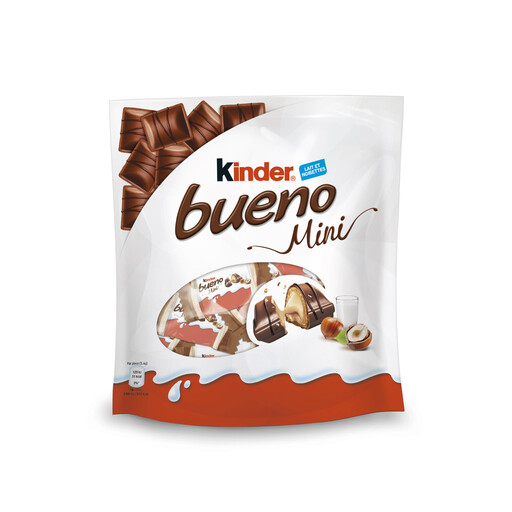 Image unavailable
This bag of mini bars could be suitable for informal sharing before or after the race. It contains 108 g. If you need to give everyone a portion, check the number of pieces and how they’re wrapped, then keep the label handy so people can check the allergens. Protect the chocolate from heat and moisture.
No, not automatically. The International Olympic Committee recommends practising your carbohydrate intake strategy during training. If you’d like to eat chocolate during the race, try the product and amount you have in mind beforehand.
No. France’s Ministry of Agriculture says that displaying Nutri-Score remains optional in France. Its absence alone doesn’t tell you whether a chocolate product complies with regulations; check the ingredients and nutritional information for that specific product.
First, check the ingredients and allergens for the exact product, then look at the net weight and nutritional information if you’re comparing several products. The summary of the EU regulation published by EUR-Lex includes the ingredients list, net quantity and nutrition declaration among the information required for prepacked foods.
The levy described by France’s Ministry of the Economy applies to sugary drinks, not chocolate bars. When choosing chocolate, check the sugar content in the nutritional information for the product you’re interested in.
Keep it out of direct sunlight before handing it out and check the product’s storage instructions. If you’ll be handing out the pieces individually, check how they’re packaged before opening the bag, too.