What should you look for first?
Treat a snack eaten around training differently from fuel during a race: for the former, focus mainly on the portion; for the latter, consider carbohydrate content and how well you tolerate it.
| What matters to you |
What to check |
Who is this for? |
| A light snack |
Calories in the portion you’ll actually eat and the size of that portion; also compare the figures per 100 g. |
I want a small chocolate treat without confusing it with my race fuelling; around 40% of shoppers put choosing a lower-calorie portion first. |
| Carbohydrates during exercise |
Carbohydrates per bar and the amount planned over the course of your run; try the format and texture during training. |
If I plan to take a bar on a long run, I need to know how it fits into my fuelling during exercise. Planning carbohydrate intake is the priority for around 40% of shoppers. |
| Dietary suitability |
Ingredients, allergens and any may-contain warnings on the exact packaging; how well you tolerate it when trying it during training. |
A bar may be the right size but contain an ingredient I need to avoid. Dietary suitability is the top criterion for around 20% of shoppers. |
Brands to compare
These examples relate to specific products: the format and nutritional information may differ for another bar from the same brand.
Snickers
A chocolate bar with peanuts and caramel, best thought of as a confectionery treat rather than part of a fuelling plan.
- Auchan lists 244 kcal and 30 g of carbohydrates for a 50 g bar.
- Check the allergens and the format you choose; these figures alone don’t determine whether it’s suitable during a marathon.
KitKat
A range of chocolate-coated wafer bars available in several sizes.
- KitKat France lists 213 kcal and 24,5 g of carbohydrates per serving of KitKat Chocolat au Lait.
- This serving also contains 11,1 g of fat; check the portion size and allergens for the format you buy.
Carrefour Sensation
The product reviewed is a chocolate protein bar, which is different from a standard chocolate bar or an energy bar designed for exercise.
- Carrefour France lists 185 kcal per 32 g serving.
- The same serving contains 14 g of fat; the word ‘protein’ alone isn’t enough to help you choose fuel for a race.
Isostar
The chocolate product reviewed is described as an energy bar for physical activity.
- Carrefour France lists 143 kcal for a 35 g bar.
- A smaller portion doesn’t, by itself, settle the question of carbohydrate intake; check the ingredients and how well you tolerate it too.
A selection from Joybuy
This Ovaltine energy bar product, in 20 g portions, could be considered as a snack around training or included in a planned fuelling strategy. How many bars to take depends on the nutritional information for the product and your exercise plan.
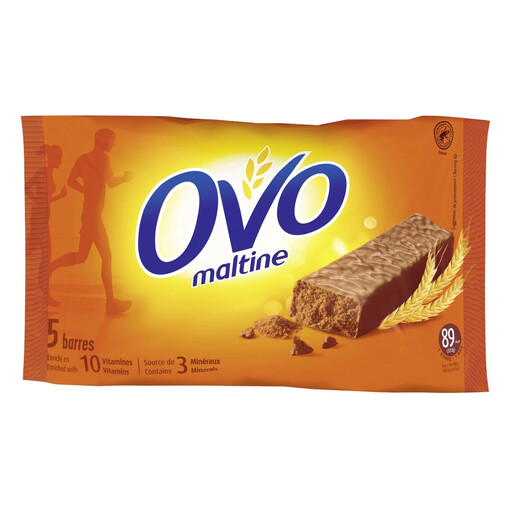 Image unavailable
Ovaltine Energy Bars, 5 x 20 g bars
The individually wrapped format makes it easy to plan a portion to take for a snack or long run. The pack contains five 20 g bars. Before adding one to your fuelling plan, check the carbohydrates and allergens on the packaging for the product you buy, then try it during training.
View on Joybuy
Frequently asked questions
Is a low-calorie chocolate bar enough for a marathon?
No. Its calorie content alone isn’t enough to plan your fuelling for the whole race. For exercise lasting more than 2 h 30, World Athletics refers to up to 90 g of carbohydrates per hour. Consider the carbohydrates in each portion as part of a plan suited to the duration of your activity and tested during training.
When should you try a new energy bar?
Try it during training before considering taking it on a race. This gives you a chance to assess its texture and ingredients, and see how well you tolerate it in the conditions in which you plan to eat it.
Which allergens should you check?
Check the ingredients list and any may-contain warnings for the exact product. Depending on the product, those reviewed list milk, wheat, peanuts, tree nuts, soya or other allergens; don’t assume that one format has the same ingredients as another.
Is Nutri-Score compulsory on chocolate bars in France?
No, Nutri-Score is a voluntary, supplementary label. The DGCCRF distinguishes this logo from the nutrition declaration required for most prepacked foods. Even if there’s no logo, check the nutrition table to compare portions.
Does France’s tax on sugary drinks apply to chocolate bars?
Article 1613 ter of the French General Tax Code, published on Légifrance, applies to drinks and liquid preparations for drinks under the conditions it sets out, not to solid chocolate bars. When choosing between bars, compare the sugars and energy listed on their labels instead.


