
Livraison le jour même ou le lendemain

Qualité garantie

Débloquez vos offres de bienvenue: Livraison GRATUITE | Jusqu'à -80 % | 30 jours d'essai gratuits à JoyPlus
Téléchargez l'application
Between household chores, food preparation, gardening and light DIY, MAPA protective gloves cater to a wide range of needs. However, a pair chosen purely for its price or appearance can quickly become uncomfortable, tear easily or prove unsuitable for the task at hand.
Here are the key criteria to consider before buying, along with a selection of models suited to different types of users.
A thick glove isn't necessarily the best choice for every job. It may offer better protection against certain abrasions, but it can also limit your precision. Conversely, a thin model is ideal for detailed work, but it won't replace a glove designed for heavy-duty mechanical tasks.
For light DIY, decorating or everyday handling, disposable nitrile gloves and vinyl models can be sufficient. For intensive gardening or construction work, it's better to opt for a more robust design, possibly reinforced with a lining.
Natural latex is flexible and offers a good fit, but it isn't suitable for people allergic to the proteins it contains. Phrases like "latex-free latex gloves" are contradictory – instead, look for latex-free gloves made from nitrile or vinyl.
Always check the material stated on the packaging. Nitrile and vinyl offer different sensations, elasticity and levels of resistance.
A reusable pair doesn't serve the same purpose as a box of 10 or 100 disposable gloves. For occasional use, a smaller pack prevents you from accumulating unused products. Cleaners, kitchens and workshops, on the other hand, will benefit from choosing larger boxes.
The phrase "resistant vinyl gloves" should, however, be considered in the context of the intended use. A vinyl glove may be perfectly fine for a precision task, but it won't be suitable for handling sharp objects, solvents or aggressive chemicals.
A poorly chosen size hinders movement and can lead to tears more quickly. Sizes S, M, L and XL don't always correspond to the same dimensions across different ranges: consult the size guide and, if possible, measure the width of your palm.
A glove should stay in place without compressing your fingers. For precision work, a close fit improves tactile sensitivity. With resistant work gloves, allow enough room to avoid excessive strain on the seams and flex zones.
Inspect the glove before each use. Disposable models should be removed carefully and then thrown away – they are not designed to be reused. Reusable gloves can be rinsed if necessary, then air-dried away from any direct heat source.
None of the models presented here should be used with sharp objects, live electrical parts or substances not specified on the product data sheet. For disposable food-safe gloves, you must check that the product clearly states it is suitable for contact with food.
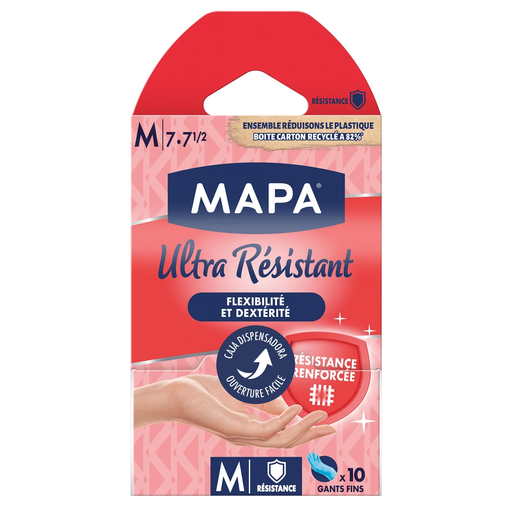
Why this choice suits this profile: this pack of 10 nitrile gloves in size M is ideal for occasional household tasks, small repairs and precision work.
The latex-free material and textured fingertips address two common issues: the risk of latex allergy and the lack of grip on small objects.
Latex-free nitrile, textured fingertips, size M and a pack of 10 gloves.
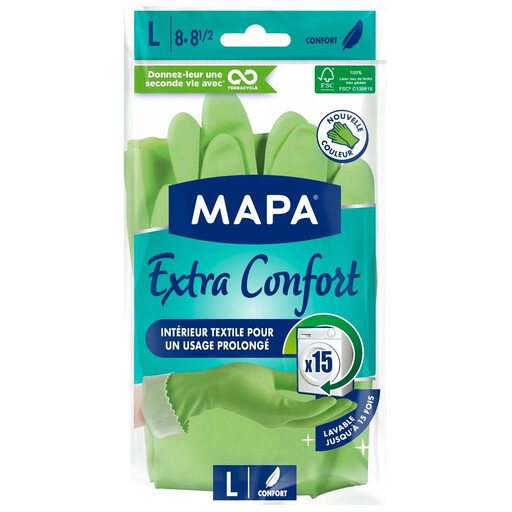
Why this choice suits this profile: this reusable model in natural latex with a cotton lining is designed for those who prioritise comfort during long cleaning sessions.
The cotton lining and reusable design prevent you from choosing a disposable glove that is too thin for regular use.
Natural latex, 100% cotton lining, size L and machine-washable up to 15 times according to the product data sheet.
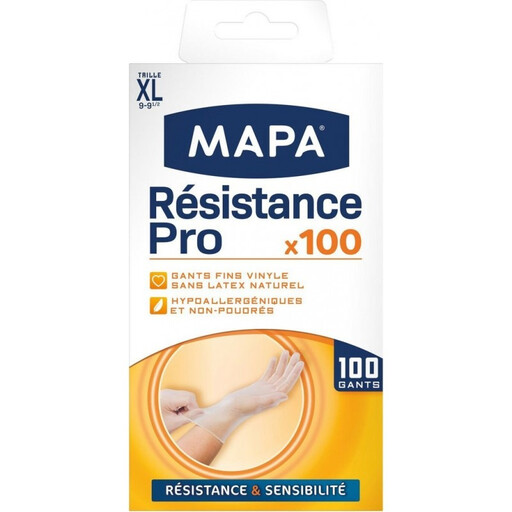
Why this choice suits this profile: this box of 100 vinyl gloves in size XL is ideal for professional cleaners, workshops and activities that require frequent glove changes.
The generous pack size reduces the need for repeat purchases, while the latex-free vinyl is suitable for many precision tasks.
Thin vinyl, latex-free, second-skin feel, size XL and a box of 100 gloves.
We've put together a comprehensive, real-time updated list of products that meet these strict selection criteria and comply with European safety regulations.
Disposable nitrile models are designed for single use only. Replace them after each task, especially if they are damaged or soiled. For repeated use, choose reusable household gloves and follow the manufacturer's washing instructions.
Measure the width of your palm and refer to the size chart for the specific product. S generally suits slim hands, M is for average hands, L for wider hands and XL for large hands. A glove that is too tight may tear; a model that is too loose will reduce your precision.
Only if the product data sheet states they are suitable for food contact. Gloves intended for the kitchen must be clean, intact and replaced between certain tasks to limit cross-contamination. Protective gloves for DIY and resistant work gloves should not be used for handling food.