
Livraison le jour même ou le lendemain

Qualité garantie

Débloquez vos offres de bienvenue: Livraison GRATUITE | Jusqu'à -80 % | 30 jours d'essai gratuits à JoyPlus
Téléchargez l'application
MAPA protective gloves cater to a wide range of needs: cleaning, food preparation, DIY, gardening, precision work and repetitive handling tasks. But a poorly chosen pair can quickly become uncomfortable, tear prematurely or offer insufficient protection for the job at hand.
Before placing an order, three common mistakes keep cropping up:
The material directly affects comfort, flexibility, resistance and how well the glove suits your intended use.
For food preparation, always check that the product carries an explicit food contact indication. The mere mention "latex-free" does not automatically mean the glove can be used with food.
Single-use models are practical when you need to change gloves between tasks or after significant soiling. They should be removed carefully, disposed of after use and never reused.
Reusable gloves are better suited to repeated household chores. The MAPA cotton-lined model featured further down can be rinsed and, according to its product page, machine-washed up to 15 times. However, allow it to air dry and always follow the usage restrictions stated.
For gardening, construction or heavy-duty DIY, it's best to opt for sturdy work gloves with a thicker construction. Depending on their design, they can offer better mechanical and thermal protection, but they are not intended for handling live electrical parts.
Gloves in sizes S, M, L or XL should fit your hand snugly without compressing your fingers. A well-fitted size makes them easier to put on, improves grip and reduces the formation of annoying creases during precise tasks.
Here's what to check on the product page:
A glove described as resistant is not necessarily compatible with all chemicals. For professional use, consult the labelling, pictograms and regulatory information provided by the manufacturer.
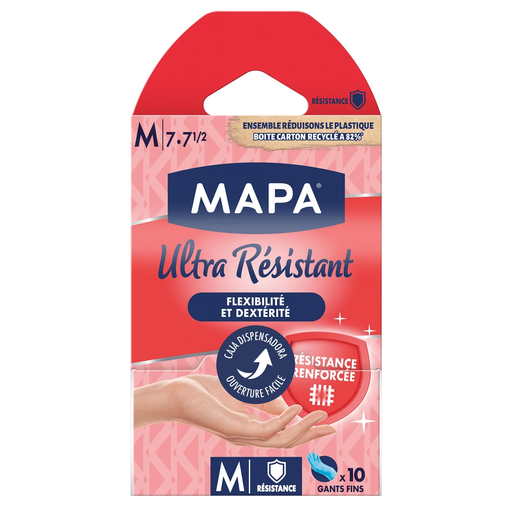
Why this choice suits this profile: This size M is ideal for small household tasks, precision work and occasional DIY projects. The pack of 10 lets you get started without buying a large box.
The nitrile material and absence of natural latex make it a suitable option for those who wish to avoid latex. The textured fingertips improve grip, but these gloves remain for single use only.
Latex-free nitrile, textured fingers and size M. Do not use with strong acids or sharp objects.
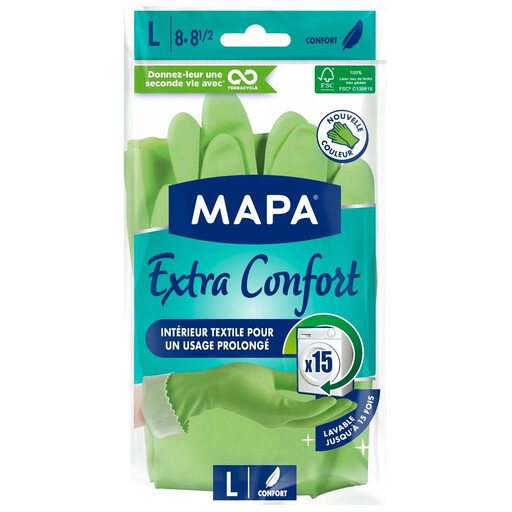
Why this choice suits this profile: This model is designed for those seeking reusable household gloves for extended sessions, featuring a textile lining and an ergonomic shape.
A disposable, thin glove should not be confused with a solution designed for prolonged wear. This model is reusable, but it is not recommended for anyone allergic to natural latex.
Natural latex, 100% cotton lining, size L and machine washable up to 15 times as indicated.
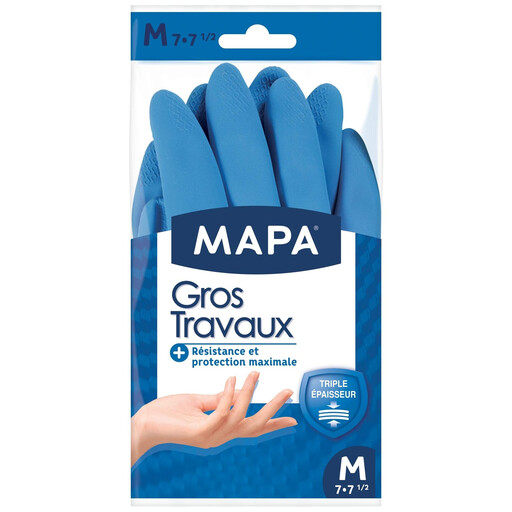
Why this choice suits this profile: This pair is intended for DIY, gardening, construction and tasks requiring, according to the product page, enhanced mechanical and thermal protection.
The triple thickness and cotton lining set it apart from a thin model designed for precision work. However, avoid solvents, strong acids and any live electrical components.
Triple-thickness natural latex, cotton interior and size M corresponding to a stated hand circumference of 7 to 7.5.
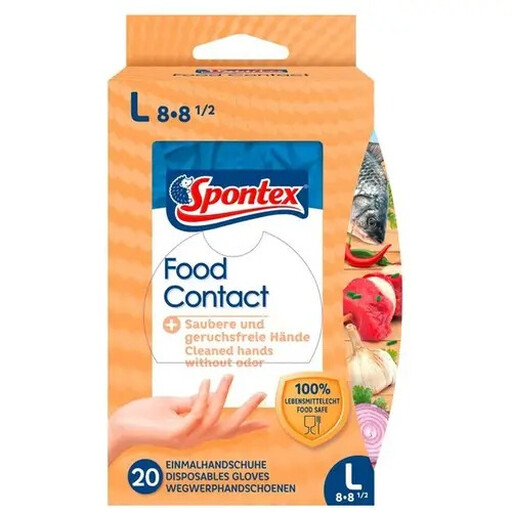
Why this choice suits this profile: This latex-free nitrile model is described as suitable for food contact, particularly for peeling or handling meat and fish.
Suitability for food contact cannot be assumed from the nitrile material alone: here, this indication is clearly stated in the product description. These gloves remain disposable.
Latex-free nitrile, size L, pack of 20 gloves and food contact compliance stated on the product page.
We've compiled a comprehensive, real-time updated list of products that fully meet these strict selection criteria and European safety regulations.
The disposable nitrile models in this selection are designed for single use only. After use, remove them carefully and dispose of them in accordance with local guidelines. For repeated use, choose a product that is explicitly described as reusable.
Measure the circumference of your hand or consult the size chart associated with the product. The glove should fit snugly without compressing your fingers. For precision work, avoid a size that is too large; for prolonged wear, avoid a model that restricts movement.
No, each activity has different requirements. Gloves intended for handling food must carry a specific indication. DIY and gardening require a construction suited to mechanical stresses. For cleaning, check for incompatible products, particularly solvents, oils and strong acids.