
Livraison le jour même ou le lendemain

Qualité garantie

Débloquez vos offres de bienvenue: Livraison GRATUITE | Jusqu'à -80 % | 30 jours d'essai gratuits à JoyPlus
Téléchargez l'application
MAPA disposable gloves are suitable for a wide range of uses: cleaning, food handling, light DIY, professional maintenance and precision tasks. But you need to pick the right reference. An ill-suited pair can quickly become uncomfortable, tear or restrict your movement.
When buying, three mistakes crop up time and again:
The material largely determines the resistance, comfort and precision of your movements.
The mention 'latex-free' does not mean the glove is compatible with all substances. For acids, solvents, oils or specific products, always check the label, the manufacturer's data sheet and the compatibility indications.
A glove that is too wide hinders precision and can snag on objects. Conversely, a model that is too tight tires your fingers and may tear when putting it on. Sizes S, M, L and XL are not perfectly standardised from one range to another: refer to the guide given on the product page.
Before using them:
If the task requires frequent changes, choose a box with a number of units that matches your usage rate. A pack of 100 gloves will be more suitable for regular use than a pack of 10 or 20.
DIY, gardening and professional protection gloves don't have to meet the same demands as fine models intended for cooking or cleaning.
Any European standards mentioned on the packaging must correspond to the intended use. A declaration of conformity does not exempt you from checking the usage limits.
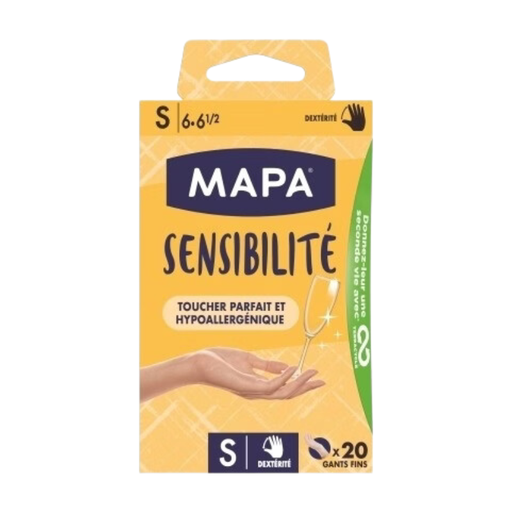
Why this choice suits this profile: This pack of 20 gloves in size S is ideal for those who want to try fine gloves for everyday tasks without buying a large box.
The vinyl material is latex-free and the powder-free formula stops you from accidentally choosing a powdered latex model without checking the features.
Size S, latex-free vinyl, powder-free interior and a pack of 20 gloves.
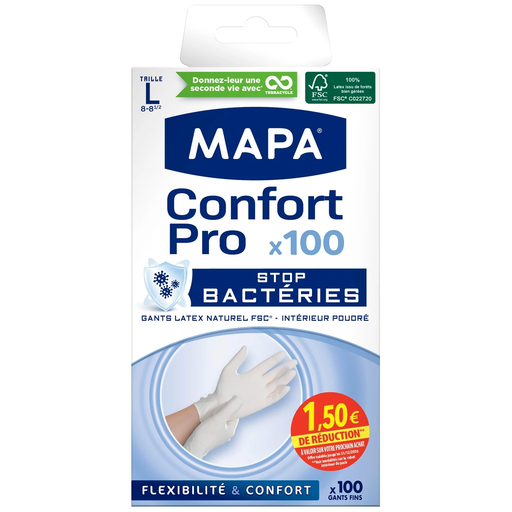
Why this choice suits this profile: The pack of 100 gloves in size L is aimed at frequent use where flexibility and precision of movement are key.
The product page clearly states the material, size, interior powdering and number of units. This lets you compare the cost per use rather than just the box price.
Natural latex, fine and flexible design, size L and a box of 100 gloves. Avoid if you have a known allergy to natural latex.
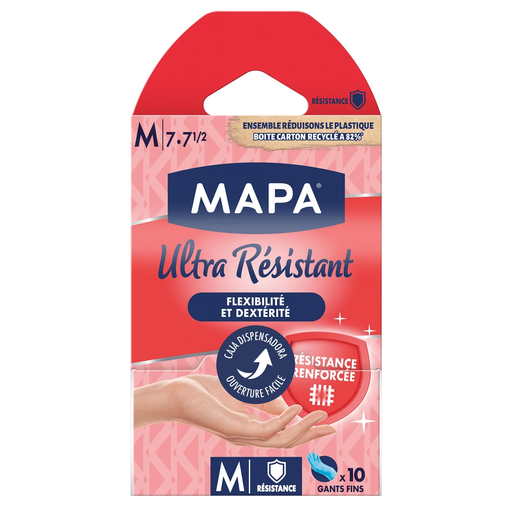
Why this choice suits this profile: This nitrile model is suitable for light DIY, household chores and precision tasks that need a better grip.
The finger texture is clearly stated and the latex-free composition stops you from mistaking reinforced protection for a standard latex glove.
Latex-free nitrile, textured surface, size M and a pack of 10 single-use gloves.
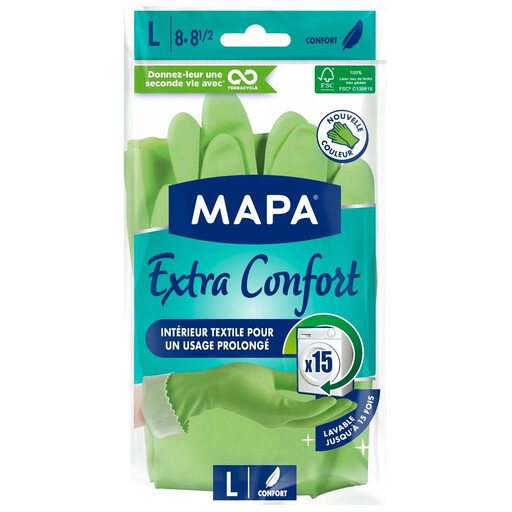
Why this choice suits this profile: This reusable pair is ideal for prolonged cleaning tasks and for people who prefer to rinse and care for their gloves after each use.
This isn't a disposable product wrongly presented as reusable: the product page clearly states rinsing, drying and the possibility of machine washing up to 15 times.
Natural latex, 100% cotton inner lining, ergonomic shape and size L 8–8.5.
We've put together a comprehensive, real-time updated selection of products that meet these demanding criteria as well as European safety regulations.
Single-use gloves should be replaced between different tasks to limit the transfer of dirt. Do not reuse them, even if they look clean to the naked eye. Reusable gloves should be rinsed, air-dried and then stored in a dry place, away from heat and sunlight.
Avoid disposable gloves for handling sharp objects, approaching a flame, touching very hot parts or using unlisted chemicals. If skin irritation occurs, stop wearing them immediately and seek advice from a healthcare professional if necessary.
The nitrile models shown here are stated as latex-free. This characteristic relates to the glove's composition. Nevertheless, check the packaging of the product you receive as well as any substances present in your work environment.
There is no universal duration that applies to all tasks. Change them as soon as they are torn, soiled or damp inside, and also after any operation that requires changing environments. In a professional setting, follow the hygiene and safety procedures specific to your activity.
Disposable gloves are designed for a single use and make frequent changes easy. Reusable cleaning gloves are more suited to prolonged work, rinsing and regular maintenance. The choice therefore depends on the duration of the task, the product being handled and the level of protection you need.