
Livraison le jour même ou le lendemain

Qualité garantie

Débloquez vos offres de bienvenue: Livraison GRATUITE | Jusqu'à -80 % | 30 jours d'essai gratuits à JoyPlus
Téléchargez l'application
Dreaming of recreating the rich, creamy espresso from your favourite coffee shop at home? Switching to a manual espresso machine is a crucial step for any enthusiast looking to truly master the art of extraction. The problem? The market is saturated with marketing promises and confusing technical specs. Before you invest, it's essential to know how to spot the pitfalls to make the right choice.
As product experts at Joybuy, our mission is to bring you clarity. Let's break down the common mistakes to avoid and the criteria that truly matter to find the machine that will turn your kitchen into a genuine barista's workshop.
Marketing can make any product look appealing, but daily use often reveals costly flaws. Here are the three most common mistakes.
To avoid these pitfalls, focus on the few technical parameters that truly make a difference.
A good espresso is extracted at a pressure of around 9 bars. So why do we see machines advertising 20 bars? This value indicates the pump's maximum capacity. A more powerful pump is simply better equipped to maintain a stable and optimal pressure throughout the extraction.
This is where a coffee machine with a pressure gauge becomes a key asset. This dial gives you a real-time reading of the extraction pressure. It allows you to:
A stainless steel coffee machine isn't just an aesthetic choice. Stainless steel offers undeniable practical benefits:
A stainless steel body is most often a sign of a robust design and an investment built to last.
Instead of an endless list, here is a curated selection designed for discerning enthusiasts looking for a high-performance, compact model.
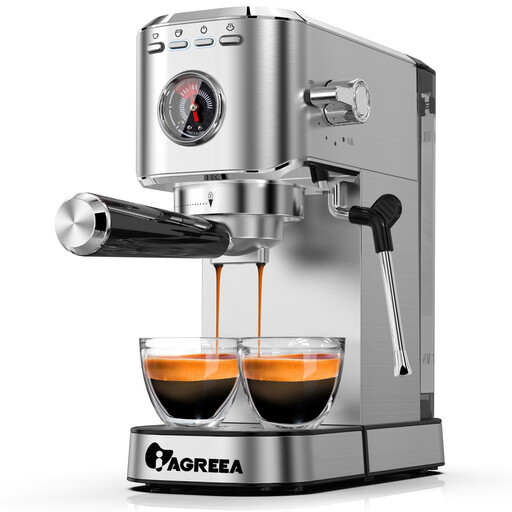
Why we love it: Perfect for those who want total control without sacrificing space. Its compact stainless steel design fits into any modern kitchen, and its features are an excellent gateway to seriously getting into the art of coffee.
Its built-in pressure gauge offers direct visual control over the pressure, cutting through vague marketing. Its brushed stainless steel body is a guarantee of durability and hygiene, while its powerful, adjustable steam wand is designed to create true microfoam.
It combines a 20-bar pump, a pressure gauge, a high-performance steam wand, and a stainless steel body in a very compact format. The cup warmer and the 1.1L removable water tank are details that make daily life easier.
A great coffee deserves a cup worthy of it. Using the right cup is essential to preserve the temperature and crema of your espresso.
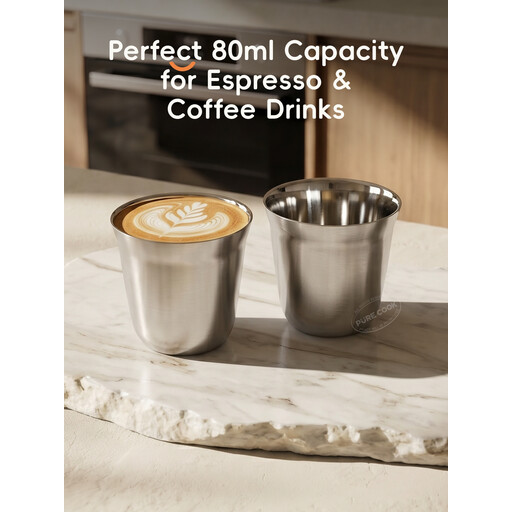
Why we love it: Its 80ml size is perfect for a single or double espresso. The double-wall stainless steel design keeps the coffee at the ideal temperature for much longer, without ever burning your fingers.
It avoids the pitfall of a cold ceramic cup that "kills" a perfect espresso by absorbing its heat and causing its *crema* to vanish.
Impressive thermal insulation, durable 304 stainless steel, and a stackable design. A major advantage: they are unbreakable, unlike glass or porcelain.
To complete your setup, discover our full selection of cups and mugs, all chosen for their quality and durability.
1. Is a 20-bar machine really necessary for a good espresso? No, the ideal extraction pressure is around 9 bars. However, a machine with a 15 or 20-bar pump has the necessary power reserve to reach and stably maintain those 9 bars, even with a very fine and well-tamped grind. The pressure gauge remains the best tool to verify that this pressure is being met.
2. How do you maintain a stainless steel manual espresso machine? Maintenance is simple, as long as it's done regularly. After each use, clean the portafilter and the steam wand. Wipe the stainless steel body with a soft, damp cloth. Remember to descale every 2 to 3 months (depending on your water hardness) to preserve the machine's performance and longevity.
3. Can you really make a good homemade cappuccino with this type of machine? Absolutely, provided the machine is equipped with a high-performance steam wand. The secret lies in the wand's ability to inject steam powerfully and controllably to create microfoam (a velvety texture) rather than just foam (large bubbles). It takes a bit of practice, but a good machine gives you all the tools you need.