
Livraison le jour même ou le lendemain

Qualité garantie

Débloquez vos offres de bienvenue: Livraison GRATUITE | Jusqu'à -80 % | 30 jours d'essai gratuits à JoyPlus
Téléchargez l'application
Mango is now available in a wide range of formats: mango pulp, juice, tropical drinks, soda, canned slices and mango in syrup. This variety makes shopping easier, but it also complicates comparisons. A drink marketed as “mango” may contain very little fruit, while sweetened pulp can significantly alter the flavour of a recipe.
To buy mango products suited to your habits in France, it is better to examine the label, format and intended use rather than relying solely on the image of the fruit on the packaging.
These descriptions do not refer to the same composition. Mango juice or a drink containing fruit purée generally indicates a proportion of mango that should be checked in the ingredients list. By contrast, mango soda may consist primarily of carbonated water, sugar or sweeteners and flavourings.
For example, T.A.S. Mango Juice Drink contains 30% mango purée, while Fanta Mango Dragon Fruit lists 0.1% mango juice from concentrate. The two products may be suited to different uses, but comparing them as though they were based on the same quantity of fruit would be misleading.
The terms “Kesar” and “Alphonso” refer to the mango variety, not necessarily to the amount of sugar. Unsweetened pulp, such as SWAD Unsweetened Kesar Mango Pulp, contains 99.9% Kesar mangoes and citric acid. It offers greater flexibility when adjusting a recipe.
Sweetened pulp is more convenient for quickly preparing a lassi, ice cream or dessert, but it already contains sugar. Check the “of which sugars” line and the ingredients list before adding it to your preparation.
An 850 g can may be a practical choice for a family, an enthusiastic home baker or a catering professional. However, it may prove inconvenient if you only use a few spoonfuls. Several products state that, after opening, the contents should be transferred to a clean container, refrigerated and consumed within two to three days.
For occasional use, 250 to 350 ml cans or 425 g cans of mango slices can help reduce waste.
Make the amount of mango the central point of your comparison. For pulp, check whether it is mango, purée or nectar, then look for sugar, water and acidifying agents. In a drink, the proportion of fruit may be considerably lower.
Ingredients are listed in descending order by quantity. The presence of sweeteners such as sucralose or preservatives does not automatically mean that a product is unsuitable for you, but it should align with your preferences.
Unsweetened Kesar pulp can be used as the base for a smoothie, sauce, Indian dessert or homemade drink. Sweetened pulp, such as SWAD Sweetened Kesar Mango Pulp, contains 102 kcal and 16.7 g of sugars per 100 g, according to the information provided. SWAD Alphonso Sweetened Mango Pulp, meanwhile, lists 117 kcal and 22.7 g of sugars per 100 g.
For a ready-to-drink beverage, compare the figures per 100 ml and per pack. T.A.S. Mango Juice Drink contains 46 kcal and 10.2 g of sugars per 100 ml, while NOW COCO Sparkling Coconut Water Peach & Mango lists 15 kcal and 3.3 g of sugars per 100 ml, with sucralose.
Before buying, check:
Products imported from India, Thailand or Korea can be interesting for Asian cooking, but the label available in France remains the reference to consult.
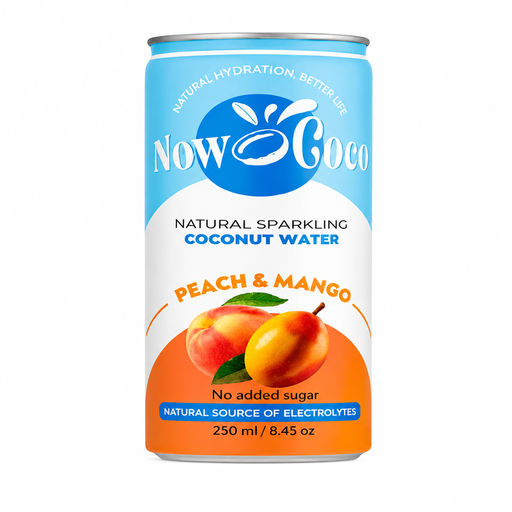
Why it suits them: A 250 ml can is designed for individual consumption, with no need to open a large bottle or can.
The ingredients specify the presence of mango and peach juice, as well as sucralose: the product is not presented as pure juice.
15 kcal and 3.3 g of sugars per 100 ml according to the product information provided; individual 250 ml format.
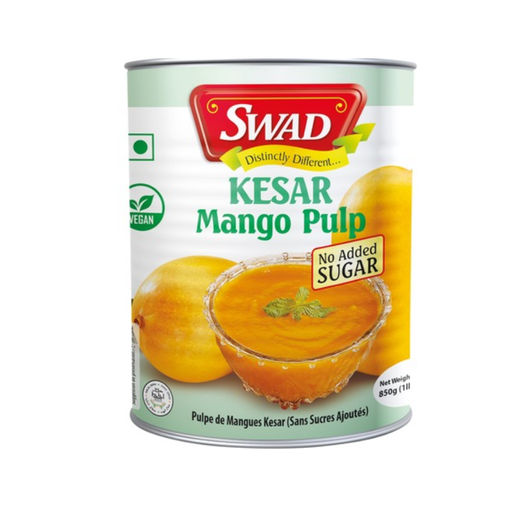
Why it suits them: This pulp is aimed at fans of Indian cuisine who want to control the amount of sugar in their lassis, desserts and sauces.
The product information states that it contains 99.9% Kesar mangoes and no added sugar, helping distinguish the variety from an already sweetened recipe.
850 g; 79 kcal and 13.4 g of sugars per 100 g according to the data provided; suitable for a wide range of recipes.
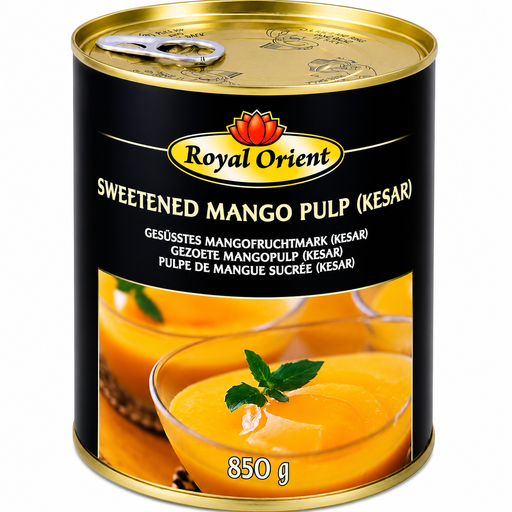
Why it suits them: The total 5.1 kg pack is intended for large families, community groups and professionals who regularly prepare drinks or desserts.
The large format is consistent with frequent consumption; it avoids having to buy numerous small units when recipes are prepared regularly.
Pack of six 850 g cans; pulp advertised as 95% Kesar; suitable for smoothies, sauces and desserts.
Explore our complete, regularly updated selection of products that meet these composition, format and labelling criteria for France.
Not necessarily. Several canned products state that they can be stored at room temperature in a cool, dry place before opening. Once the can has been opened, transfer the pulp to a clean container and refrigerate it. Then follow the storage period stated on the packaging, often two to three days.
Alphonso and Kesar are two mango varieties used in Indian pulp products and desserts. The variety name alone does not reveal the final flavour or sugar level: always check the fruit content, whether sugar has been added and the nutritional values.
Yes. They can be used in tarts, cakes, fruit salads and fillings. Drain them before incorporating them so that you can better control the moisture in the preparation. The syrup already adds sugar, so you may need to reduce the amount specified in the recipe.