
Livraison le jour même ou le lendemain

Qualité garantie

Débloquez vos offres de bienvenue: Livraison GRATUITE | Jusqu'à -80 % | 30 jours d'essai gratuits à JoyPlus
Téléchargez l'application
Mango products come in a huge variety of forms: tinned fruit in syrup, dried mango, juice, nectar, pulp, chilled desserts and Asian specialities. That means plenty of variety, but it can also make choosing what to order a little less straightforward.
Three common pitfalls keep cropping up. A picture of a whole mango on the packaging doesn't guarantee the recipe contains a generous amount of mango. Claims like "natural", "no added sugar" or "low in calories" also need checking against the ingredients list and the nutritional information panel. Finally, the format has to match how you plan to use it: a tin of mango in syrup works for several portions, whereas a pouch of dried mango is better suited to snacking on the go.
If you're after a strong fruit flavour, mango needs to appear high up in the ingredients list. For fruit in syrup, the proportion is sometimes clearly stated: both the MOLI and AROY-D products contain 54% mango. They then round out the recipe with water, sugar and an acidity regulator.
For baking or cooking in bulk, mango pulp saves you a lot of time. Kesar Royal Orient pulp boasts 95% mango pulp, with sugar and citric acid. You can use it to make smoothies, desserts or sauces. Its 850 g size is worth choosing based on how much you'll actually use, though.
Dehydration naturally concentrates the carbohydrates in dried fruit. Be&Cheery mango shows 342 kcal and 72.6 g of sugar per 100 g, while Jia Jian Cheng Chu Philippine mango lists 58 g of sugar per 100 g. These figures let you compare products on a concrete basis, rather than being swayed by marketing claims alone.
Drinks can also vary widely. Mango nectar sold in 2-litre bottles contains pulp, water and sugar, coming in at 55 kcal per 100 g. By contrast, Tymbark mango-mint drink is mostly made from apple juice and contains just 1% concentrated mango juice, according to the product sheet. So it's aimed more at fans of fruity drinks with a hint of mint than at anyone looking for a dominant mango flavour.
Konjac jelly with mango shows a low energy value on its product sheet, but the recipe contains erythritol, sweeteners and several texturising agents. Take the time to read the label and follow the consumption instructions, especially the requirement to chew the product.
How a product is stored directly affects how convenient it is day to day:
Allergens also deserve your attention. Some dried mango products contain sulphites, while TOCO mango and onion chutney contains mustard, which is present in the spice blend. Mango and passion fruit mochi contains soya and may also have traces of gluten or sesame.
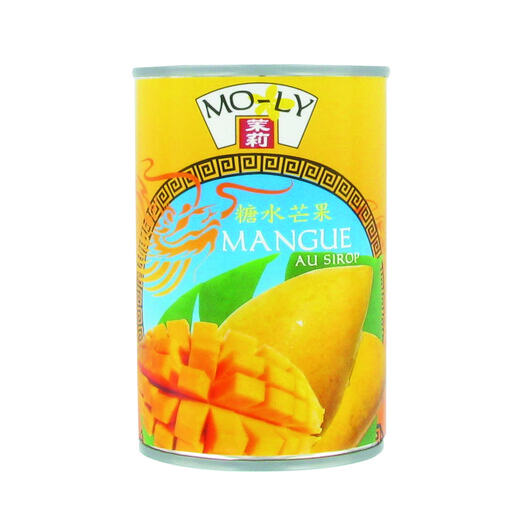
Why this suits this profile: Its 425 g size lets you try mango in syrup without committing to a large tin. The pieces are ready to serve in a fruit salad, dessert or yoghurt.
The product sheet states 54% mango and lists the nutritional values, making it easy to compare objectively with other tinned fruit.
A standard size, 57 kcal per 100 g and no-fuss preparation. Keep refrigerated after opening.
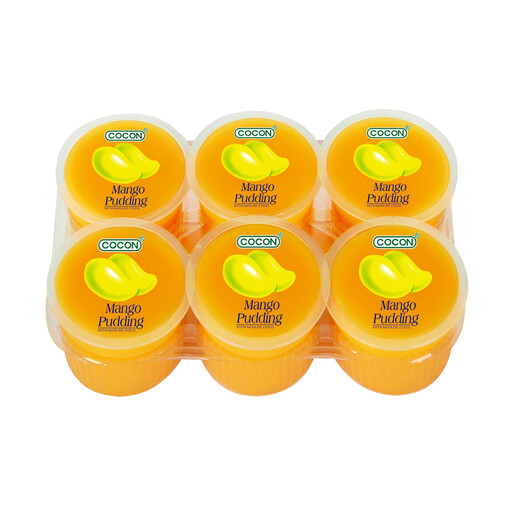
Why this suits this profile: This Asian dessert combines the silky texture of a pudding with pieces of nata de coco, offering a more sophisticated experience than simple tinned fruit.
The product sheet specifies it contains 5% mango juice, milk and gelling agents. So you're buying it for its texture and indulgence, rather than a vague promise of high fruit content.
A 480 g size, 76 kcal per 100 g and a dessert that's ready to serve. Keep refrigerated.
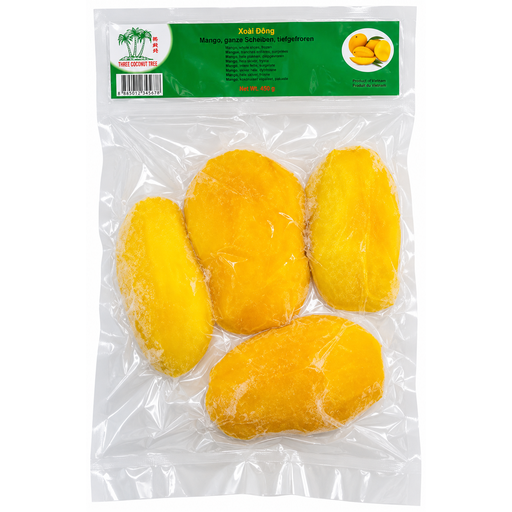
Why this suits this profile: These frozen mango pieces are handy for smoothies, fruit salads, desserts and toppings. No need to peel or chop them.
According to the product sheet, the ingredients are 100% mango, with no added sugar, colouring or artificial flavour. Storage at −18 °C is essential, though.
Approx. 500 g, 60 kcal per 100 g and very versatile in the kitchen. Do not refreeze after thawing.
For savoury dishes, TOCO mango and onion chutney plays on a sweet-and-savoury combination made with onion, mango, vinegar and spices. It works well with poultry, cheese, vegetables or to liven up a sauce. For snacking on the go, Be&Cheery or Jia Jian Cheng Chu dried mangoes are ready to eat. Just keep an eye out for any sulphites.
Fans of Asian mango specialities can also look at mango and passion fruit mochi, konjac jellies or mango sweets. These products focus on unusual textures and formats, but they often contain more sugar, sweeteners or texturising agents than a simple bag of frozen mango.
We've put together a complete, real-time list of products that fully meet these strict selection criteria and European safety regulations.
Juice is generally described as a drink obtained from the fruit or from concentrate. Nectar may contain pulp, water and sugar, with a thicker texture. To compare two products accurately, the best approach is to check the ingredients list and the proportion of mango stated on the label.
Reseal the pouch carefully and keep it in a dry, cool place away from light. Eat the contents promptly to preserve the texture. Also check for sulphites if you're sensitive to this allergen.
Frozen mango is ideal for blended preparations and is easy to portion. Tinned mango works well in fruit salads and cakes, while mango pulp is suited to recipes made in larger quantities. Before ordering, always compare the added sugar content, the format and the storage requirements.