
Livraison le jour même ou le lendemain

Qualité garantie

Débloquez vos offres de bienvenue: Livraison GRATUITE | Jusqu'à -80 % | 30 jours d'essai gratuits à JoyPlus
Téléchargez l'application
Finding a drink that's both refreshing and original can be a real challenge. Caught between classic fruit juices and sodas, a new contender is making waves: the mango and nata de coco drink. Combining the sweetness of mango with the fun texture of chewy coconut jelly cubes, this Asian mango drink is winning over a rapidly growing audience.
As a product expert at Joybuy, I'm here to help you see things more clearly. In this guide, I'll share my tips for finding the hidden gem that will satisfy your cravings, without the unnecessary marketing jargon.
Before diving into our selection, let's review the key criteria to ensure you make the right choice.
What makes this drink so special is, of course, its chewy pieces. Nata de coco, or drinkable coconut jelly, is created through the fermentation of coconut water. But be aware, not all nata is created equal: some people prefer small, soft pieces, while others swear by larger, firmer cubes. The proportion of nata de coco in the bottle also plays a crucial role: the more there is, the more generous the chew in every sip.
The core of the experience, the mango flavour, can be achieved in two ways. A mango juice with nata de coco made from concentrate generally offers a lighter flavour and a more liquid consistency. In contrast, a drink formulated with mango purée will be thicker, with a more intense taste and a creamy touch. The fruit percentage listed on the label is an excellent indicator of the intensity you can expect.
Taking a minute to read the ingredients list is never a bad idea. You'll find valuable information about the sugar content and the presence of sweeteners or artificial colours. It's the best way to make an informed choice, whether you're looking for a light tropical refresher or a pure indulgence.
Here are a few gems that stand out from the crowd, each with its own unique personality.
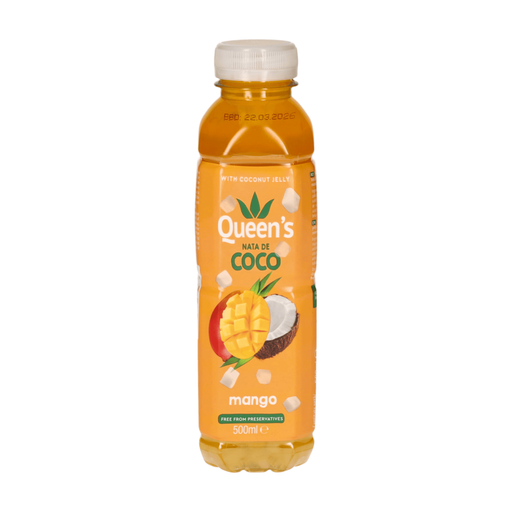
Why it stands out: The strength of the Queens drink? Its generous 500 ml size, perfect for quenching a serious thirst, and its light profile with only 19 kcal per 100 ml. This non-carbonated drink combines mango juice (from concentrate) with plenty of coconut jelly pieces for a very balanced result.
Key features:
Who is it for? For those who want a thirst-quenching drink with coconut pieces in a large format for sunny days or to accompany a meal, without breaking the calorie bank.
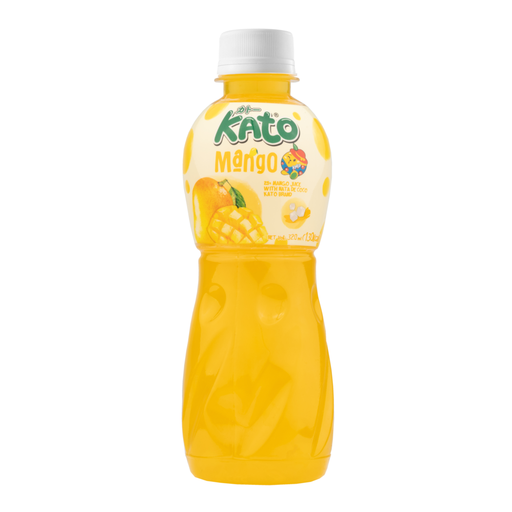
Why it stands out: Here, KATO goes all-in on indulgence. With 25% mango purée and 15% nata de coco, this drink has a rich, smooth texture that's almost like a nectar. The mango flavour is intense, and the consistency is much thicker than juice-based versions.
Key features:
Who is it for? For foodies who love intense fruit flavours and rich, enveloping textures. It's almost like a liquid dessert or a special treat.
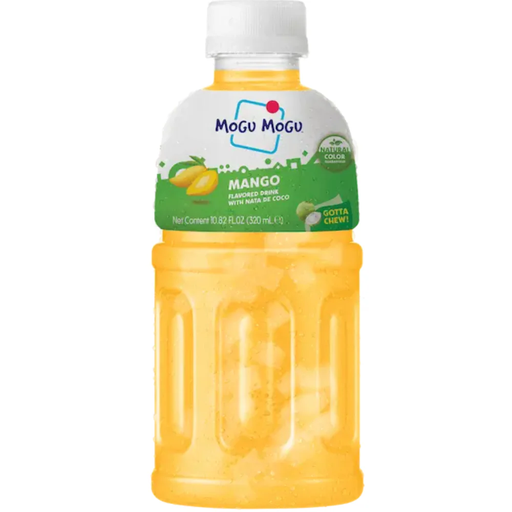
Why it stands out: Mogu Mogu, the undisputed star of the category, needs no introduction. Mogu Mogu Mango is often the drink that starts it all for many. Its recipe is a timeless, proven classic: a light fruit juice with perfectly tender coconut jelly pieces.
Key features:
Who is it for? For newcomers looking to discover this type of drink, as well as for regulars seeking a dependable favourite. It's the choice that pleases everyone.
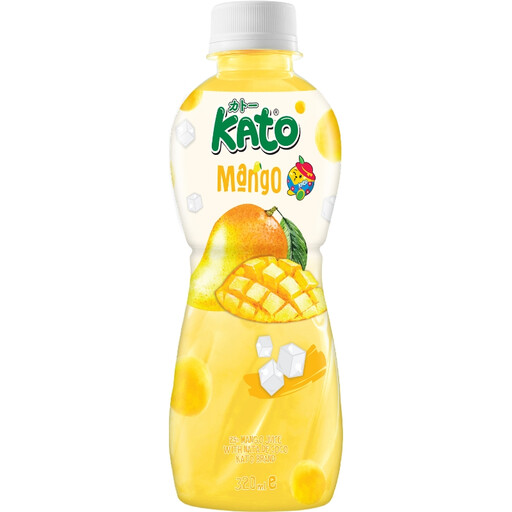
Why it stands out: KATO offers a second version, this time based on 25% mango juice from concentrate. The result is a lighter, more fluid drink than its purée-based cousin. It remains generous with nata de coco (16%) but uses a blend of fructose and sweeteners, which lowers its calorie count to 25 kcal per 100 ml.
Key features:
Who is it for? The perfect alternative for those who love mango but prefer a less dense and lower-sugar drink than the purée-based versions.
Mango is an excellent start. But the world of coconut jelly drinks is a true playground of flavours! Lychee, pineapple, passion fruit, melon... If you have an adventurous palate, you're in for a treat.
Explore our complete collection of fruit drinks with coconut jelly to find your next favourite.
Nata de coco is a chewy, translucent delicacy originating from the Philippines. It is produced through the fermentation of coconut water. Its unique texture, both tender and firm, has made it a star ingredient in desserts and drinks across Asia.
Although Mogu Mogu is the most well-known, the market is far from limited to it! Brands like KATO and Queens offer excellent alternatives, each with its own unique recipes and textures: some are richer and purée-based, while others come in more generous sizes.
The secret to enjoying it to the fullest? Serve it well-chilled, perhaps with a few ice cubes. Most importantly, shake the bottle well before opening to distribute the nata de coco pieces evenly. It makes all the difference