
Livraison le jour même ou le lendemain

Qualité garantie

Débloquez vos offres de bienvenue: Livraison GRATUITE | Jusqu'à -80 % | 30 jours d'essai gratuits à JoyPlus
Téléchargez l'application
Mango mochi ice cream has become the star dessert for anyone looking to combine freshness with an exotic touch. This small Japanese delicacy captivates with its unique contrast between an ultra-soft, chewy rice dough shell and an intense sorbet core. But be warned: not all options on the shelf are created equal, and disappointment is often just around the corner. To help you avoid any unpleasant surprises, we've broken down the common pitfalls and the tell-tale signs of quality.
With the growing craze for this dessert, shelves are overflowing with products of varying quality. Here are the most common let-downs that can ruin the experience:
To ensure you make the right choice, here are the key points to check on the packaging.
The core of the mochi sets the tone. There are two main schools of thought:
The one indicator that never lies? The percentage of mango purée. Aim for over 20% to ensure you're getting an authentic and natural taste.
The outer layer, or glutinous rice dough, is the mochi's signature. It must be thin, supple, and just elastic enough. A very specific type of glutinous rice flour gives it this unique texture. A quality product can be identified by its dough, which softens in a few minutes at room temperature to become perfectly chewy without ever being sticky or pasty. This is what distinguishes a true iced daifuku from a simple frozen dessert.
If you're looking for a vegan mochi ice cream or have intolerances, deciphering the label is a non-negotiable step.
Rather than an exhaustive list, we've selected three gems that meet specific expectations. There's a perfect mochi for everyone!
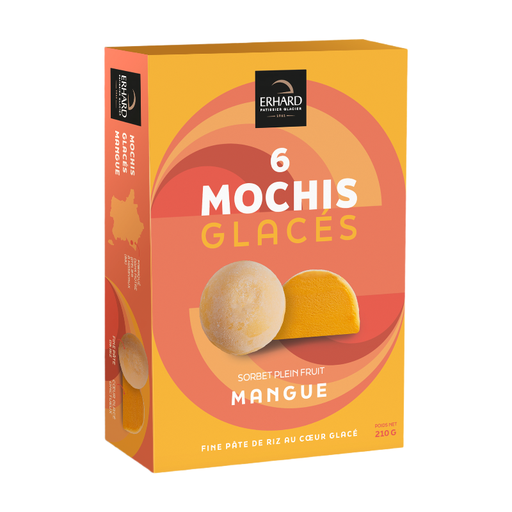
Why we chose it: For those who want the true taste of the fruit, without compromise. Made in France by a master ice cream maker, this mochi bets everything on an exceptional sorbet for an intense and authentic experience.
It knocks out artificial flavours with a filling that contains 28% mango purée. A record-breaking amount that guarantees a rich and natural flavour.
A pure sorbet recipe with no dairy products, which lets the fruit take centre stage. The expertise of a French ice cream maker does the rest.
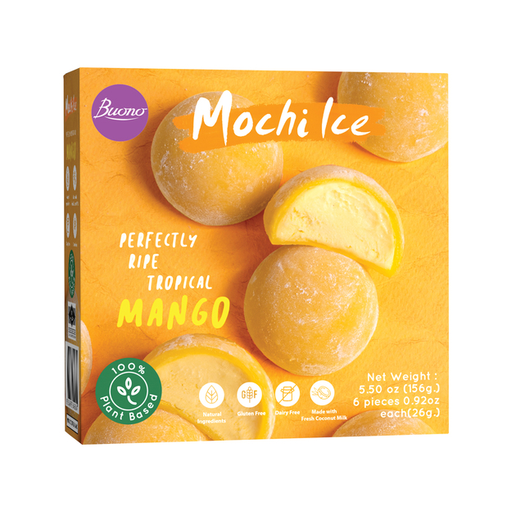
Why we chose it: The perfect choice for vegan or lactose-free diets that doesn't sacrifice on indulgence. Its plant-based recipe offers a stunningly creamy alternative.
It sidesteps the pitfall of hidden ingredients. The label is crystal clear: a filling based on coconut milk, for a recipe guaranteed to be free of any dairy products.
The creaminess and exotic touch of coconut milk, which pairs perfectly with mango. A bonus: it's also Halal certified.
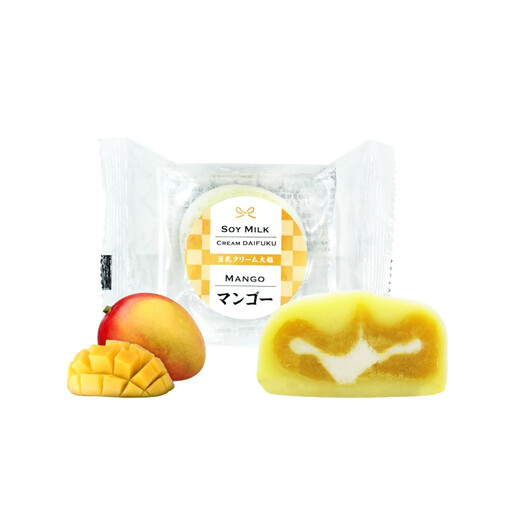
Why we chose it: For those who have mastered classic mochi ice cream and want to venture towards a texture closer to daifuku, the original Japanese dessert.
It avoids the simplicity of a sorbet ball by offering a two-part filling: a creamy soy milk cream and a molten mango core. Double the texture, double the pleasure.
A tasting experience that is off the beaten path and closer to an authentic daifuku. The combination of soy milk and mango is as surprising as it is balanced.
Discover our complete selection of mango mochi that meet our quality standards and current regulations.
The secret to the perfect tasting experience? Take your mochi out of the freezer 2 to 5 minutes before eating. This short resting time allows the rice dough to regain its signature softness without giving the icy core time to melt.
Although the two are often confused, there is a nuance. Classic mochi ice cream contains a simple ball of sorbet or ice cream. Daifuku, on the other hand, is traditionally filled with a sweet paste (like anko, made from red beans). An iced daifuku is therefore a frozen version with a more complex filling: a mousse, a cream, or an insert, which distinguishes it from a simple sorbet.
Far from it! Many recipes include dairy products (milk powder, cream, lactose) to make the filling creamier. If you are vegan, the essential step is to scan the ingredient list for the term vegan mochi ice cream or to check that the filling is a water-based sorbet or made with plant-based milk (coconut, soy).