
Livraison le jour même ou le lendemain

Qualité garantie

Débloquez vos offres de bienvenue: Livraison GRATUITE | Jusqu'à -80 % | 30 jours d'essai gratuits à JoyPlus
Téléchargez l'application
With MagSafe, charging your iPhone has become effortless. A simple magnetic "snap," and you're all set. This simplicity has given rise to a market that is as booming as it is confusing. Because while many wireless chargers promise the world, they are far from equal.
As the head of product selections at Joybuy, my mission is to cut through the noise for you. Before you make a purchase, it's crucial to know the common pitfalls that can turn a smart buy into a real headache.
To make the right choice, forget the marketing claims for a moment and focus on a few technical specifications that don't lie.
The term "MagSafe compatible" is everywhere, but it guarantees nothing. The real seal of approval to look for in 2026 is Qi2 certification (pronounced "chee two"). This is the new universal standard from the Wireless Power Consortium, which natively integrates Apple's magnetic profile.
A certified Qi2 charger guarantees two essential things:
Choosing a Qi2 model is an investment in performance and future-proofing.
A 15W wireless iPhone charger can only deliver its full power if it's connected to the right wall adapter. Most models require a USB-C power adapter of at least 20W (often sold separately). Using your old 5W or 12W charger will throttle the speed, even with the best wireless charger in the world. So, always check if the adapter is included, and if not, make sure you have one on hand.
The ideal form factor depends entirely on your habits:
Here are a few models that check all the boxes, each tailored to a specific need.
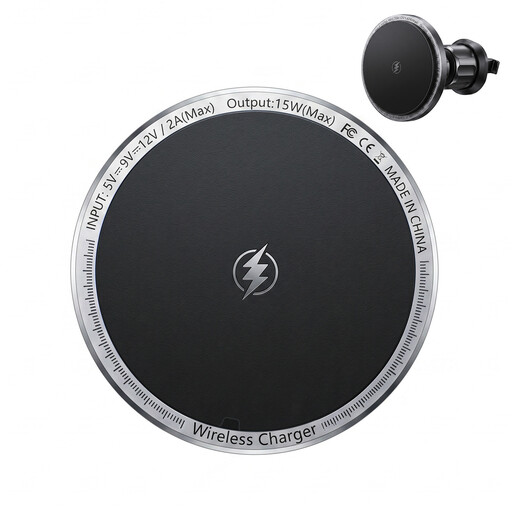
Why we chose it: Designed for the road, it lets you mount and charge your iPhone with one hand. Your GPS stays visible and your phone stays charged, even on long trips. Its compact air vent design doesn't obstruct your view.
It integrates a metal heat sink to manage overheating, a real issue in a sun-baked car interior. Its powerful magnets ensure a rock-solid grip, even on bumpy roads.
It delivers 15W of power for efficient charging, whether the trip is short or long. The added bonus? Its ambient LED lighting adds a modern touch to your car's interior.
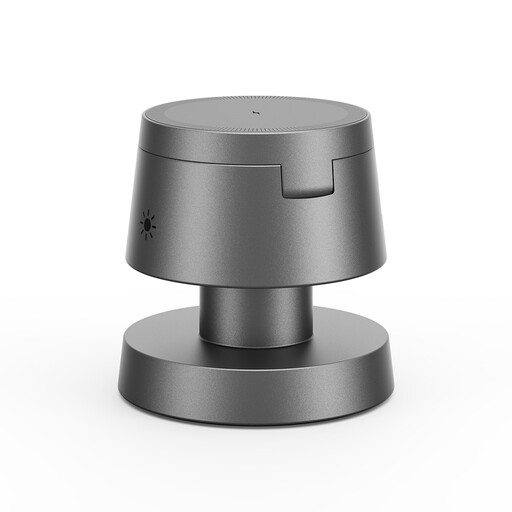
Why we chose it: Perfect for decluttering a nightstand or desk. It centralises charging for your iPhone, Apple Watch, and AirPods on a single base, which also serves as an adjustable stand for video calls.
It uses independent charging modules to ensure stable power without overheating or interference. Its weighted base provides perfect stability, unlike overly light stands that can tip over with the slightest touch.
It combines 4 functions: charger for phone, watch, and earbuds, plus an ambient night light. The stand is tiltable (from 0 to 65°) to find the perfect viewing angle.
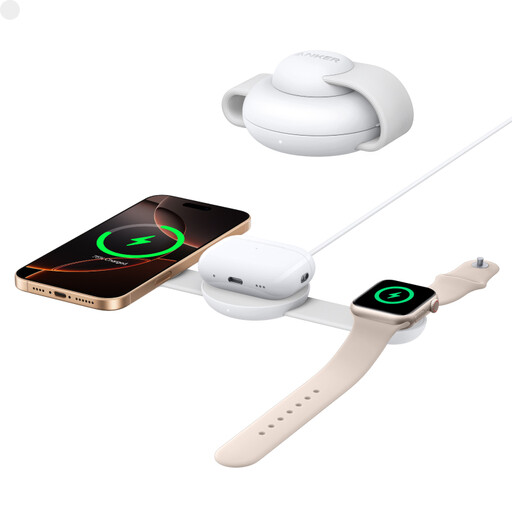
Why we chose it: Its foldable, ultra-compact design makes it the ideal travel companion. It simultaneously charges an iPhone, Apple Watch, and AirPods with a single device, saving precious space in your luggage.
As a Qi2-certified charger, it guarantees true 15W fast charging, a far cry from the random performance of non-certified models. Bonus: the 40W adapter is included for optimal power right out of the box.
An ultra-portable 3-in-1 solution. It's also certified for Apple Watch fast charging, a rare feature for third-party chargers.
We have curated a complete selection of products that meet our selection criteria and European safety standards.
A "MagSafe compatible" charger simply has magnets for alignment. It doesn't guarantee a 15W charging speed or compliance with the latest safety standards. In contrast, a Qi2-certified charger has passed a battery of tests to validate its alignment, 15W power delivery, and thermal management. It's a true guarantee of quality and performance.
No, not if you choose a quality, certified charger. Modern charging systems, like those in iPhones and Qi2 chargers, communicate constantly to adjust power and manage temperature. The real risk comes from low-end chargers that overheat. Repeated, excessive heat is the number one enemy of a battery's lifespan.
Yes, this is a crucial point. To reach 15W, your MagSafe wireless charger or Qi2 charger must be connected to a USB-C Power Delivery (PD) power adapter of at least 20W. With a less powerful adapter, the charger will work, but much more slowly. So, always remember to check if the adapter is included.