
Livraison le jour même ou le lendemain

Qualité garantie

Débloquez vos offres de bienvenue: Livraison GRATUITE | Jusqu'à -80 % | 30 jours d'essai gratuits à JoyPlus
Téléchargez l'application
Waze, Spotify, hands-free calls... our smartphones have become our daily co-pilots. To keep them in sight and fully charged, the MagSafe car charger has emerged as the go-to solution, finally freeing us from tangled cables. The problem? The market is flooded with models making alluring marketing promises, but their real-world performance often leaves much to be desired.
As a product selection expert at Joybuy, my mission is to guide you through this jungle. Together, we'll break down the 3 common pitfalls that can turn a good deal into a disappointment and define the key criteria for making the right choice with confidence.
A sleek design or a rock-bottom price shouldn't distract you from what's essential. Behind these marketing claims often lie flaws that make the charger frustrating, or even unusable, on a daily basis.
To be confident in your investment, here are the three points to examine closely. This is what separates a quickly forgotten gadget from a reliable accessory that will serve you for years.
A true wireless fast car charger must, above all, deliver stable power.
The mounting system will depend on your car's interior and your preferences. But the goal is always the same: rock-solid stability.
A good wireless car charger is more than just a magnet. It must have built-in electronic safeguards to protect your smartphone.
Rather than a simple list, we've selected three models that meet our demanding criteria, each tailored to a specific user profile.
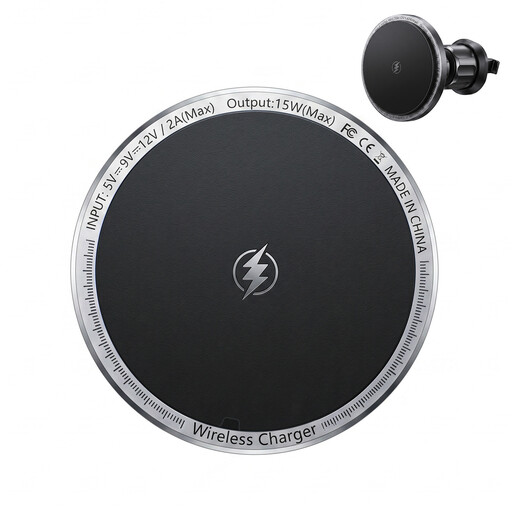
Why we chose it: Perfect for daily commutes, this model gets straight to the point: efficient charging and a flawless grip. Its compact air vent design keeps your field of view clear and your dashboard uncluttered.
It integrates a metal heat sink to manage temperature and maintain a stable charging output. Say goodbye to the "fake" fast charging trap.
15W power for efficient charging. Optimised magnetic alignment for iPhone 12 and newer, ensuring a rock-solid grip.
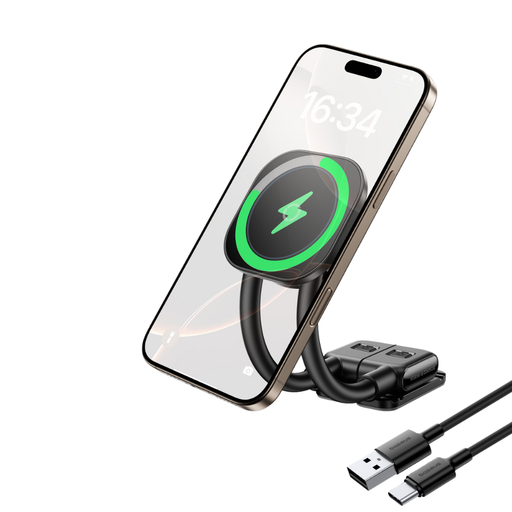
Why we chose it: Ideal for those who juggle between multiple vehicles or simply want options. This model is a true Swiss Army knife: it includes both an air vent mount AND a dashboard adhesive mount.
By providing two reliable mounting systems, it avoids the pitfall of a single, flimsy mount that is often incompatible with certain dashboards.
Versatile installation (vent or dashboard). 360° rotating head for the perfect viewing angle and 15W MagSafe-compatible wireless charging.
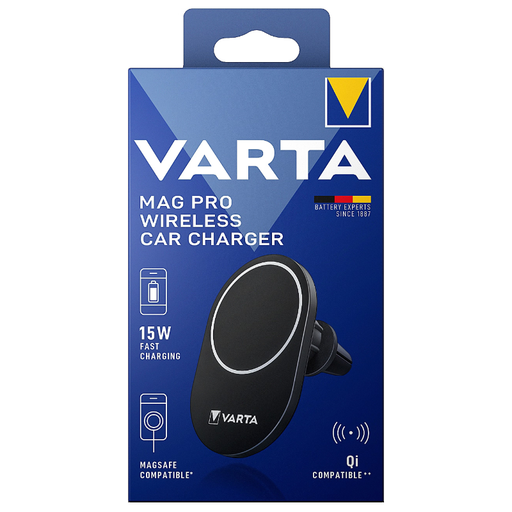
Why we chose it: For those who make no compromises on quality and durability. The VARTA name itself is a seal of quality and performance, especially regarding the safety of its electronic components.
It counters the pitfalls of power and sturdiness with a high-resistance polymer construction and state-of-the-art thermal management. The result: 15W charging that doesn't falter and an impeccable magnetic hold.
Official Qi certification guarantees universal compatibility and safe charging. Premium materials and a 2-year manufacturer's warranty.
We have put together a complete selection of products that meet our selection criteria and European safety standards.
Can a MagSafe car charger damage my iPhone's battery? No, provided you choose a quality charger with the necessary protections. Certified models (CE, RoHS) include safeguards that prevent overheating, overvoltage, and overcharging. Apple's MagSafe technology is also designed for the iPhone and charger to communicate to adjust power and preserve the battery. The real risk comes from cheap, no-name chargers that ignore these safety standards.
Is an air vent mount safe for my car? Yes, if the model is well-designed. The best air vent mounts use a hook system that locks behind a vent blade, offering far superior stability than a simple clip. The pressure is distributed more evenly, which protects the vent's plastic. Avoid models that just pinch the blade without a locking mechanism.
Do I need a specific car charger adapter to get 15W fast charging? Yes, and this is a crucial and often overlooked point. For a magnetic iPhone car charger to deliver its full 15W, it must be connected to an adequate power source. Specifically, you need a car charger adapter with a USB-C port and a power output of at least 20W, compatible with the Power Delivery (PD) standard. Your car's standard USB-A port is far too weak and will throttle the charging speed.