
Livraison le jour même ou le lendemain

Qualité garantie

Débloquez vos offres de bienvenue: Livraison GRATUITE | Jusqu'à -80 % | 30 jours d'essai gratuits à JoyPlus
Téléchargez l'application
Magnetic products cover a wide range of uses: holding a smartphone during a journey, protecting a phone, building shapes with a child, positioning a metal part or extracting a spark plug. This versatility can really simplify everyday life, but it also makes choosing the right product more tricky.
A product listing might boast a "powerful" magnet, "universal" compatibility or great durability without specifying the conditions under which these claims hold true. Before placing an order, it's worth keeping three common pitfalls in mind.
The N52 rating indicates the quality of the magnetic material, but it alone doesn't guarantee reliable hold in every situation. The weight of the object, the thickness of the case, vibrations and the orientation of the magnet all matter just as much.
A magnetic car phone mount attached to an air vent won't behave the same way on a smooth road as it will on a rough surface. The shape of the clip, the locking mechanism and the contact surface area are therefore just as important as the magnet's strength.
A MagSafe-compatible case isn't automatically suitable for every phone. For a MagSafe iPhone 17 Pro case, check the model carefully: the iPhone 17 Pro and iPhone 17 Pro Max have different dimensions. The same vigilance applies to a MagSafe Galaxy S26 Ultra case: its cut-outs and magnet alignment must match your smartphone precisely.
Models without a magnetic ring can sometimes accommodate a self-adhesive metal ring. However, this can thicken the overall setup, interfere with wireless charging or leave marks on the case.
Claims about shock resistance, durability or safety usually relate to very specific test conditions. They don't exempt you from following the usage precautions. A powerful magnet can, in particular, interact with certain medical devices: keep it at a safe distance in line with the manufacturer's warnings.
For toys, check the recommended age, the condition of the pieces and the presence of the CE marking where required. Magnetic parts should never be left within reach of a child who might put them in their mouth.
For a phone mount intended for an air vent, measure the width of the clip and make sure your vehicle's vent blades can support this type of fixing. A model with a metal clip and a rotating lock will often be more stable than a simple hook, but don't force it on a fragile vent.
With a suction cup mount, the surface needs to be smooth, clean and sufficiently flat. On a windscreen or dashboard, check the compatibility stated by the manufacturer and avoid overtightening the mechanism.
Accessories exposed to impacts or heat need to be made from suitable materials. Aluminium is common on a compact magnetic spirit level, while chrome-vanadium steel is better suited to mechanical tools that undergo significant stress.
A 115 mm level with a V-base can be positioned on tubes and other curved surfaces. A stated accuracy of 0.5 mm/m provides a concrete benchmark, provided you protect the tool from drops and clean its magnetic base regularly.
For a magnetic spark plug socket, compare the diameter, drive square and length. A 14 mm socket with a 3/8-inch drive, thin wall and 360° articulation can make it easier to access tight spaces. However, it must match the spark plug and the wrench you're using exactly.
A magnetic construction toy is chosen based on the size of the pieces, the strength of the assemblies and the child's age. ABS tiles with rounded edges are easier to handle, but it's still essential to inspect the pieces after a drop.
A 32-piece set in a metal tin makes storage and transport easier. A 50-piece set multiplies the geometric combinations. For a first introduction, a 36-piece mini set can be easier for little hands to manage, as long as you respect the recommended age on the product listing.
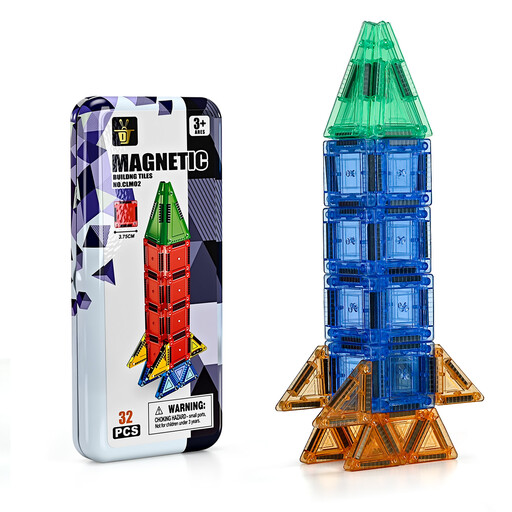
Why this choice suits this profile: Its compact format is ideal for families who want to discover educational magnetic tiles at home and on the go.
The metal tin helps prevent lost pieces, while the 32-piece set avoids paying for an overly large assortment on a first purchase.
32 pieces, 3.75 cm square tiles and ABS material with rounded edges, according to the product listing.
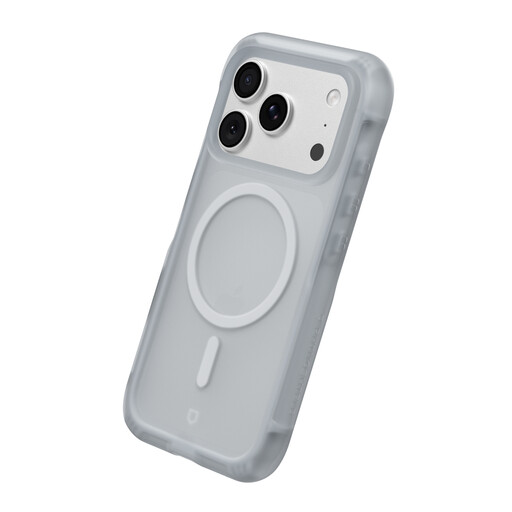
Why this choice suits this profile: This case is aimed at iPhone users who want robust protection without giving up magnetic accessories.
Compatibility is explicitly stated for the iPhone 17 Pro, reducing the risk of accidentally choosing a case meant for the Pro Max model.
Multi-layer construction, shock-absorbing chambers and MagSafe compatibility as stated by the manufacturer.
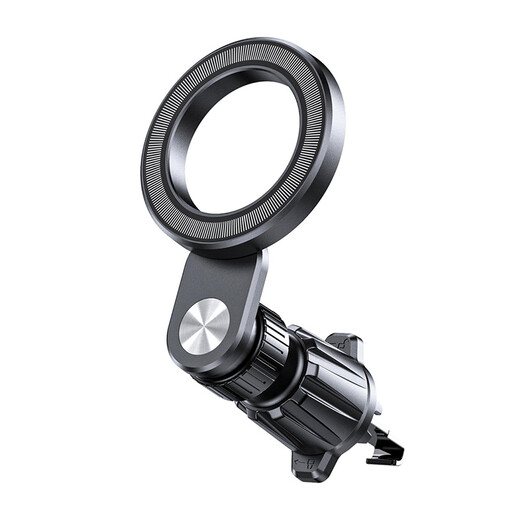
Why this choice suits this profile: Drivers who regularly use sat-nav will appreciate the adjustable orientation and the reinforced fixing on the air vent.
The metal clip and rotating lock support the N52 magnet, rather than relying solely on adhesive strength.
360° rotation, support for MagSafe and metal rings, with a stated one-year guarantee.
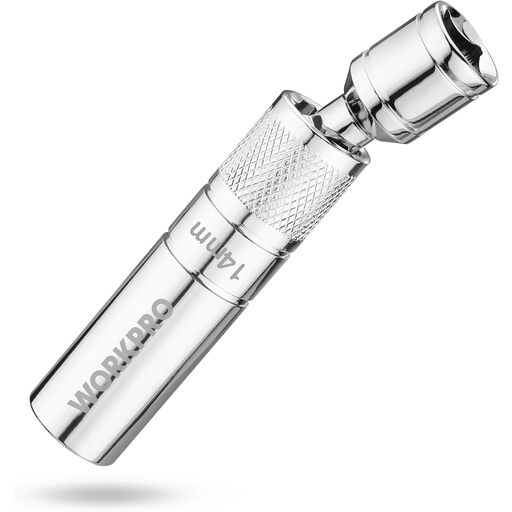
Why this choice suits this profile: Its size is suitable for maintaining cars, motorbikes and small engines where the spark plug is hard to reach.
The 14 mm diameter, thin wall and 12-point drive are clearly stated, allowing you to check compatibility before ordering.
Heat-treated chrome-vanadium steel, 3/8-inch drive, integrated magnet and 360° articulation.
We've compiled a comprehensive, real-time updated selection of products that meet these demanding criteria and European safety regulations.
No. It may work directly with a MagSafe-compatible device or require the addition of a metal ring. Check the thickness of the case, the position of the ring and the weight of the phone. Compatibility stated for an iPhone doesn't automatically apply to a Galaxy, and vice versa.
It all depends on their exposure to impacts, heat and moisture, as well as the quality of manufacture. A magnet doesn't consume electricity and therefore doesn't need recharging. However, its hold can diminish with a case that's too thick, a dirty surface or a worn fixing mechanism. Tools should also be protected against corrosion.
That depends on the product listing and labelling. Even when a toy is marked as suitable for children aged 3 and over, use it under supervision, especially if the pieces are small. Respect the recommended age, check the integrity of the parts regularly and never leave a child to handle a loose magnet.