
Livraison le jour même ou le lendemain

Qualité garantie

Débloquez vos offres de bienvenue: Livraison GRATUITE | Jusqu'à -80 % | 30 jours d'essai gratuits à JoyPlus
Téléchargez l'application
A magnetic building set for children can keep them entertained for an entire afternoon, support early geometry learning, and provide the backdrop for countless stories. But the number of pieces or attractive colours alone aren't enough to make the right choice. The size of the pieces, how well the magnets hold, the variety of shapes, and the storage solutions all play a direct role in everyday use.
Here are the main pitfalls to avoid and the criteria to check before buying magnetic tiles, magnetic building blocks, or a set with a castle, house or villa theme.
A 150-piece set might seem more appealing than a 50-piece set. However, if most of the pieces are the same shape, your child's constructions will quickly become limited. To build a house, a castle or a 3D structure, check for squares, triangles, roof pieces, connectors and accessories.
Smaller sets are ideal for a first introduction. A more comprehensive set, on the other hand, is better for playing with others or for building more complex structures over time.
Dimensions affect both how easy the pieces are to handle and the level of detail you can achieve. Tiles of 7.5 cm are generally easy for small hands to grasp and allow for clearly visible structures. Pieces of 2.5 cm enable more precise creations but require greater dexterity.
For a building toy for children aged 3 and up, always check the manufacturer's recommended age and look out for any small parts. This guidance does not replace adult supervision.
A strong magnetic pull can help a structure stay in place, but the key factor is how securely the magnets are housed. The product description should explain how they are integrated, for example through welding or a permanent seal. Also inspect the pieces regularly: a crack, deformation or visible magnet means you should stop playing with the toy immediately.
Swallowing several magnets can cause serious internal injuries. Magnetic pieces must therefore be kept out of reach of children under 3 years old and should never be put in the mouth.
For creative 3D play, choose a set that includes several geometric shapes. 7.5 cm sets are suitable for large constructions: houses, garages, towers or villages. 5.5 cm models offer a good compromise, while miniature 2.5 cm sets encourage detail work and are easier to transport.
Compatibility claims deserve careful attention. Two sets will only fit together properly if the piece size, magnet polarity and connection system match. A set that is compatible with other sets of the same size can be useful for gradually expanding your collection.
ABS plastic is commonly used to make magnetic tiles. Look for smooth edges, no burrs and clear information about the materials used. For purchases in the UK, the EN 71 standard governs toy safety within the European Union. The REACH regulation covers chemical substances, but it doesn't replace the need to check the actual condition of the toy.
Some product descriptions also mention American standards, such as ASTM or CPC. These are compliance statements for the specific product, not a general guarantee valid for all magnetic toys.
A bag or box helps prevent lost pieces and makes tidying up after each play session simple. Clean the pieces with a slightly damp cloth, following the manufacturer's instructions, then dry them thoroughly. Avoid immersion, abrasive products and excessive heat, which could damage the plastic or internal components.
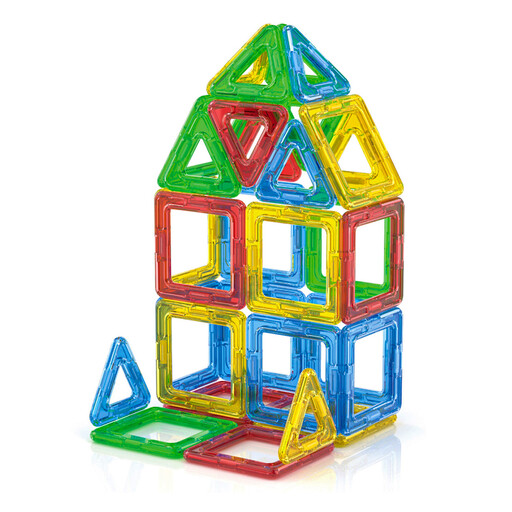
Why this choice suits this profile: With its 36 pieces, this set is perfect for a first building activity. Its lightweight pieces and colourful box also make it an easy birthday gift idea.
The number of pieces is clearly stated, and this entry-level format avoids buying an oversized set for a child who is just starting out.
36 pieces, ABS plastic and storage in a colourful box, according to the product description.
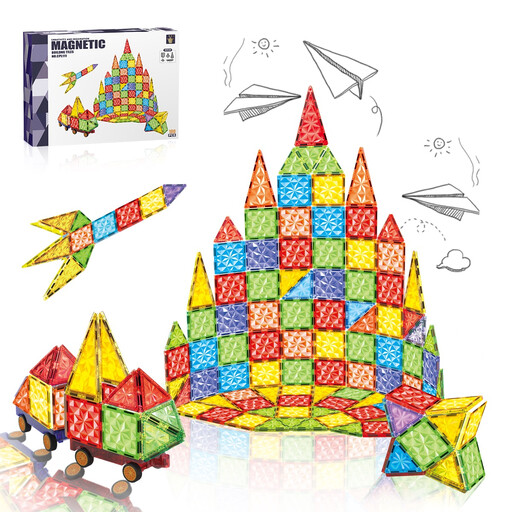
Why this choice suits this profile: Its 100 large-format pieces allow for building more impressive structures and playing together, both at home and in an educational setting.
The advertised variety of shapes is better suited to house, castle and 3D structure projects than an assortment of identical pieces.
100 pieces of 7.5 cm, storage bag and magnets described as encapsulated within the tiles.
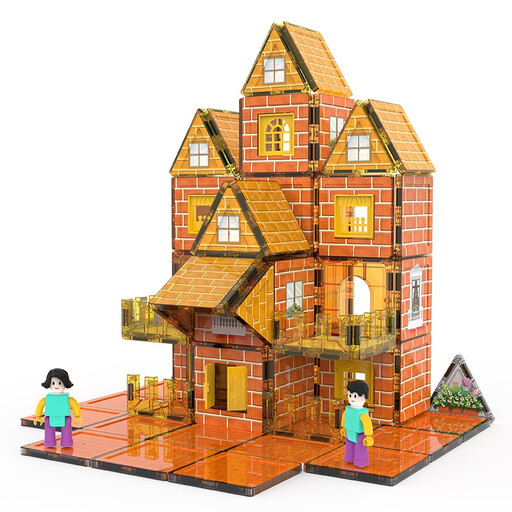
Why this choice suits this profile: The villa theme structures role-play and is ideal for children who enjoy recreating the same scenes, alone or with an adult.
The theme and roof pieces provide a concrete goal, while still leaving plenty of freedom to invent your own constructions.
81 pieces, 7.5 cm format, storage bag and manual assembly with no batteries required, according to the product description.
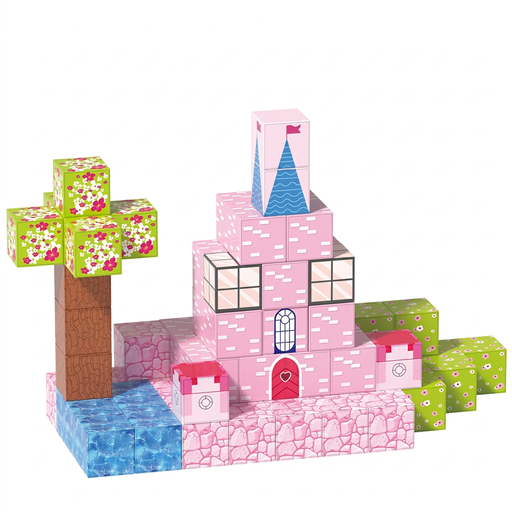
Why this choice suits this profile: Its compact size slips easily into a bag for playing at a restaurant, while travelling or at friends' houses, with a castle and princess theme.
The storage box and small dimensions keep clutter to a minimum, while the theme provides an instantly recognisable play setting.
78 pieces of 2.5 cm, easy-to-carry box and advertised compatibility with other sets of the same size.
We've compiled a comprehensive, real-time selection of products that meet these criteria and European safety requirements.
A set of 28 to 50 pieces is generally suitable for a first introduction or occasional use. For building houses, towers and multi-player scenes, a set of 67 to 100 pieces offers more possibilities. However, the number of pieces should be considered alongside the variety of shapes on offer.
The models shown are listed as suitable from age 3 on their product descriptions, but they contain small parts and strong magnets. Children should play under supervision and never put the pieces in their mouths. Inspect the casings regularly and set aside any damaged pieces.
Store all pieces in the provided bag or box, avoid water and high temperatures, and clean them according to the manufacturer's instructions. To keep play interesting, offer progressive challenges: copy a shape, build a villa with an entrance, then invent a story around the structure.