
Livraison le jour même ou le lendemain

Qualité garantie

Débloquez vos offres de bienvenue: Livraison GRATUITE | Jusqu'à -80 % | 30 jours d'essai gratuits à JoyPlus
Téléchargez l'application
Choosing magnetic building blocks for children isn't just about looking at the number of pieces on the box. Between the spectacular constructions shown on the packaging, the promises of STEM learning and the sets that all look the same, it's easy to end up with a toy that's poorly suited to the child's age or impractical for everyday use.
Whether for a birthday, Christmas or a home activity, three pitfalls keep cropping up:
A well-chosen set therefore needs to take into account the child's age, the composition of the set, the stated durability and the type of constructions they want to build.
To choose magnetic blocks for ages 3 and up, check the manufacturer's recommended age, but also look out for any small parts, wheels or detachable accessories. Magnets are never harmless: a child must not put them in their mouth. When necessary, use should always be under adult supervision.
The CE marking must appear on the product or its packaging. It indicates a declaration of conformity with applicable European requirements, but does not replace reading the instructions, checking the recommended age or reviewing the warnings. For a purchase in the UK, also look for the contact details of the manufacturer or importer established within the European Union.
ABS magnetic bricks are very common thanks to their rigid surface and ease of cleaning. Rounded edges generally make handling more pleasant, especially during long building sessions. However, you should check that the pieces have no cracks, deformations or accessible magnetic parts.
When mentioned by the manufacturer, ultrasonic welding relates to the assembly of certain pieces. It does not replace regular checks: replace any damaged element or any piece where the magnet seems to be moving.
An 85 to 150-piece set generally opens up more possibilities than a small set, but the composition matters just as much as the quantity. A variety of shapes — squares, triangles, curved pieces, wheels or decorative elements — allows you to build houses, vehicles, animals or three-dimensional structures.
For a first magnetic building set, a simple set often makes it easier to get started. A child who is already used to building will get more out of a 100 or 150-piece set, especially for longer projects or playing together with siblings.
The options below cater to different uses. They are based on the features stated for each product; always check the product page, recommended age and instructions before placing an order.
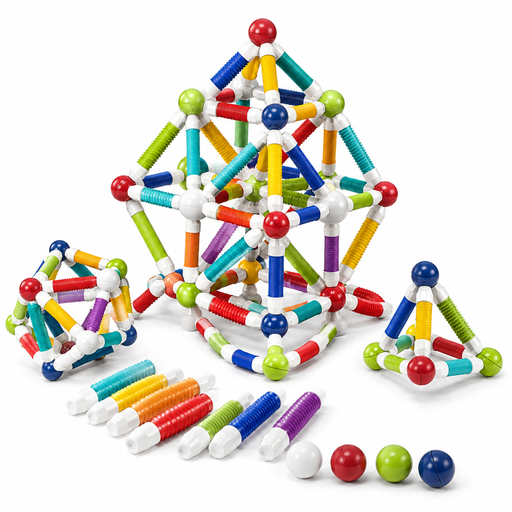
Why this choice suits this profile: With its 85 pieces and gift box, this set offers an affordable entry point into the world of magnetic construction for a child who is discovering the activity.
The number of pieces is clearly stated, making it easier to compare with sets of a similar size.
85-piece set, stated ABS material and gift box included.
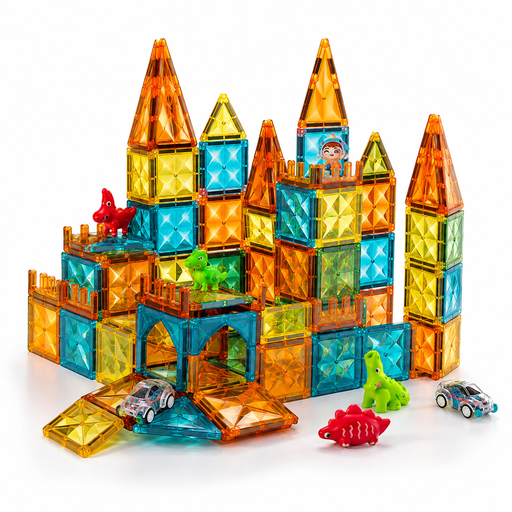
Why this choice suits this profile: The illuminated Ferris wheel adds a storytelling dimension to the constructions. It can appeal to a child who enjoys creating scenes and imagining stories.
The product page mentions ultrasonic-welded magnetic blocks; still check the condition of the pieces before each use.
Illuminated Ferris wheel and design stated for children aged 3 to 10 years.
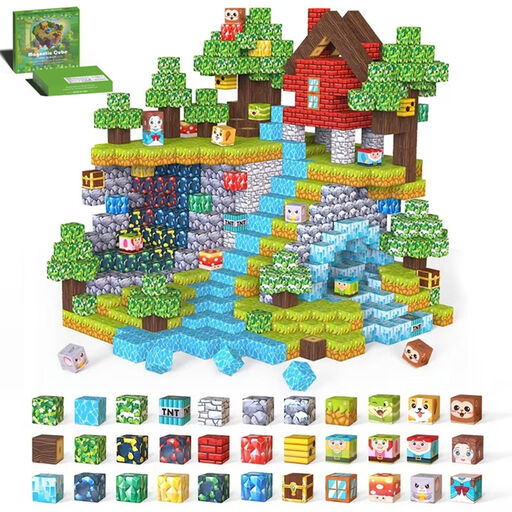
Why this choice suits this profile: With its 150 pieces, this set is ideal for families where several children build together, or for those who want to regularly refresh their creations.
The total number of pieces is stated precisely and the mention of certified ABS appears in the product name; check the documents available on the product page.
150-piece set and stated STEM learning orientation.
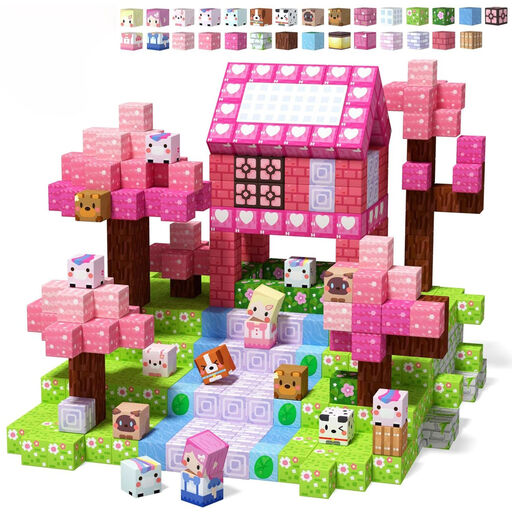
Why this choice suits this profile: The unicorn theme and the 29 tree models stated can fuel role-play and storytelling.
The theme is clearly displayed: this set will suit a child drawn to a specific theme more than someone looking for completely versatile pieces.
100 pieces, 29 tree models stated and recommended age from 3 years.
We've put together a comprehensive list, updated in real time, of products that meet these demanding selection criteria and European safety regulations.
To keep a creative and educational toy in good condition, store the pieces in a closed box and regularly check the magnets, welds and edges. Avoid storing them near a heat source or a device sensitive to magnets. Cleaning should follow the manufacturer's instructions; when a product is stated as washable, use a gentle method and dry each piece thoroughly.
Activities can evolve with age:
These exercises can help develop fine motor skills and spatial imagination, without turning play into schoolwork.
Some sets are indicated for ages 3 and up, but the recommended age alone is not enough. Check the warnings, verify the size of the pieces and supervise the child during the first uses. The magnets must remain enclosed inside the designated elements.
An 85 to 100-piece set can be suitable for discovering the concept without ending up with a mountain of pieces. A 150-piece set becomes interesting when the child builds often, shares the toy with another child or wants to create larger structures.
Compare the stated age, the material, the variety of shapes, the storage system and the compliance information. Also check that the pieces match the child's abilities and that the recommended level of supervision is compatible with how you plan to use it at home.