
Livraison le jour même ou le lendemain

Qualité garantie

Débloquez vos offres de bienvenue: Livraison GRATUITE | Jusqu'à -80 % | 30 jours d'essai gratuits à JoyPlus
Téléchargez l'application
A lunch box may seem straightforward to choose… until the first lid leaks in your bag, sauce slips between the compartments or the container turns out to be too bulky for the refrigerator. Parents, students and professionals often look for a versatile solution, but product pages do not always provide the details that truly matter in everyday use.
Before buying a lunch box, bento box or airtight food container, check three points : actual use, compatibility with your kitchen appliances and ease of cleaning. Here are the criteria to review carefully to avoid impractical purchases, along with a selection of recommended models for 2026.
A pressure-fit lid may keep a sandwich or fruit in place without being designed to carry soup. Similarly, a compartmented lunch box may prevent foods from mixing without stopping liquids from passing from one section to another.
For dishes with sauce, look for an airtight food container with a silicone seal and a clearly described locking system. For a dry snack, a clip closure may be sufficient. In all cases, read the product page carefully : the presence of a lid alone does not guarantee leakproofing.
The statement “ microwave-safe ” often applies to the container, but not the lid. Stainless-steel models, including steel lunch boxes, should not be placed in a microwave oven. With plastic containers, the lid generally needs to be removed or left ajar so steam can escape.
A microwave-compatible lunch box must therefore be used in accordance with the manufacturer’s instructions. Borosilicate-glass models are suitable for reheating when this feature is explicitly stated in the description, as is the case with certain Ovenglass containers.
Removable seals can retain traces of sauce, while lids with multiple clips require more thorough cleaning. A box advertised as dishwasher-safe may still require the seal to be removed for truly comprehensive care.
Before ordering, check whether the lid can be disassembled, whether the various parts can be removed and whether hand washing is recommended. A lunch box that is easy to clean will be considerably more pleasant to use every day, particularly for meals at school or work.
Capacity should match the appetite and type of meal being carried :
Dimensions matter just as much as volume. A stackable or modular box can fit more easily into a bag, drawer or shelf. For school, also consider weight, ease of handling and whether the child can open the clips independently. Models intended for children aged 3 and over should be used with the warnings concerning small parts in mind.
Food-grade plastic is lightweight and practical for meals on the go. If you are looking for a BPA-free box, make sure this feature is explicitly stated. Polypropylene and Tritan are used in many food-storage containers, with compatibility varying from one model to another.
A stainless-steel box stands up well to repeated use, but is generally not microwave-compatible. Borosilicate glass, used for some glass containers, allows you to see the contents and may be suitable for reheating when specified as heat-resistant. It is, however, heavier and may break if dropped.
A compartmented lunch box is convenient for separating foods, but it does not necessarily replace several airtight containers. Check whether the dividers are fixed or removable and whether each compartment has its own lid.
For storage, check the following specifications separately : refrigerator, freezer, dishwasher and microwave. A box compatible with one of these appliances is not automatically compatible with the others.
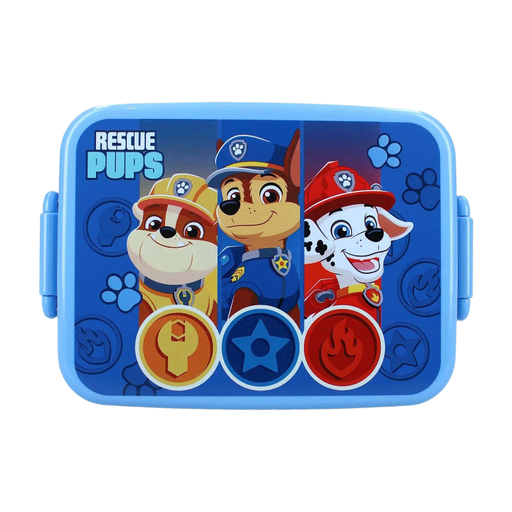
Why this model may suit you : this school lunch box is suitable for children aged 3 and over and can carry sandwiches, fruit or small snacks.
The product page specifies that it uses a pressure-fit closure, must be hand-washed and is not microwave-safe : its limitations are clearly stated before purchase.
Dimensions of 16 × 13 × 5 cm, low weight and durable plastic with a smooth surface.

Why this model may suit you : its format is ideal for individual portions and office lunches. It can also be used for reheating once the lid has been removed.
The product page confirms compatibility with the freezer, microwave and dishwasher : a valuable advantage over stainless-steel containers.
Borosilicate glass, 630 ml capacity, clip closure and stated leakproofing.
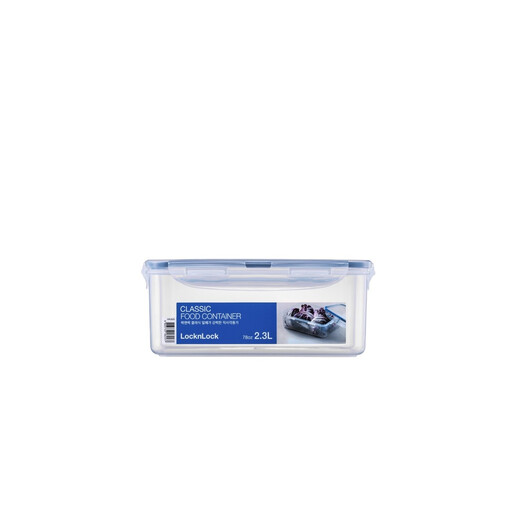
Why this model may suit you : this large container is ideal for batch cooking, leftovers and storing generous portions in the refrigerator.
The four-sided locking system and silicone seal are clearly specified. This makes it easy to distinguish from a simple lid resting on the container.
2.3 litre capacity, plastic advertised as BPA-free, compatible with the refrigerator, freezer, dishwasher and microwave with the lid removed.
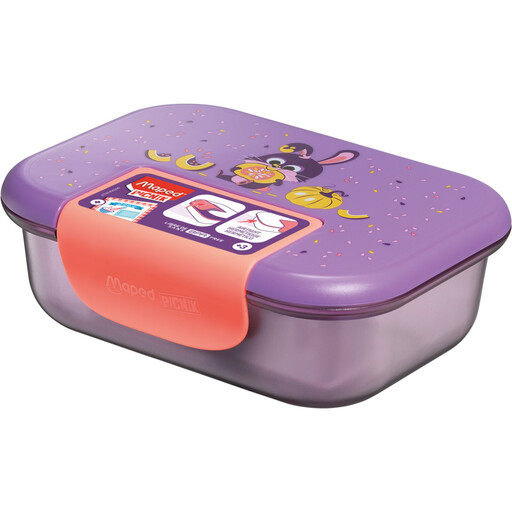
Why this model may suit you : its rectangular format and large fluorescent clip make it easy for a child to handle at school or on a picnic.
The attached lid reduces the risk of losing it, and the product page specifies that the model is not microwave-safe.
Stainless steel, 900 ml capacity, dishwasher-safe and attached clip closure.
We have assembled an updated selection of products that meet these criteria and the safety requirements applicable to the European market.
For an individual meal, a capacity of 600 to 900 ml is generally suitable for a salad, a dish served with vegetables or several prepared items. For a more substantial meal or batch-cooking use, a 1- to 2.3-litre container may be more suitable, but it will be less convenient to carry.
As a general rule, no. The stainless-steel models featured here are not microwave-compatible. To reheat a dish, transfer it to a suitable container, such as certain borosilicate-glass or microwave-safe plastic models. Remove the lid if instructed to do so.
Wash the container after every use, clean the seal regularly and allow all parts to dry before closing the box. Avoid abrasive sponges and inspect the lid, clips and silicone regularly. A crack, deformation or worn seal may compromise leakproofing : replace the affected part or the container.