Parents planning an occasional treat
You want to take a few chocolates from a gift box, without making it the main part of the lunchbox. For children aged 4–17, Manger Bouger recommends limiting sugary and fatty foods in the daily diet.


For a school lunchbox, a premium chocolate box is best kept as a supply to dip into for the occasional treat, rather than used as a ready-to-go lunch portion. Before choosing an assortment, check the allergens for the exact product and set aside a separate portion. If the lunchbox may be exposed to heat on the journey, also consider the storage instructions.
You want to take a few chocolates from a gift box, without making it the main part of the lunchbox. For children aged 4–17, Manger Bouger recommends limiting sugary and fatty foods in the daily diet.
If the box contains several recipes, check the label on the exact product. EU labelling rules require allergens present in the ingredients list to be highlighted.
If the lunchbox will be in a school bag or a hot vehicle, the presentation on the box alone is not enough to guide your choice. Lindt says chocolate softens more quickly above 25 °C.
For a lunchbox, first decide how much to take, then check the ingredients of the specific product and the conditions during the journey.
| Consideration | What to check | Who is this for? |
|---|---|---|
| How much to take | Net weight, number of chocolates and whether you can prepare a separate portion. | When a box is for several occasions, I prefer to decide in advance what will go in the lunchbox. Around 42% of consumers in this group would prioritise how much to take. |
| Allergens and ingredients | Ingredients list, highlighted allergens and any ‘may contain’ warnings on the exact product. | If a child needs to avoid certain ingredients, checking the label comes before choosing a variety of recipes. Around 33% of consumers in this group would make this their priority. |
| Transport and presentation | Storage instructions, possible heat during the journey and protection for the chocolates. | If the lunchbox may be left somewhere warm, I want the chocolates to arrive without having softened. Around 25% of consumers in this group would put transport first. |
A sharing assortment doesn’t tell you how much to put in a child’s lunchbox. Manger Bouger recommends limiting sugary and fatty foods in the daily diet of children aged 4–17.
Set aside a small portion in advance and make up the rest of the meal with the foods you usually pack.
Different recipes in the same box may have different ingredients. Carrefour’s product listing for Ferrero Collection mentions milk, nuts, soya and wheat, depending on the recipe. Lindt also says it cannot guarantee that any of its products are completely free from nut allergens.
Check the label on the product you buy and follow any medical or school guidance that applies to the child.
According to Santé publique France, displaying Nutri-Score is voluntary. If it’s not shown, you should still check the nutritional information.
When it appears on comparable products, use it as one point of reference among others. Also check the sugar and fat content per 100 g, as well as the ingredients list.
According to Lindt, chocolate softens more quickly above 25 °C. So a lunchbox left in the sun or in a hot vehicle could affect the texture of the chocolates.
Avoid exposing the chocolates to heat and make sure the container protects them during the journey.
The CHAMPS-ÉLYSÉES range includes assorted boxes that can be kept as a supply to portion out.
Ferrero Collection brings several recipes together in one assortment.
The retailer offers branded boxes and own-brand assortments, which should be checked product by product.
The Marque Repère range includes chocolate and confectionery products to browse, although not all of them are assorted boxes.
This assorted rocher box can be kept as a supply, with an occasional treat set aside separately for the lunchbox.
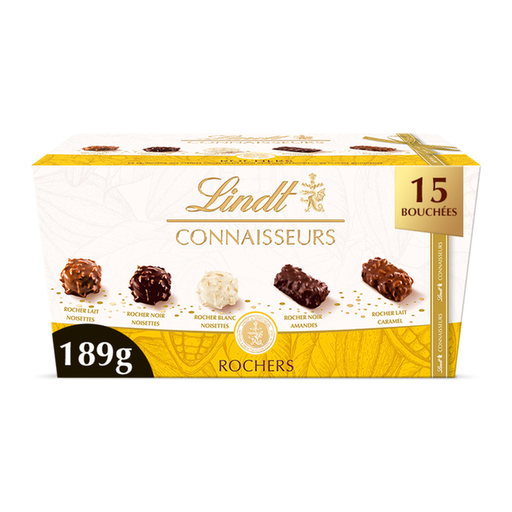 Image unavailable
Keep this box at home and take out the amount you want to put in the lunchbox. It contains 189 g of assorted rochers. Before packing any, check the ingredients and allergens on the packaging, and protect the chocolates from heat during the journey.
No. Santé publique France says that producers choose whether to display Nutri-Score. If it’s shown, it can help you compare similar products; also check the nutritional information and ingredients list.
No, not to a box of solid chocolates. In France, Article 1613 ter of the General Tax Code, published on Légifrance, applies to drinks and liquid preparations for drinks. When comparing chocolates, check the sugar content in the nutritional information instead.
Read the ingredients list, check which allergens are highlighted and look for any ‘may contain’ warnings on the packaging of the exact product. If the child has an allergy, also follow any medical or school guidance that applies to them.
Avoid leaving the lunchbox in the sun or in a hot vehicle, and protect the chocolates during the journey. Lindt generally recommends storing chocolate between 15 °C and 18 °C and says it softens more quickly above 25 °C.