People who prepare their sandwiches in advance
If you make your lunch at home or at work, the jar’s weight matters mainly in relation to how much you’ll use. Also make sure you’ll have bread and something to spread it with at lunchtime.


If you’re having lunch without bread or utensils, a format with breadsticks is easier to eat than a jar. If you prepare your sandwiches in advance, choose an amount you’ll use and check the recipe, allergens and nutritional information for the exact product. A convenient format alone does not make a complete lunch.
If you make your lunch at home or at work, the jar’s weight matters mainly in relation to how much you’ll use. Also make sure you’ll have bread and something to spread it with at lunchtime.
A format that pairs spread with breadsticks can be eaten without a knife or any preparation. Check the whole portion, including the breadstick ingredients.
Check the recipe and any accompanying product separately. In particular, the word ‘plant-based’ alone does not confirm that a specific product is dairy-free.
First decide whether you’ll prepare your sandwiches or need a portion you can eat without utensils. Then check the ingredients of the specific product you’re considering.
| What matters | What to check | Who is it for? |
|---|---|---|
| Jar size | Net weight and how much you expect to use. | I make several sandwiches but don’t want to choose a jar that’s too big for how I’ll use it; around 37% of consumers put choosing the right amount first. |
| Convenience on the go | Whether it comes with something to eat it with, and the weight of the complete portion. | Without bread or a knife at lunchtime, I need something ready to eat. Immediate convenience is the top priority for around 27% of consumers. |
| Ingredients and allergens | The ingredients list and allergen information for the exact product, including any accompanying items. | If an ingredient affects my choice, I need to be able to check the information for everything in the pack; around 18% of consumers prioritise this compatibility. |
| Nutritional information | Values per 100 g and, if shown on the packaging, values per portion. | When putting my lunch together, I want to distinguish the values for the whole product from those for a small amount of spread; around 18% of consumers put nutritional comparisons first. |
According to Santé publique France, Nutri-Score labelling is voluntary. If it appears on the packaging, it can help you compare similar products, but it does not replace checking the ingredients and nutritional information.
In France, Santé publique France states that displaying it is voluntary. If it’s not shown, you should still check the other information on the packaging.
Compare the nutritional values per 100 g and the ingredients lists of products in the same category. The DGCCRF states that nutrition declarations are compulsory for most prepacked foods.
Nutella states that its Plant-Based recipe may contain milk and is not suitable for people allergic to milk proteins.
If milk content affects your choice, read the ingredients and warnings on the packaging of the exact product.
The accompanying product has its own ingredients too. So you can’t infer the contents of an on-the-go pack from those of a jar of spread.
Check the allergens and the values given for the complete unit before choosing this format for lunch.
The brand offers jars, a format with breadsticks and a Plant-Based recipe.
Carrefour offers, among other products, hazelnut spread in jars of different sizes.
The range includes jars of spread in several sizes.
The Auchan range includes cocoa and hazelnut spreads under the Pasta Cao and Pouce names, as well as other recipes.
Aldi sells spreads under several own-brand names, including Tartichoc and Cucina.
This selection includes a format with breadsticks for eating without any preparation, as well as jars to enjoy with bread or another accompaniment. The recipes include hazelnut, pistachio and banana varieties.
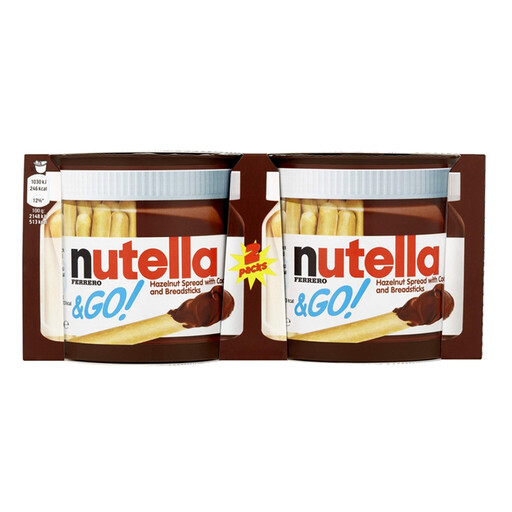 Image unavailable
This pack with breadsticks is a handy choice if you don’t have bread or a knife at lunchtime. Check the ingredients and allergens in both the spread and the breadsticks; the nutritional values for this pack are given per 100 g.
 Image unavailable
This jar is a good option for preparing sandwiches in advance if you expect to use this amount. The Joybuy listing for this product includes hazelnuts and milk among the ingredients. You’ll need something to spread it on, and should check the allergens on the packaging.
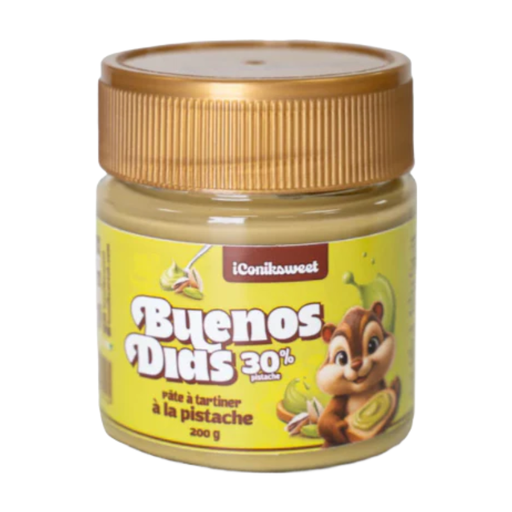 Image unavailable
This jar is for anyone looking for a pistachio spread to enjoy on bread. If you need to avoid certain ingredients, check the allergens and any ‘may contain’ warnings on the packaging of the exact product.
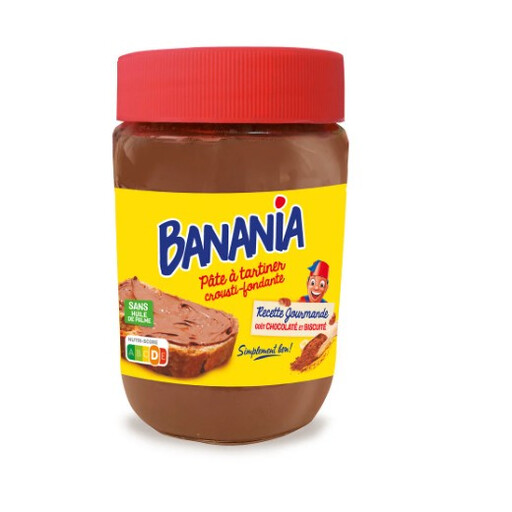 Image unavailable
This jarred spread can be used to make sandwiches before you head out. The ‘no palm oil’ claim distinguishes this variety, but it doesn’t replace checking the full ingredients list and allergen information.
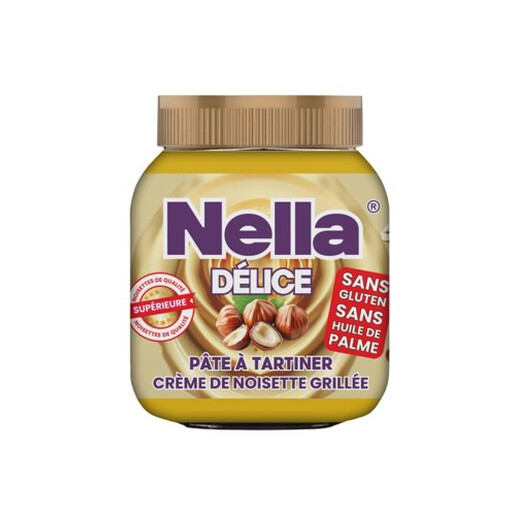 Image unavailable
This 320 g jar is suited to enjoying on bread or another base. The recipe contains hazelnuts and dairy ingredients, so check the jar’s label if their presence affects your choice.
No. Santé publique France says that displaying it is voluntary. The DGCCRF, however, states that nutrition declarations are compulsory for most prepacked foods. Check them to compare values per 100 g.
Choose an amount that suits the sandwiches you plan to make. To decide between two jars, compare their net weight, recipe and the storage instructions on their packaging.
No. Nutella says its Plant-Based recipe may contain milk and is not suitable for people allergic to milk proteins. Check the warnings on the packaging of the exact product rather than relying on the recipe name alone.
It’s a ready-to-eat snack, but its convenient format alone doesn’t tell you whether it makes a complete lunch. Check the portion and nutritional information for the whole unit, then choose the other foods in your meal to suit your needs.