People who often prepare their lunch
If you regularly make sandwiches, the pack weight and number of slices can help you choose an amount you’ll actually use.


To make sandwiches to take with you without buying more bread than you need, start by working out how many meals you’re planning, then check the pack weight and slice size. Pre-sliced bread is a convenient choice if easy preparation is your priority. Fresh or crisp bread offers other options, as long as the format and storage instructions suit your lunch.
If you regularly make sandwiches, the pack weight and number of slices can help you choose an amount you’ll actually use.
If the ingredients matter when you choose bread, check the ingredients list and nutritional information for each product rather than relying on its name alone.
If you need to avoid an allergen, check the exact product and any warnings about possible traces. For bread sold without packaging, ask the retailer for the information available.
For lunch on the go, first choose an amount and slice size that suit what you plan to take with you. The ingredients and allergen information can then help you choose between breads in a suitable format.
| What matters | What to check | Who is it for? |
|---|---|---|
| Lunch budget | The pack weight and how many slices you’ll be able to use. | If I’m preparing several lunches, I want to choose an amount that won’t go to waste. Around 36% of consumers prioritise keeping to their budget. |
| Easy to carry and top | The slice size and how much room you’ll need in your lunch box. | When I’m eating out, I look for sandwiches I can fill and take with me without complicated cutting. Easy preparation and transport come first for around 29% of consumers. |
| Bread ingredients | The ingredients list and nutritional information per 100 g. | If I want wholemeal or seeded bread, I want to know what’s in the product I choose. This is the top priority for around 21% of consumers. |
| Ingredients to avoid | The declared allergens and any warnings about possible traces on the specific product. | If I need to avoid an ingredient, I check the product before considering its format. This is a priority for around 14% of consumers. |
A larger pack is only useful if you can use the slices while they’re still in good condition.
Count the lunches you’re planning, then check the product’s weight, number of slices and storage instructions.
The name of the bread doesn’t tell you everything about its ingredients or whether it’s suitable for a dietary requirement. According to the French Directorate-General for Competition, Consumer Affairs and Fraud Control, allergens are highlighted on the labels of pre-packed foods.
Read the ingredients list for the exact product. For fresh bread, ask the retailer for allergen information.
Carrefour offers sliced bread under its Carrefour Classic', Carrefour Extra and Carrefour Bio ranges, with a choice of recipes and formats.
E.Leclerc offers EPI D'OR sliced bread, including plain, wholemeal and seeded varieties.
Auchan’s range includes plain and wholemeal sliced bread, crustless options and other varieties.
Lidl offers packaged bread as well as bread baked in store at some locations.
ALDI’s range includes MANNAPAIN® sliced bread, crispbread and fresh bread.
Bridor offers ranges of bread and snack products for food service professionals.
If you prefer a crisp base to sliced bread, here’s an option to consider, depending on your filling and any ingredients you need to avoid.
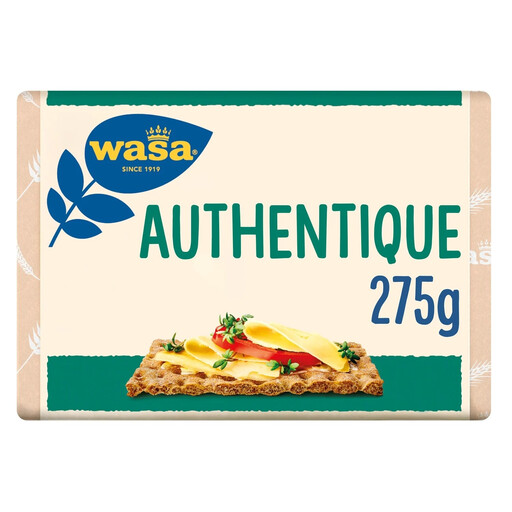 Image unavailable
This crispbread could be a good choice if you’d rather make open sandwiches than sandwiches with sliced bread. The pack contains 275 g; check that the crispbread size suits your filling.
The product information lists rye gluten and possible traces of lupin, milk, mustard, sesame and soya. Once opened, it recommends storing the crispbread in an airtight container.
No. If you’re looking for a wholemeal variety, check the ingredients of the specific product rather than relying on its name alone. When comparing pre-packed products, the French Directorate-General for Competition, Consumer Affairs and Fraud Control states that nutritional information is given per 100 g or 100 ml.
Read the ingredients list and check for any warnings about possible traces on the specific product. According to the French Directorate-General for Competition, Consumer Affairs and Fraud Control, allergens are highlighted on the labels of pre-packed foods. For bread sold without packaging, ask the retailer for the information available.
Start by working out how many sandwiches you plan to make, then check the pack weight, number of slices and their size. Before choosing a larger pack, also check the date shown and the storage instructions for that product.