
Livraison le jour même ou le lendemain

Qualité garantie

Débloquez vos offres de bienvenue: Livraison GRATUITE | Jusqu'à -80 % | 30 jours d'essai gratuits à JoyPlus
Téléchargez l'application
A lunch box should carry a meal without taking up your entire bag, withstand everyday handling and be easy to clean. But an attractive finish or the simple claim that it is ‘airtight’ is not enough to guarantee the right choice. Parents, students and working professionals can quickly end up with a model that is too small, awkward to close or poorly suited to the food being carried.
Here are the key criteria to consider before choosing a bento box, a compartmented lunch box or a simple food storage container.
A clip-on lid may stop a sandwich or fruit from moving around without actually containing liquids. If you want to carry a salad with its dressing, a dish with sauce or a yoghurt, check for a sealing gasket, the type of fasteners and the precise conditions of use.
A box described as airtight is not necessarily suitable for very runny liquids either. If in doubt, it is better to carry the sauce in a small separate container.
Lid grooves, removable seals and fixed dividers can trap food residue. A leakproof lunch box is only truly practical if all its parts can be rinsed and dried properly. Check the manufacturer’s recommendations: some models are dishwasher-safe, while others must be washed by hand.
A compact box may offer less space than expected because of its compartments or the thickness of its walls. For a child, a 300 ml format may be enough for a small snack. An adult lunch will generally require more capacity. The stated capacity provides an initial indication, but the shape of the internal space matters just as much.
Before ordering a portable lunch box, think about how you will usually use it:
A compartmented lunch box prevents food from mixing, but its dividers are not necessarily leakproof. For meal prep, an assortment of boxes in different sizes may prove more versatile than a single model.
Food-grade stainless steel generally resists odours and stains well, but it is not compatible with microwave ovens. Borosilicate glass lets you see the contents and is well suited to food storage. On the other hand, it is heavier and can break.
Lightweight plastic is particularly suitable for school bags. However, you should check the manufacturer’s information regarding the dishwasher, freezer, microwave and maximum temperature. A BPA-free lunch box should display this feature clearly in its product listing, rather than merely suggesting it through an image or marketing claim.
For a children’s lunch box, the closure should be easy to operate. Check the small components regularly, particularly the clips and seals. Some models are not recommended for children under 3 because they contain small parts.
It is also worth measuring the bag used every day. A box that is too wide may take up the space intended for a water bottle or exercise book, even if its capacity looks appealing on paper.
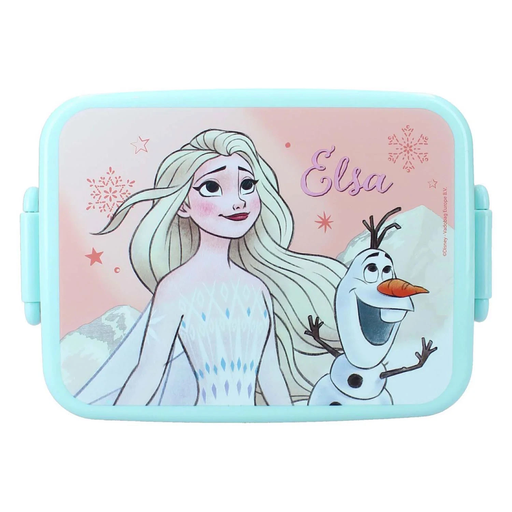
Why this choice suits this profile : With its 300 ml capacity and compact format, this model is suitable for young children taking a small snack to school or on an outing.
Its small format avoids choosing a box that is unnecessarily large for a simple snack. The manufacturer recommends cleaning it with water and mild soap.
Plastic described as durable, a compact footprint and Frozen decoration suitable for children aged 3 to 12.

Why this choice suits this profile : With eight containers ranging from 150 to 1,040 ml, this set is suitable for lunch, fridge storage and portion preparation alike.
The eight sizes let you match the container to the meal, rather than always carrying a box that is too large.
Borosilicate glass, removable components and several capacities for storing and carrying meals.

Why this choice suits this profile : Its five compartments and 316L stainless steel construction meet the needs of meal prep, office lunches and picnics.
The four fasteners hold the lid securely in place. However, the manufacturer recommends hand-washing and advises against using it in the microwave or oven.
316L stainless steel, five separate sections and a tray designed to organise portions.
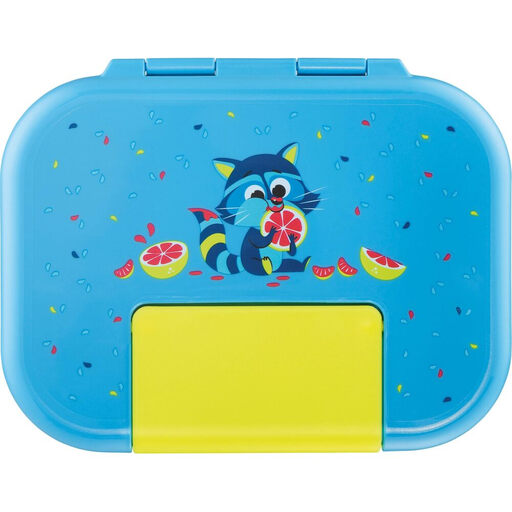
Why this choice suits this profile : Its 900 ml capacity, attached lid and fluorescent clip make school lunches and picnics easier.
The listing mentions a silicone seal and a leakproof closure, while the lid remains attached to the base. This model is not suitable for microwaves or hot liquids.
An 18/8 stainless steel base, a 900 ml capacity, a BPA-free plastic lid and dishwasher-safe cleaning on the top rack.
We have put together a complete, real-time updated list of products that fully meet these strict selection criteria and European safety regulations.
To keep your lunch box in good condition for longer, a few simple habits are all it takes:
A stainless steel food container is well suited to regular use. Glass is often a better choice for storage at home, provided its weight is not an issue for you. For children, prioritise ease of opening and a suitable size over a long list of features.
For a complete meal, choose a capacity larger than that of a simple snack box. The ideal capacity depends on your appetite and the food you carry. A compartmented model can make organising food easier, but check that each compartment can hold the portions you usually prepare.
Not necessarily. Compartments stop food from mixing, but they are not always sealed off from one another. To carry liquid-based dishes, look for a product listing that clearly mentions the seal, closure system and leak resistance. Then follow the stated conditions of use.
It depends on the material and the model. Stainless steel and other metal components must never be placed in a microwave. Glass can sometimes be used, subject to the manufacturer’s instructions. Remove the lid if the instructions require it, and always check the guidance before reheating your meal.