
Livraison le jour même ou le lendemain

Qualité garantie

Débloquez vos offres de bienvenue: Livraison GRATUITE | Jusqu'à -80 % | 30 jours d'essai gratuits à JoyPlus
Téléchargez l'application
A lunch box should be something you barely notice throughout the day – it needs to slip easily into a bag, open without fuss, clean quickly and keep your food in good condition. Yet the features highlighted on product pages aren’t always enough to guarantee a pleasant everyday experience.
Before you buy a lunch box, bento box or food container, take the time to check three often-overlooked points: the closure, the internal organisation and the cleaning routine. Here are the criteria to consider when looking for a model that suits a child, a student, an employee or home use.
A clip-on or hinged lid reduces the risk of accidental opening, but that doesn’t mean the box can carry liquid foods. To be truly airtight, it needs a well-fitted seal and a closure system designed to minimise leaks.
For a lunch box intended for school or the office, always check the manufacturer’s recommendations. Even when a product is described as leak-resistant, it’s best to transport soups and sauces in a food thermos designed for that purpose.
A large capacity isn’t always a sign of practicality. A 900 ml model may be fine for a full lunch, but it will take up more space in a school bag than a 300 ml container meant for a simple snack.
On the other hand, a small lunch box for school might not have enough room for a sandwich, a piece of fruit and a side. When comparing models, don’t just look at the stated volume – also consider the internal shape and the actual footprint.
Compartments, seals and removable lids make organisation easier, but they also add parts that need cleaning. A compartmentalised lunch box should be able to be taken apart so that residue doesn’t build up in the corners and around the seals.
Another common mistake is assuming that a stainless steel or glass box can go in the microwave. Metal is not allowed in a microwave. Some plastic lids may also have specific restrictions. The product page is the reference you should consult.
A rectangular shape generally packs more easily into a bag than a very rounded model. Also remember to measure the available space in your school bag, work bag or fridge.
A stainless steel lunch box is impact-resistant and doesn’t hold onto odours, but it cannot be used in the microwave. 316L stainless steel is sometimes highlighted for its corrosion resistance – that doesn’t mean you can skip careful washing and drying.
Plastic is lightweight and practical, especially for children. However, do check the recommended age, washing instructions and any warnings about small parts. Borosilicate glass is suitable for storing and preparing food, but its weight and fragility make it less ideal for daily transport without care.
For hot or saucy dishes, a wide-mouth food thermos may be more suitable than a standard box. A family-sized 1.5‑litre model won’t necessarily match the needs of a child or an individual lunch.
Compartments keep foods separate and help with portion control. They’re especially handy for pairing a side, a piece of fruit and a source of protein. However, not all dividers are leak-proof. A moist food can therefore soak or alter the texture of another.
Check the number of clips, whether there’s a seal, how easy it is to open, and whether you can close the box properly without forcing it. For a young child, a wide, easy-to-manipulate clip will encourage independence. An adult, on the other hand, may prefer a more compact system.
The models below meet different needs. Their features are presented based on the information available on the product pages.
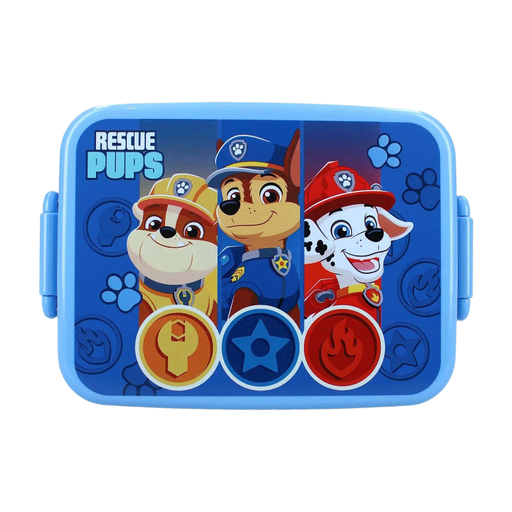
Why this choice suits this profile: This plastic model is ideal for first packed lunches. With its dimensions of 16 × 13 × 5 cm and light weight, it’s easy to slip into a bag. The design can also help a young child feel more attached to their lunch box.
The press-on lid is easy to understand, and the size stops you from choosing an oversized box for a small portion. The manufacturer recommends hand washing and advises against microwave use.
Plastic construction, press-on closure, compact dimensions and recommended for ages 3 and up.

Why this choice suits this profile: Its five compartments and 316L stainless steel construction are ideal for those who like to prepare meals methodically, control portions and regularly take their lunch to the office or on a picnic.
Foods stay separate instead of being piled into one large compartment. The lids and four buckles must be properly closed before transport.
316L stainless steel, five sections, removable tray and PP lid with four buckles. Hand washing is recommended.

Why this choice suits this profile: With its wide opening, this food thermos is designed for hot or cold meals that need to stay at temperature during a journey, a working day or an outdoor activity.
It targets foods that need thermal insulation, rather than simple dry items. The product page states a holding time of 4 to 6 hours and advises against turning the container upside down.
1.5 l capacity, 316 stainless steel, vacuum insulation, wide opening and leak-proof lid according to the product description.
We’ve selected a full range, updated in real time, of products that meet these demanding criteria as well as European safety standards.
To extend the life of a food container, rinse it after the meal and dry the lid, seal and base separately if they are removable. Avoid abrasive sponges on stainless steel and glass. Regularly inspect the box for cracks, warping, broken clips or seals that no longer sit properly.
A lunch box used every day will naturally show signs of wear more quickly than one reserved for picnics. Replace it if the closure no longer holds, if the material is cracked or if a persistent odour resists cleaning.
For a schoolchild, go for a size that fits easily into their school bag, a simple opening mechanism and a capacity suited to the meal you plan to pack. A lid that stays attached reduces the risk of losing a part. Also check the recommended age and whether there are any small components.
Yes, if you want to separate foods or prepare distinct portions. It’s practical for cold meals, fruit and sides. However, it doesn’t replace a fully leak-proof container for liquids – check the design of the seals and dividers.
It depends entirely on the material and the manufacturer’s instructions. Stainless steel models, like metal lunch boxes, must not be placed in the microwave. Also remove any lid or part containing metal before reheating a dish, and only do so if the instructions allow it.