
当日/次日达

品质保障

开启新人专享福利: 全场免邮 | 低至 2 折 | 免费试用 30 天 JoyPlus 会员
下载 Joybuy
Whether it's for the kids' school lunch, your meal at the office, or an impromptu picnic, the lunch box has become an everyday essential. But with an overwhelming number of options and sometimes exaggerated claims, it's easy to make the wrong choice and regret your purchase. To help you see more clearly, our editorial team has broken down the market. Let's analyse the pitfalls to avoid to ensure you make the right choice.
Attractive packaging can sometimes hide a less-than-stellar reality in practice. Here are the most common disappointments that turn a promising purchase into a real headache.
To avoid these pitfalls, a few simple technical points should be checked. They will make all the difference in daily use and in the long run.
The choice of material directly impacts the durability, hygiene, and practicality of your box.
A foolproof seal almost always relies on a silicone seal integrated into the lid. This gasket creates a barrier that prevents liquids from escaping. Check that the closing system (clips, latches, etc.) presses the lid firmly against the base to ensure perfect compression of the seal. For soups and saucy dishes, a screw-top food jar remains the most reliable solution.
The compartmentalised lunch box is ideal for separating the different elements of a meal and preventing everything from mixing. This is the very principle of the Japanese bento box.
To put theory into practice, here are a few models that meet specific needs and tick all the boxes on our checklist.
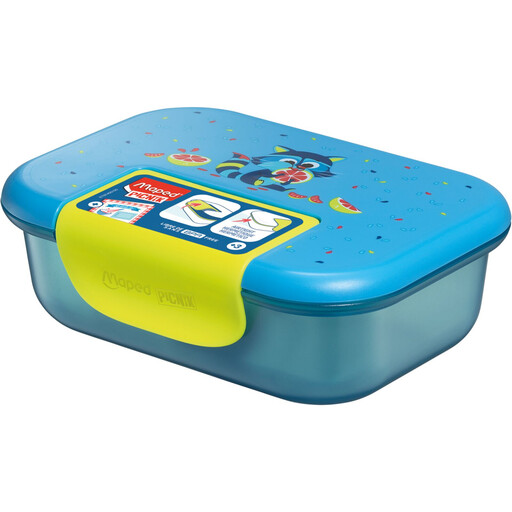
Ideal as a snack box or for a full meal, it's designed for kids to use independently. The opening clip is easy for small hands to operate, and the attached lid prevents it from getting lost in the canteen. Its stainless steel base is robust enough to withstand the rough and tumble of the playground.
Its stainless steel base doesn't retain food odours or stains. The closing system with a large clip is designed to be durable and simple, bypassing the trap of fragile closures.
Kid-friendly design (easy clip, attached lid). Hygienic and durable material (stainless steel). Dishwasher-safe.

This set is perfect for an adult lunch box and for weekly meal prep. With three sizes (600, 1100, and 2200 ml), it offers great versatility for storing snacks, salads, or full meals. The 316 stainless steel, which is surgical-grade, is a guarantee of durability and food safety.
The 316 stainless steel is non-porous and corrosion-resistant, which prevents it from absorbing odours or stains, unlike low-quality plastics. An investment that quickly pays for itself.
Set of 3 sizes for maximum flexibility. High-quality material (316 stainless steel). Stackable, freezer and dishwasher-safe.

For those who want to enjoy a hot soup or a stew for lunch, this type of container is the perfect solution. Its design is specifically focused on temperature retention, making it a truly high-performance insulated lunch box.
It doesn't just settle for a double wall. This thermos uses true vacuum insulation, the most effective technology for maintaining heat. This sidesteps the trap of false insulated promises.
Effective temperature retention (hot or cold). Wide opening for easy filling and eating. Leak-proof screw-on lid.
Our full selection brings together products that meet these quality criteria and current food safety standards.
1. How do I properly care for a stainless steel lunch box? To prevent water spots, dry it completely after washing. For a deep clean, a mixture of baking soda and water will tackle even the most stubborn stains. Although it's durable, avoid abrasive sponges that could scratch the surface.
2. Is a plastic snack box safe for my child? Yes, provided you choose a model with the "BPA-free" label. This certification guarantees that the plastic does not contain bisphenol A, a controversial endocrine disruptor. Opt for plastics known for their stability, such as polypropylene (PP).
3. What's the difference between a bento box and a classic lunch box? The term bento box originally refers to a Japanese single-serving meal box with one or more compartments, designed to hold a complete and balanced meal. In everyday language, it now more broadly refers to any compartmentalised lunch box that allows you to separate foods, as opposed to a classic lunch box which has only one large container.