
Livraison le jour même ou le lendemain

Qualité garantie

Débloquez vos offres de bienvenue: Livraison GRATUITE | Jusqu'à -80 % | 30 jours d'essai gratuits à JoyPlus
Téléchargez l'application
Preparing your lunch for the office, school or a picnic helps you organise your meals better and avoid last-minute purchases. But choosing a lunch box isn't just about picking a nice colour or pattern. The capacity, closure system, compartments and material will all have a direct impact on how it performs in everyday use.
A simple snap-on lid may be fine for carrying dry foods, but it will quickly show its limitations with sauce, dressing or liquid-based preparations. A latch or multiple clips alone do not guarantee perfect leak-proofing.
Before placing your order, be sure to check:
A compartmentalised lunch box allows you to separate different foods, but sections that are too small can quickly limit portion sizes. Conversely, a large bento box may take up considerable space in your bag or fridge.
For regular use, start from your typical meals: salad, sandwich, hot dish, fruit or snack. A child's needs are not the same as those of an employee carrying a full lunch.
A robust material does not exempt you from checking the care instructions. Some containers are dishwasher-safe, while others must be washed by hand. Metal, for example, should not be placed in the microwave. Plastic lids may also withstand different temperatures from the container itself.
Always read the instructions, warnings and the seller's or manufacturer's contact details before first use.
The capacity stated by the manufacturer is a useful starting point, but the external dimensions are just as important. A compact children's lunch box will slip easily into a school bag, while a larger model will be better suited to meal prep or storing leftovers.
Compartments are particularly useful for:
For batch cooking, opt for several boxes of the same size that are stackable and easy to store. They simplify fridge storage and portion organisation.
A glass lunch box lets you see the contents at a glance and is well suited to storing food in the fridge. Borosilicate glass is often valued for its resistance to temperature changes, but it remains heavier and can break if dropped.
A stainless steel lunch box is generally suitable for transporting and storing many types of food. However, it should not go in the microwave. Also check whether its lid is dishwasher-safe.
Plastic containers are lightweight and practical, especially for a children's lunch box or daily use. Make sure they are intended for food contact and respect the temperature limits specified by the manufacturer.
Finally, a disposable biodegradable lunch box made from bamboo fibre, sugarcane or other plant fibres can be useful for one-off events or takeaway. It won't necessarily replace a reusable lunch box for everyday use.
An airtight food container must be properly sealed before being placed in a bag. Clean the lid, grooves and seals thoroughly to remove all residue. Dry each component before storing to prevent lingering odours.
To decide between two models, check:
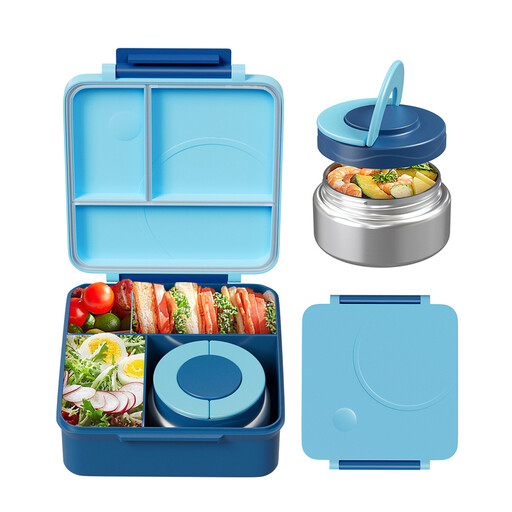
Why this choice suits this profile: Its compartmentalised design is ideal for first attempts at meal prep, with simple organisation for a lunch and its side dish.
The divider prevents foods from mixing, while the single-latch closure remains quick and easy to operate.
A 54 oz capacity as stated in the product name and a compartmentalised design for organising portions.
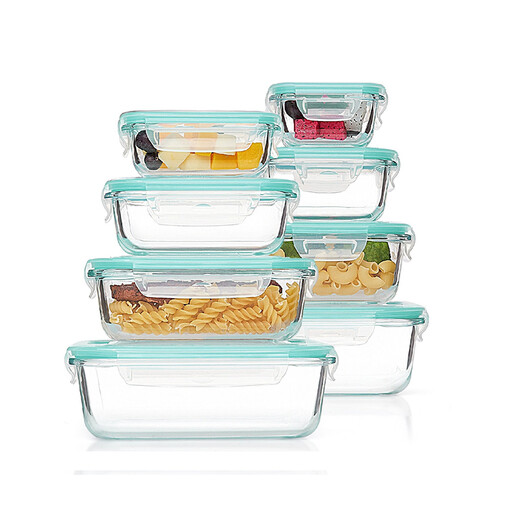
Why this choice suits this profile: This set of eight different sizes is ideal for households that want to alternate between lunches, leftovers and homemade preparations with containers of varying capacities.
The range of volumes means you don't have to use a box that's too big or too small every time.
Borosilicate glass and capacities from 150 to 1,040 ml, as stated on the product page.
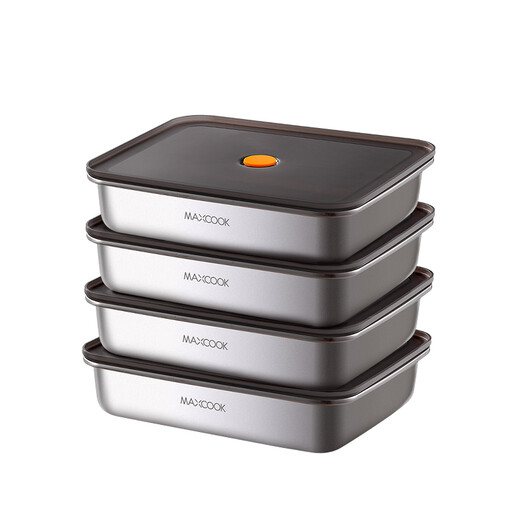
Why this choice suits this profile: The four 1,600 ml containers meet the needs of bulk storage, batch cooking and preparing meals in advance.
The uniform size makes stacking easy and prevents incompatible boxes from accumulating in the fridge.
316L stainless steel, lids included, plus freezer and dishwasher compatibility as stated on the product page.
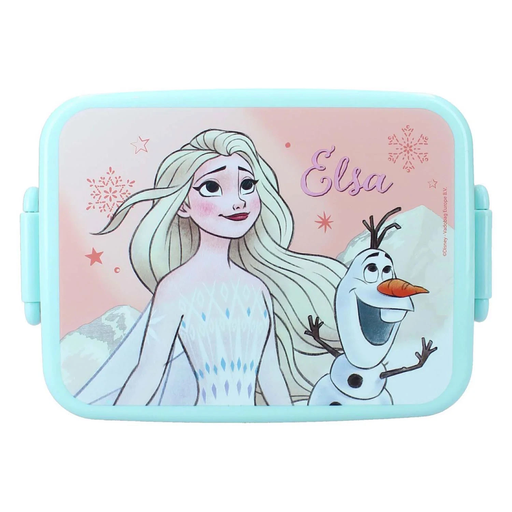
Why this choice suits this profile: Its compact size and stated 300 ml capacity are ideal for a snack or small meal carried in a school bag.
The clearly stated capacity prevents you from choosing an oversized box for a simple snack.
Plastic as stated on the product page, cleaning with water and mild soap, plus compact dimensions for travel.
Choose a model with a secure closure and, if possible, a removable seal. Carry the box upright and allow preparations to cool before sealing, following the manufacturer's recommendations.
It can be suitable for storing food and reheating, but only if the product page states it is microwave-safe. However, its weight and relative fragility should be considered for daily commutes.
Wash it after each use, dry the lid thoroughly and avoid abrasive sponges. Regularly inspect the container for any cracks, warping, lingering odours or damaged seals. Replace it if its condition no longer allows reliable closure or effective cleaning.