
Livraison le jour même ou le lendemain

Qualité garantie

Débloquez vos offres de bienvenue: Livraison GRATUITE | Jusqu'à -80 % | 30 jours d'essai gratuits à JoyPlus
Téléchargez l'application
Packing your own lunch for the office or for the kids' school day is a smart move: it's more budget-friendly, healthier, and better for the planet. But let's be honest, choosing the right lunch box often turns into a real headache. Between marketing promises and the harsh reality of daily use, it's all too easy to end up with a disappointing model. Our editorial mission: to help you decode the labels and identify the criteria that truly matter.
Before we get to our top picks, let's review the most common pitfalls that turn a good investment into a purchase you'll regret.
To avoid these disappointments, a few key technical points will make all the difference. This is what separates a regrettable purchase from a reliable lunch companion for years to come.
The choice of material is crucial. It influences durability, weight, maintenance, and how you can use it.
The lid is the crucial checkpoint. A removable silicone gasket is a real plus for deep cleaning. The locking clips must be sturdy and easy to operate. For a kid's lunch box, simplicity is key: opt for large, easy-to-use clips or flexible lids. For transporting saucy dishes or soup, a perfect seal is non-negotiable.
The bento box (or compartmentalised lunch box) is the ultimate solution to keep your fruit salad from mixing with your main dish. With every food item in its place, flavours and textures are preserved.
Also, consider the format. A rectangular box fits more easily into a backpack or tote bag than a round one.
Rather than searching for a one-size-fits-all model, it's better to choose a lunch box designed for a specific use and user.

Why we recommend it: Perfect for enjoying a hot, home-cooked meal (soup, stew, etc.) without needing a microwave. The 316 stainless steel is a guarantee of impeccable quality and food safety.
Unlike simple double-walled containers, this model uses true vacuum insulation to maintain temperature (hot or cold) for 4 to 6 hours. The lid is designed for a rock-solid, leak-proof seal.
Comes with a dedicated insulated carrying bag, which makes transport easier and enhances insulation. Its wide opening simplifies filling, serving, and cleaning.
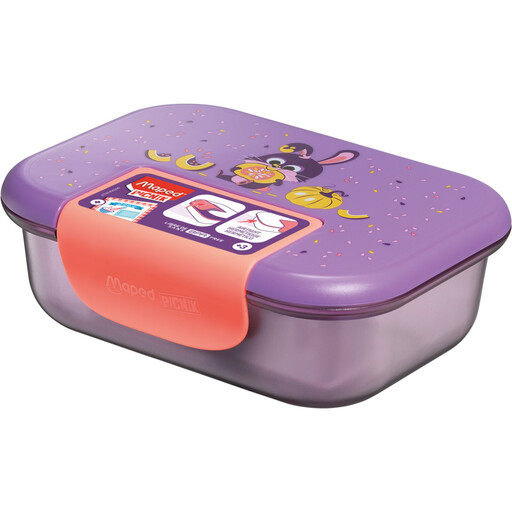
Why we recommend it: Maped designed this with parents (and kids!) in mind: it combines the sturdiness of stainless steel with clever details for independent use, like its giant clip and a lid that's attached to the base.
It solves the problem of boxes that are difficult for little hands to open, thanks to its oversized clip. The attached lid prevents one of the parts from getting lost—a classic schoolyard mishap.
A sturdy and hygienic stainless steel base that is dishwasher-safe. Its rectangular shape optimises space in a school bag. The fun design is a bonus to motivate kids to finish their meal.
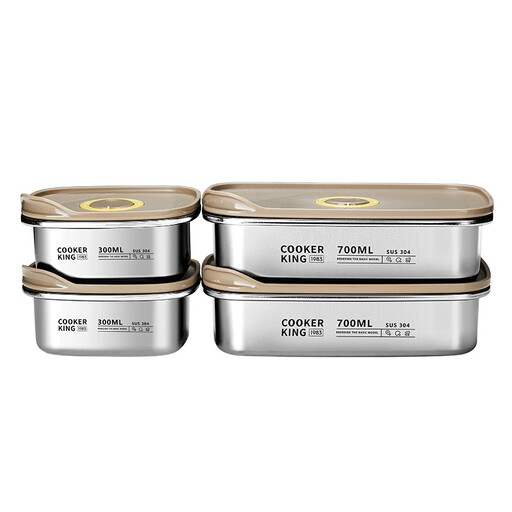
Why we recommend it: The perfect solution for meal preppers who plan their week's meals in advance. This set of four different-sized boxes lets you store everything from the main course to a snack with impeccable organisation.
This set solves the problem of a single box that's never the right size. It offers a versatile solution for all needs, from fridge storage to transport in your bag, without being limited to one format.
Made from food-grade stainless steel, these boxes are stackable for optimal space-saving in the fridge or cupboards. Durable and hassle-free, they are completely dishwasher-safe.
Explore our complete collection of lunch boxes, all tested and approved by our editors according to strict quality and safety criteria.
For plastic, a run through the dishwasher is often enough. If a stubborn odour persists (ah, the curry!), let the open container soak for a few hours in a solution of warm water and baking soda or white vinegar. Rinse well and let it air dry with the lid off. For stainless steel and glass, a simple wash with soapy water or in the dishwasher is sufficient.
No, and this is a golden rule: never put metal in a microwave oven. You risk creating sparks, damaging your appliance, or even starting a fire. Stainless steel is made to last and preserve, not to be reheated in this manner. For that, choose a compatible glass or plastic (and BPA-free) container.
Both are food-grade stainless steels. 304 is the most common and is already very resistant to corrosion. 316 steel, however, contains molybdenum, which makes it even more robust against salt and acids (like in salad dressing or tomato sauce). For an insulated food jar or very intensive use, 316 is a plus that guarantees maximum longevity.