
Livraison le jour même ou le lendemain

Qualité garantie

Débloquez vos offres de bienvenue: Livraison GRATUITE | Jusqu'à -80 % | 30 jours d'essai gratuits à JoyPlus
Téléchargez l'application
A lunch box should fit into your daily routine, rather than simply look attractive. For a child, it needs to be easy to open and carry. For an adult, it should hold a filling meal without taking up all the space in your bag. For batch cooking or a one-off event, the material, number of compartments and reusability can make a real difference.
Before buying a lunch box, three common pitfalls are worth avoiding.
The capacity should match the intended use:
A compartment lunch box allows you to keep foods separate and prevents textures from mixing. This is useful for carrying a sandwich, crudités and a dessert. However, compartments do not replace a watertight seal: if the design does not provide hermetic separation, a liquid sauce may move from one section to another.
For children aged 3 and over, also consider the size of the fasteners and the force needed to operate them. A lunch box intended for school should be easy to open without help, while remaining secure enough inside a schoolbag.
Here are the main options available:
The labelling should provide useful information about the intended use, the manufacturer or responsible operator in the European Union, and any precautions that may apply. For products intended to come into contact with food, choose a clearly documented product listing and follow the stated temperature limits.
An airtight lunch box is particularly useful for foods that may spill. For a salad without dressing, a whole piece of fruit or a sandwich, a simple closure may be enough. In particular, check:
For work, a set of glass boxes in several sizes can make preparing meals in advance easier. For a snack box intended for a child, an appealing design and intuitive opening mechanism will often matter more than maximum capacity.
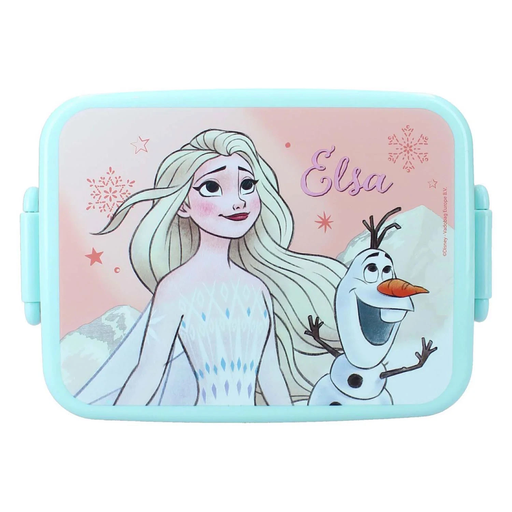
Why this choice suits this profile : With its 300 ml capacity and compact format, this snack box is ideal for small treats and schoolbags. Its Frozen-inspired design may also help children settle into their snack-time routine more easily.
Its small capacity means you do not pay for or carry an oversized box for a simple snack. The manufacturer recommends washing it with water and mild soap.
300 ml capacity, easy-to-clean plastic and compact dimensions of 13 × 5 × 5 cm.

Why this choice suits this profile : Its five compartments are ideal for anyone who prepares varied meals, monitors portions or takes a complete lunch to work or on a picnic.
The product listing specifies several important limitations: hand washing is recommended, it is not suitable for use in the microwave or oven, and the closure should be checked before carrying.
316L stainless steel, five compartments, four fastening loops and polypropylene lids.
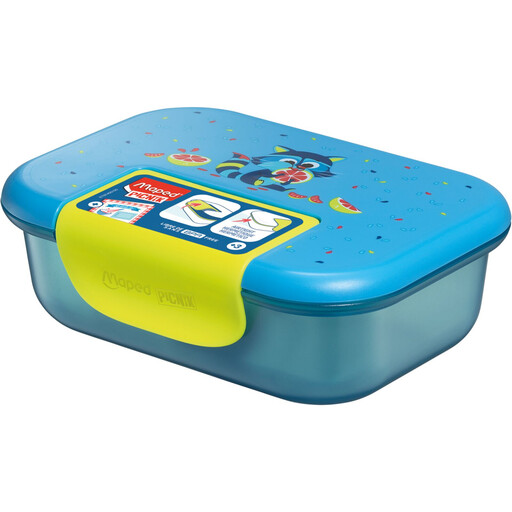
Why this choice suits this profile : With its 900 ml capacity, this lunch box is suitable for school days, outings and lunches that call for plenty of space, while remaining easy for a child to handle.
The attached lid helps prevent lost parts, while the fluorescent clip is easy to spot. The product listing states that it is dishwasher-safe, but prohibits use in the microwave.
900 ml capacity, stainless steel base, attached lid, clip fastening and dishwasher-safe care.
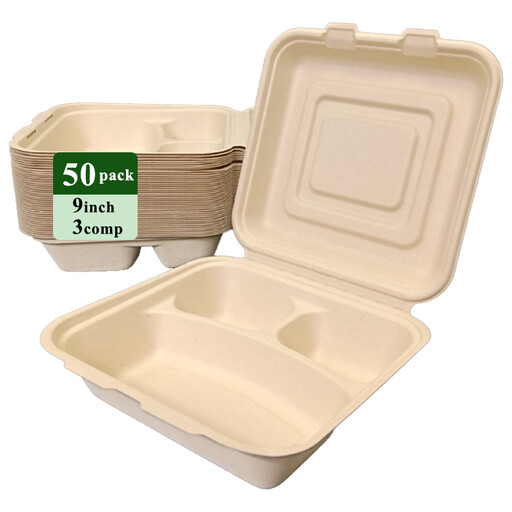
Why this choice suits this profile : This pack of 50 disposable bamboo meal boxes is ideal for receptions, community groups, takeaway food or picnics where collecting and washing the boxes is not planned.
The pack of 50 makes it easy to plan for group use. However, check local sorting guidance and the usage instructions before ordering.
Three-compartment format, 9-inch dimensions and a pack of 50 units.
We have put together a complete, real-time-updated list of products that meet these demanding selection criteria and European safety requirements.
For a snack, a format of around 300 ml may be sufficient. For a full lunch, a capacity of 700 to 900 ml will provide more room, as long as it is compatible with the size of the schoolbag and the child’s appetite. Compartments keep foods separate, but do not necessarily make the box watertight between each section.
No, stainless steel must not be placed in the microwave. Models with plastic lids may also contain metal components or seals that impose restrictions. Always consult the product instructions. A glass lunch box may sometimes be used to reheat food, but only if this function is explicitly authorised.
It depends on the material, how often it is used and the condition of the closures. Inspect the clips, seals and lids regularly. Replace the box if it is cracked, misshapen, rusty or no longer closes properly. Appropriate washing, thorough drying and compliance with the stated temperature limits will help extend its everyday lifespan.