
Livraison le jour même ou le lendemain

Qualité garantie

Débloquez vos offres de bienvenue: Livraison GRATUITE | Jusqu'à -80 % | 30 jours d'essai gratuits à JoyPlus
Téléchargez l'application
Whether it's for taking a packed lunch to the office, getting into meal prep, or simply storing leftovers, the lunch box has become a staple in our kitchens. The problem? The market is flooded with models that rarely live up to their promises. The box that leaks at the bottom of your bag, the meal that's disappointingly lukewarm despite the "insulated" label, or the plastic that warps in the dishwasher: these letdowns are all too common. Before you buy, it's essential to know how to see through the marketing gimmicks to find that perfect container, the one that will truly meet your needs.
Don't judge a lunch box by its design alone. Certain design flaws, often invisible to the naked eye, can quickly turn your purchase into a culinary nightmare.
To make the right choice, focus on three technical points that make all the difference in the durability and practicality of your future food storage container.
Each material has its strengths and weaknesses.
A truly leak-proof container relies on a winning combination: a thick, removable silicone gasket (essential for deep cleaning and impeccable hygiene) and a robust system of locking clips that secure the lid on all four sides. This design ensures even pressure on the gasket and prevents disasters, even if your bag gets tossed around.
If you're a meal prep aficionado, versatility is non-negotiable. Look for the pictograms that confirm compatibility with:
A model that checks all three of these boxes will be a game-changer for organising your weekly meals.
Rather than a random laundry list, we've matched products to user profiles. The goal: to help you find the box that fits perfectly into your daily life.

Why this choice? This ultra-comprehensive set is a dream come true for *batch cooking* fans. With ten containers in two different sizes, you can prepare and portion out lunches, snacks, and dinners for the entire week. The borosilicate glass, which goes from the freezer to the microwave, simplifies all your meal logistics.
Borosilicate glass is impervious to stains and odours, unlike cheap plastics. Its clip-locking system is designed to last, sidestepping the trap of lids that warp over time.
A complete and cohesive set for streamlined organisation. The containers are stackable, optimising space in both the fridge and cupboards.

Why this choice? This is the solution for those without access to a microwave or who want to enjoy a hot meal without reheating. Perfect for soups, stews, or pasta, it keeps food hot for several hours. Its wide mouth makes filling, serving, and cleaning easy.
This model features true double-wall vacuum insulation, the only technology that guarantees long-lasting heat retention. It thus avoids the trap of fake "insulated" containers with single walls that never deliver on their promises.
Its construction from 316 stainless steel, a grade superior to the standard 304, gives it enhanced resistance to corrosion from salt and acids (like in vinaigrettes or tomato sauces).
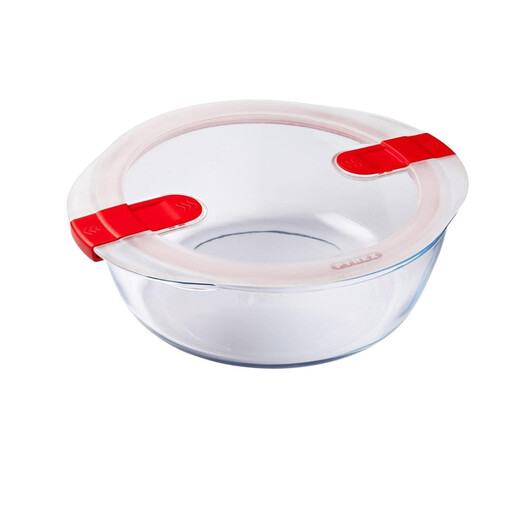
Why this choice? This is the Swiss Army knife of food storage. This large, ultra-durable glass dish lets you bake a casserole in the oven, store it in the fridge, transport it without leaks, and reheat it in the microwave. Its generous capacity is perfect for family meals or large *meal prep* portions.
Its lid features a clever steam valve. Opening it prevents pressure buildup and splatters in the microwave—a common problem with standard containers that have to be left ajar (and often end up leaking).
One dish to do it all: cook, store, transport, and reheat. Pyrex glass is the gold standard for thermal shock resistance, a guarantee of unmatched durability.
We've curated a complete selection of products that meet our strict requirements and current safety standards.
The water test is foolproof: fill the box, close it, then shake and turn it upside down over the sink. Not a single drop? You've got a winner. Visually, look for a thick silicone gasket and four robust locking clips.
304 (or 18/8) stainless steel is the industry standard for kitchenware, offering very good rust resistance. 316 (or 18/10) stainless steel, sometimes called "surgical" or "marine-grade" steel, also contains molybdenum. This addition makes it virtually invulnerable to corrosion from salts (chlorides) and acids. For soups, dressed salads, or saucy dishes, 316 is a worthwhile long-term investment.
Absolutely not, and this is a non-negotiable safety point.