
Livraison le jour même ou le lendemain

Qualité garantie

Débloquez vos offres de bienvenue: Livraison GRATUITE | Jusqu'à -80 % | 30 jours d'essai gratuits à JoyPlus
Téléchargez l'application
Whether you're taking lunch to the office, packing snacks for the kids, or planning your weekly meal prep, the lunch box has become an everyday essential. Yet, with an overwhelming number of options, it's easy to get lost and end up with buyer's remorse. A leaky lid, stained plastic, or the promise of warmth that vanishes in an hour? These are all-too-common disappointments.
As a product expert at Joybuy, my mission is to help you see things more clearly. Let's forget the marketing jargon and focus on what really matters. Here are the pitfalls to avoid and the objective criteria for choosing a lunch box that will finally live up to its promises.
Before you make a decision, it's best to know the deal-breaking flaws that can render a lunch box useless in just a few weeks.
To make the right choice, focus on these three key points. They are your guarantee of practicality, durability, and safety in your future lunch box.
The choice of material is fundamental and depends on your use case.
For balanced and well-presented meals, compartmentalisation is a major asset.
If you want to bring hot meals, a simple plastic container won't cut it. You need a food thermos or a truly high-performance insulated lunch box. The secret to their effectiveness? Double-wall vacuum insulation technology. It's the airless space between the two stainless steel walls that blocks heat transfer. The pro tip for maximum efficiency: preheat the container with boiling water for a few minutes before adding your meal.
Rather than a simple product list, we've identified concrete solutions for specific user profiles, based on the objective criteria defined above.
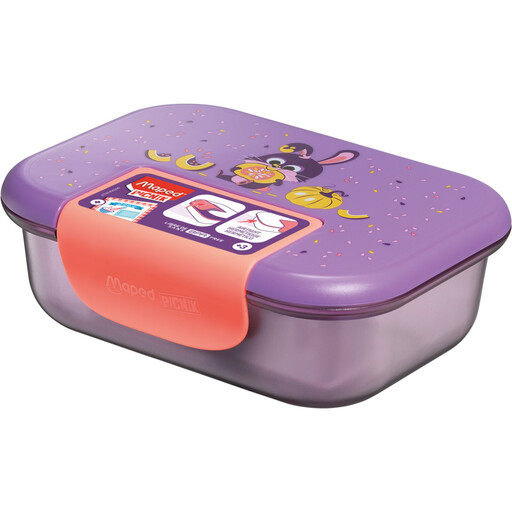
Why it's a great choice: This snack box is designed for kids. It combines the durability of stainless steel with thoughtful details: a locking clip that's easy for little hands to manage and a lid that's attached to the box, so it won't get lost in the playground.
It eliminates the risk of low-grade materials with its sturdy stainless steel base. Its kid-friendly locking system puts an end to the frustration of lids that are too hard to open or close.
The combination of a durable stainless steel base and an attached lid makes it an ultra-reliable and practical solution for the school day.

Why it's a great choice: For those who prioritise durability and impeccable hygiene, this set checks all the boxes. The 316 stainless steel ensures maximum corrosion resistance, while the three different sizes offer total versatility, from a full meal to a snack.
There are no compromises on quality here. The use of 316 stainless steel is a guarantee of longevity and food safety, light-years away from degrading plastics or low-end stainless steel.
A set of three capacities (600 ml, 1100 ml, 2200 ml) in premium stainless steel, stackable for optimised storage and maximum versatility.

Why it's a great choice: This food thermos is specifically designed to retain heat. Its wide opening makes both filling and cleaning easy, and its perfectly sealed lid is a must-have for carrying soups and saucy dishes with complete peace of mind.
It knocks out the false promise of insulation. Its 304 stainless steel design with double-wall vacuum insulation is the benchmark technology for effectively retaining heat for several hours.
Reliable thermal performance for hot meals, an ultra-practical wide opening, and a leak-proof seal for zero-risk transport.
We've put together a complete selection of products that meet our selection criteria and the strictest safety standards.
The secret? Clean it immediately. As soon as possible after your meal, rinse your box with clean water. For a deep clean, use hot water and dish soap. For plastic containers that have retained odours, a mixture of baking soda and water left to sit overnight can work wonders. Always let the box air dry completely before closing it for storage.
No, absolutely never. Metal, including stainless steel, should never be placed in a microwave oven. It can cause sparks (arcing), severely damage your appliance, and even start a fire. If you want to reheat your meal, transfer it to a suitable container (ceramic, glass, or microwave-safe plastic).
Both of these stainless steel types are food-grade and perfectly safe. 304 stainless steel (also known as 18/8) is the most common and offers excellent resistance to rust and corrosion in most situations. 316 stainless steel also contains molybdenum, which gives it enhanced corrosion resistance, particularly against chlorides (salt) and acids. For everyday use, 304 stainless steel is more than sufficient. 316 is a bonus for long-term durability, especially if you often carry very salty or acidic foods.