
Livraison le jour même ou le lendemain

Qualité garantie

Débloquez vos offres de bienvenue: Livraison GRATUITE | Jusqu'à -80 % | 30 jours d'essai gratuits à JoyPlus
Téléchargez l'application
Choosing a lunch box? On the surface, it seems like child's play. In reality, it's a different story. Who hasn't cursed at a bag soaked in salad dressing, a hot meal that's disappointingly lukewarm by lunchtime, or a plastic bento that still smells like last week's curry? Far too many of us are familiar with these minor daily disasters. The problem is a market flooded with marketing promises that fall apart after the first use.
To avoid throwing your money down the drain, let's review the most common pitfalls.
To sidestep these traps, you need to stick to the facts: a few objective technical criteria that don't lie about a product's true quality and durability.
The material is the cornerstone of your future lunch box. It determines its hygiene, lifespan, and versatility.
A truly leak-proof seal relies on a dynamic duo:
For an insulated lunch box, performance depends on double-wall vacuum insulation technology. This is what blocks heat transfer. Let's be realistic: good insulation will keep your meal hot for 4 to 6 hours. Pro tip: to maximise performance, preheat your container by filling it with boiling water for a few minutes before adding your food.
To help you out, here is our selection of models that tick all the right boxes for specific profiles and uses.

Why this model? Perfect for those who demand a real, hot, and substantial meal at the office or on the go. Its large 1.5 L capacity and insulated design make it a reliable partner for long days, without needing a microwave.
Its 316 stainless steel construction resists corrosion and retains no odours. The vacuum insulation provides 4 to 6 hours of heat retention—a realistic performance that prevents the disappointment of a cold meal.
Premium material (316 stainless steel) for maximum hygiene and durability. A wide mouth makes filling, serving, and cleaning easy.
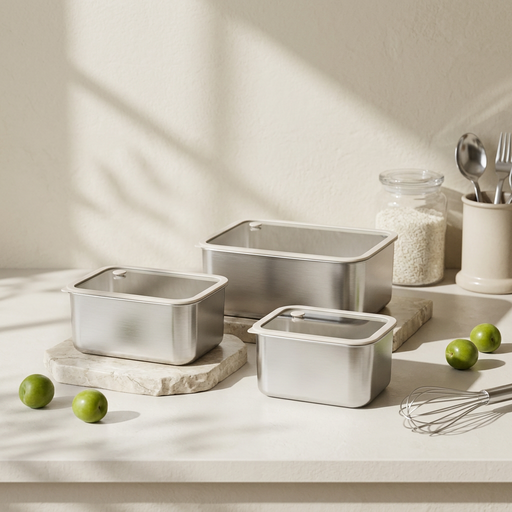
Why this set? The essential ally for organising your week's meals. The three different sizes (1 L, 1.8 L, 3 L) offer great flexibility, and their stackable design optimises fridge space.
The food-grade 304 stainless steel won't stain or retain odours, unlike plastic containers. The glass lid with a silicone seal ensures a tight seal for storage and lets you see the contents.
Set of 3 sizes for maximum modularity. Stackable, space-saving design. Hygienic and durable material.
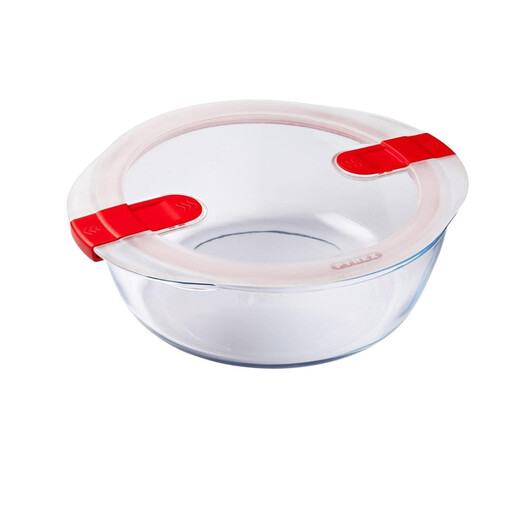
Why this dish? The Swiss Army knife for families. This large 2.3 L glass dish lets you cook for several people, store leftovers, and reheat in a flash. Its versatility (oven, microwave, freezer) is a major asset.
Borosilicate glass is a proven material that doesn't warp or absorb anything. The lid features a steam vent, a smart function that prevents splatters in the microwave—a common flaw in basic containers.
Highly versatile (oven, microwave, freezer). Generous 2.3 L capacity. Healthy and durable material that has stood the test of time.
Explore our full selection of products that meet our strict quality criteria and the highest safety standards.
Stainless steel is very durable, but proper care extends its life. Wash it by hand with a soft sponge and dish soap to preserve its shiny finish. Avoid abrasive scouring pads that can scratch the surface. Dry it completely after washing to prevent water spots. A little tip for the lid's gasket: to maintain its elasticity, store the lid separately or don't screw it on completely.
304 stainless steel is the most common type used in the food industry. It is perfectly safe and resistant to most types of corrosion. 316 stainless steel, sometimes called "marine-grade stainless steel," includes an addition of molybdenum. This element significantly increases its resistance to corrosion caused by chlorides (salt) and acids. If you plan to regularly transport salads with vinaigrette, or tomato- or citrus-based dishes, choosing a 316 stainless steel container is a wise choice for maximum longevity.
It all depends on the design. To transport soup or a saucy dish with complete peace of mind, choose a model with a screw-top lid and a thick silicone gasket. This mechanism provides more uniform and secure pressure than a clip-on system. Before tossing your liquid-filled container into your bag, do a simple test at home: fill it with water, close it, and then shake it vigorously over the sink. It's the ultimate crash test for your peace of mind.