
Livraison le jour même ou le lendemain

Qualité garantie

Débloquez vos offres de bienvenue: Livraison GRATUITE | Jusqu'à -80 % | 30 jours d'essai gratuits à JoyPlus
Téléchargez l'application
Whether it's for the kids' school lunch, your meal at the office, or a spontaneous picnic, the lunch box has become an everyday essential. However, choosing the right model can often feel like an uphill battle. Between marketing promises and real-world performance, it's easy to end up with a disappointing product. As the head of our "Home" section, my mission is to help you see things more clearly and identify the criteria that really matter.
Before you start shopping, watch out for these 3 common pitfalls that lead to buyer's remorse:
To avoid these disappointments, it's essential to focus on a few objective features. To ensure you don't get fooled, here are the key points to examine closely.
The choice of material is crucial for the longevity, hygiene, and practicality of your lunch box.
The compartmentalised lunch box, often called a bento box, is a clever solution for carrying a complete, balanced meal without the different foods mixing together. It allows you to separate the main course, side dish, and dessert, thus preserving the flavours and textures of each component. It's a particularly popular option for adding variety to lunches, for both children and adults.
If you want to pack piping hot soups or crisp, cool salads, an insulated lunch box is essential. These models use a double-wall, vacuum-insulated design to maintain the temperature for several hours. For optimal performance, it's often recommended to pre-fill the container with boiling water (or cool it with ice water) before adding your meal. An insulated food jar is an excellent alternative for liquids or saucy dishes.
Instead of searching for a one-size-fits-all solution, it's better to choose a model that's perfectly suited to your daily routine.
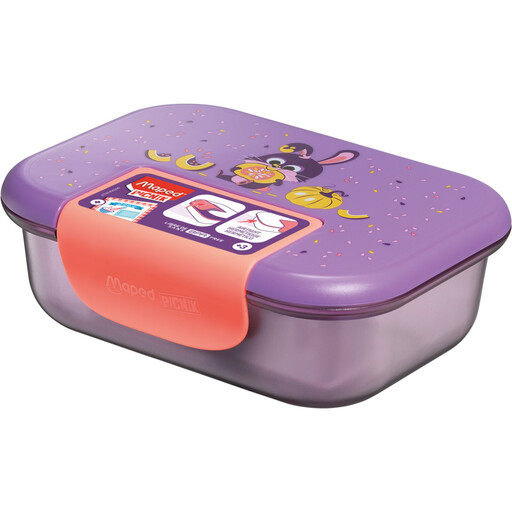
Why this model stands out: Designed for children, this model combines a sturdy stainless steel base with features created to promote independence. It's an excellent snack box or container for school lunches.
The large closing clip is easy for little hands to manage, and the attached lid prevents it from getting lost. The stainless steel base resists both stains and odours.
The simple opening system and attached lid help children become more independent, while ensuring excellent durability.

Why this model stands out: This food storage set is the ideal solution for meal prep fans. The highly durable borosilicate glass can go straight from the fridge to the microwave without worry.
Glass is a non-reactive, non-porous material that doesn't stain or absorb any odours. The snap-lock lids provide a reliable seal to preserve freshness.
The set of 10 containers in two different sizes offers welcome modularity for organising and storing a wide variety of dishes and portions.

Why this model stands out: This food jar is a true insulated lunch box, specifically designed to maintain food temperature thanks to its 316 stainless steel construction and vacuum insulation.
Unlike standard containers that promise minimal insulation, this model relies on dedicated technology for true heat (or cold) retention, preventing the disappointment of a lukewarm meal.
Its key strength: thermal performance. The included insulated carrying bag further enhances portability and insulation.
We have curated a complete range of products that meet our demanding selection criteria and current safety standards.
For plastic containers, it's best to wash them right after use. For stubborn odours, let them soak overnight in a mixture of hot water and baking soda. For stainless steel and glass, a simple run through the dishwasher is usually enough.
No, you should never place a metal object, including a stainless steel lunch box, in a microwave oven. It could cause sparks, damage the appliance, and pose a fire hazard. To reheat your food, you must transfer it to a microwave-safe container.
The term bento box refers to the Japanese tradition of a single-portion, take-out meal packed in a compartmentalised container. Today, the term is used more broadly to describe any compartmentalised lunch box that allows you to separate different types of food. A classic lunch box, on the other hand, may have only one large compartment.