
Livraison le jour même ou le lendemain

Qualité garantie

Débloquez vos offres de bienvenue: Livraison GRATUITE | Jusqu'à -80 % | 30 jours d'essai gratuits à JoyPlus
Téléchargez l'application
Eating healthier, saving money, reducing waste… The benefits of a homemade lunch are well-established. However, choosing the right lunch box can quickly become a headache. Between marketing promises and real-world use, it's easy to end up with a disappointing product. As a product expert at Joybuy, my mission is to guide you to find the model that's truly right for you, without any nasty surprises.
Before we talk about products, let's break down the 3 common pitfalls that turn a good investment into a daily regret.
Pitfall #1: The False Promise of 'Leak-Proof'. Who hasn't had that sinking feeling of discovering salad dressing at the bottom of their bag? A leaky airtight container is the most common nightmare. The cause: a poor-quality silicone gasket or a flimsy locking system that warps after a few dishwasher cycles.
Pitfall #2: Materials That Don't Age Well. Low-grade plastic is the number one culprit. It stains orange from the first tomato sauce, retains the smell of yesterday's fish, and eventually warps in the microwave. The result: goodbye seal, hello leaks.
Pitfall #3: Insulation That Doesn't Insulate. A proper insulated food jar should keep your meal hot for several hours. Unfortunately, many entry-level models offer only token insulation. Your food is already lukewarm by lunchtime, adding to the disappointment.
To avoid falling into these traps, you need to focus on a few key technical details. These are what separate a short-lived gadget from a durable companion for your lunches.
The material is the cornerstone of your lunch box. It determines its lifespan, hygiene, and versatility.
stainless steel storage container is virtually indestructible, but be aware: it is generally not microwave-safe.An airtight container that lives up to its promise relies on two pillars:
Finally, think about your daily routine.
Rather than a simple list, we've matched concrete solutions to specific needs. Every product recommended here strictly adheres to the quality criteria we've just defined.
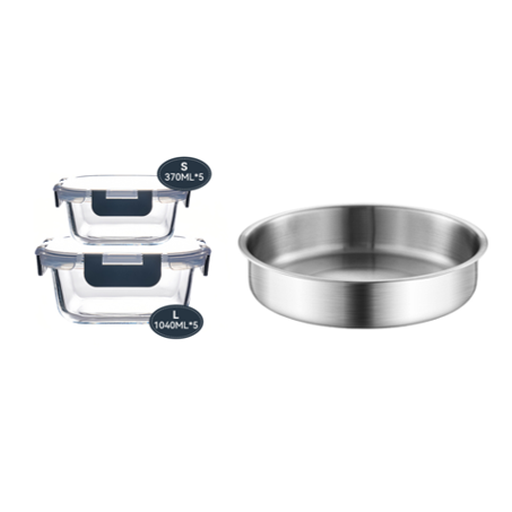
Why we chose it: Ideal for those who prep their meals for the entire week. This comprehensive meal prep set offers various sizes for main dishes, sides, and snacks, ensuring flawless organisation.
Its high-quality borosilicate glass is impervious to stains and odours (pitfall #2). Its robust snap-lock lids guarantee a perfectly tight seal (pitfall #1).
A 10-piece ecosystem (glass + stainless steel) for complete and perfectly organised meal prep.

Why we chose it: Perfect for those without access to a microwave. This insulated food jar delivers top-tier thermal performance, ideal for a steaming soup or a saucy dish.
Its vacuum insulation retains heat for 4-6 hours, where low-end models fail (pitfall #3). Its 316 stainless steel is a guarantee of durability and hygiene (pitfall #2).
Its premium material (316 stainless steel) offers increased resistance to corrosion and maximum longevity. The insulated carrying bag is a real bonus.

Why we chose it: For those who want durability without the weight of glass or the drawbacks of plastic. This stainless steel storage container set is lightweight, virtually unbreakable, and ultra-versatile, from the freezer to your backpack.
The 304 stainless steel is shock-proof and resistant to stains and odours (pitfall #2). The transparent lids with their thick silicone gaskets ensure a flawless seal (pitfall #1).
The best of both worlds: the robustness of stainless steel and the convenience of transparent lids. The deep, stackable design optimises storage.
Discover our full selection of expert-vetted products, all of which meet our quality criteria and current safety standards.
Can a stainless steel container really go in the dishwasher? Yes, the stainless steel body (304 or 316) is completely dishwasher-safe. However, to preserve the elasticity of the silicone gasket in the long run, we recommend washing the lid by hand. This is the secret to maintaining a perfect seal, year after year.
How can I avoid thermal shock with a glass container? Even though borosilicate glass is very durable, it's best to avoid sudden temperature changes. Never move a dish from the freezer directly into a preheated oven. Let it acclimate for a few minutes at room temperature. Likewise, wait for a hot dish to cool down a bit before putting it in the fridge or freezer.
What's the difference between 304 and 316 stainless steel for a lunch box? Both are excellent food-grade stainless steels. The main difference? 316 stainless steel contains molybdenum, an addition that boosts its resistance to corrosion (from salt, acidic dressings, etc.). It's the gold standard for maximum durability. 304 stainless steel, the benchmark standard for quality kitchenware, remains a solid choice for everyday use.