People keeping an eye on fat
You’re making pancakes with almond drink and want to choose a product whose fat content per 100 ml meets the ‘low fat’ criterion for liquids.


For Candlemas pancakes, choose an almond drink with no more than 1.5 g of fat per 100 ml if your priority is a ‘low fat’ option: this is the limit for liquids set by Regulation (EC) No 1924/2006. Check the sugars and ingredients separately. A ‘no added sugars’ claim tells you nothing about the fat content, while an ‘intense’ version may contain cane sugar and more fat.
You’re making pancakes with almond drink and want to choose a product whose fat content per 100 ml meets the ‘low fat’ criterion for liquids.
You’re looking for an unsweetened or no added sugars almond drink for your batter. You’ll also need to check the fat content, as these claims relate to different criteria.
You compare the almond content of drinks before cooking and are happy to check the sugars and fat separately in a product described as ‘intense’.
To compare drinks for your pancakes, start with your main priority, then check the other values on the label of the product you choose.
| Criterion | What to check | Who is it for? |
|---|---|---|
| Fat | The value per 100 ml: no more than 1.5 g to meet the ‘low fat’ criterion for liquids under Regulation (EC) No 1924/2006. | If I want the drink in my batter to meet this criterion, its fat content matters more than claims on the front of the pack. Around 33% of consumers may put this need first. |
| Sugars | The ‘sugar-free’ or ‘no added sugars’ claim, the ingredients list and the sugar content per 100 ml. | For my pancakes, I’d rather choose a drink based on its sugar content without assuming it is also low in fat. This may be the main criterion for around 27% of consumers. |
| Almond content | The percentage of almonds, followed by the sugars and fat in the same product. | I prioritise a recipe with a higher almond content, even if that means setting aside the low-fat criterion. Around 20% of consumers may prioritise this concentration. |
| Organic and in-store availability | The specific product, its values per 100 ml and its availability in your shop. | If I’m mainly looking for an organic drink or a product stocked by my chosen retailer for making pancakes, I still need to check its composition. Around 20% of consumers may have this priority. |
These claims relate to different criteria. Carrefour Bio’s product information lists 1.7 g of fat per 100 g for its no added sugars almond drink. Don’t assume this is the same as a value per 100 ml without checking.
If you’re choosing a low-fat liquid, look for the value per 100 ml on the carton, then check the sugars separately.
E.Leclerc’s product information for Bio Village Amande Intense lists 7% almond purée, cane sugar and 4.3 g of fat per 100 ml. This product therefore does not meet the threshold of 1.5 g per 100 ml.
If low fat is your priority, compare the nutrition information rather than choosing based on the product range name.
An almond drink contains almonds. The French Directorate-General for Competition Policy, Consumer Affairs and Fraud Control reminds food businesses that allergenic ingredients must be highlighted on food labels.
Before making pancakes for someone with an allergy, check the ingredients and any ‘may contain’ warnings on the carton you plan to use.
Compare specific products rather than brands alone: recipes within the same range can have different nutritional values.
The retailer offers, among other products, an unsweetened almond drink.
The range includes an Unsweetened White Almond drink.
This E.Leclerc brand offers an organic unsweetened almond drink and an Amande Intense version.
The range includes no added sugars and intense almond drinks.
Lidl sells an organic sugar-free almond drink under this brand.
Aldi sells a 1 L organic almond-based drink under this brand.
This almond drink could be an option for pancake batter. If your choice depends on the fat or sugar content, check the values on its own carton.
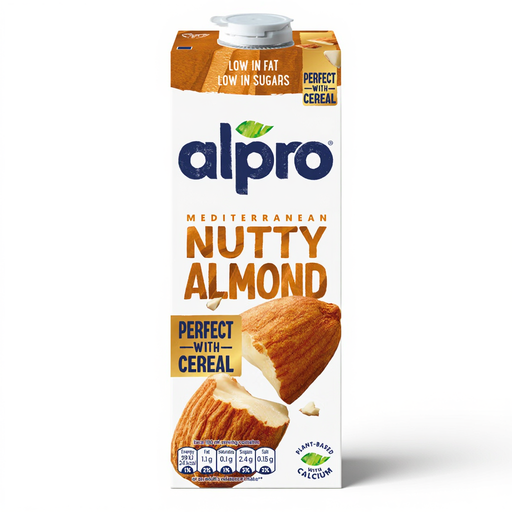 Image unavailable
Worth considering if you’d like to use an almond drink in your pancake batter. This is not the Unsweetened White Almond version mentioned above, so check its fat and sugar content per 100 ml on the carton.
For a drink, look for no more than 1.5 g of fat per 100 ml if you’re using the ‘low fat’ claim as your guide. This threshold for liquids is set out in Regulation (EC) No 1924/2006. Check the unit on the nutrition table before comparing products.
No. A claim about sugars doesn’t tell you the fat content. Check both on the same carton and, for the criterion that applies to liquids, use a value given per 100 ml.
Follow the storage instructions after opening shown on the carton. In particular, check the temperature and how soon it should be used for the product you have.
Don’t use almond drink for someone with an almond allergy. Also check the ingredients list and any ‘may contain’ warnings on every pack before making the recipe.