People keeping an eye on added sugars
You want to distinguish sugars naturally present in tomatoes from sugar added to the recipe. So, even if the label says ‘no added sugars’, you should still check the ‘of which sugars’ figure.


To choose a lower-sugar pasta sauce for delivered meals, compare the ‘of which sugars’ figure per 100 g for sauces of the same type, then check the ingredients and any claim on the jar. ‘No added sugars’ does not mean ‘sugar-free’, so also check the storage instructions for the product you choose, particularly after opening.
You want to distinguish sugars naturally present in tomatoes from sugar added to the recipe. So, even if the label says ‘no added sugars’, you should still check the ‘of which sugars’ figure.
You’re looking for a sauce that’s easy to include in meals served or delivered to someone’s home, in a format with storage instructions suited to the number of portions planned.
You’re choosing between several brands and want to compare the sugars and salt per 100 g, as well as the ingredients in each product.
Start with the claim and nutrition figures per 100 g, then check that the jar size and storage instructions suit the way you’re organising the meals for delivery.
| Criteria | What to check | Who is it for? |
|---|---|---|
| Sugars and claims | Compare the ‘of which sugars’ figure per 100 g for sauces of the same type, and check the ingredients. If a reduction is claimed, check the exact claim and what it is compared with. | I want to know whether sugar has been added, without confusing this with the total amount of sugars. Around 33% of consumers put this check first. |
| Serving the meals | Check the reheating instructions and choose a format that suits the portions you need to serve. | When I’m preparing several meals, I prioritise a sauce that’s easy to use and portion for the planned service. Around 27% of consumers put ease of serving ahead of other criteria. |
| Storage | Check the instructions for after opening and the recommended time to use the sauce, as stated on the jar. Also take account of the storage instructions for the other components of the meal. | If an opened jar is going to be used for several meals, I need to be able to follow its storage instructions. This is the main concern for around 20% of consumers. |
| Full ingredients and nutrition information | Check the ingredients, any allergens listed on the packaging, and the sugars and salt per 100 g. | If the recipient has dietary restrictions, I can’t rely on a claim highlighted on the front of the jar. Around 20% of consumers prioritise checking the full label first. |
According to Anses, a product with no added sugars may still contain sugars naturally present in the sauce’s ingredients.
Check the exact claim, the ingredients and the ‘of which sugars’ figure per 100 g.
The product listings for Carrefour Classic’, TURINI at E.Leclerc and Barilla Basilico mention sugar in the ingredients or refer to added sugars. The recipe name alone doesn’t tell you whether the sauce has a lower sugar content.
Check the product you’re buying and compare its figures per 100 g with those of a sauce of the same type.
Storage times and conditions vary by product. Other perishable components of a delivered meal also have their own storage requirements.
Follow the label on the jar you’re using, as well as the storage instructions for the complete meal.
Panzani offers several tomato sauce recipes, including basil and Provençal-style varieties.
The range includes Basilico tomato sauce, available in formats including 200 g and 400 g.
Carrefour Classic’ offers a tomato and basil sauce in a 420 g jar.
TURINI offers a cooked tomato and basil sauce in a 420 g jar.
This tomato sauce can be used as a base for pasta in a delivered meal. To see whether it suits your search for reduced sugars, check the label on the jar you choose rather than relying on its name alone.
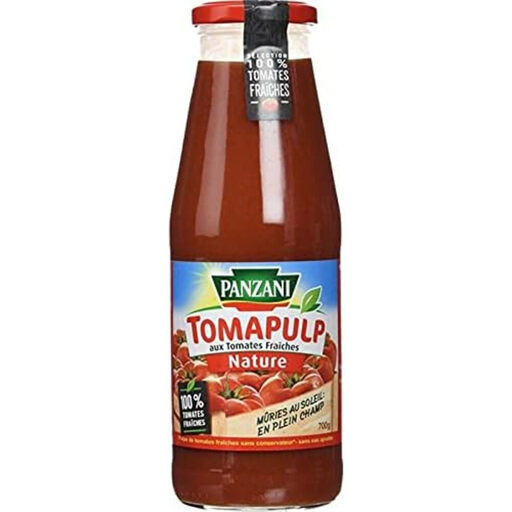 Image unavailable
This 700 g format can accompany pasta in a delivered meal. Choose it based on the number of portions you’re planning.
Check the jar of the product you’re buying for the sugar claim, ingredients and instructions for after opening. The claim ‘no added sugars’ alone doesn’t prove that it has less sugar than a comparable sauce.
No. As Anses explains, sugars naturally present in the ingredients may still be there even when no sugar has been added. To find the total amount declared, check the ‘of which sugars’ figure per 100 g.
Check the exact claim on the product you’re buying, the reduction stated and the nutrition information per 100 g. Then compare it with a sauce of the same type. ‘No added sugars’ answers a different question from whether a sauce has a comparative reduction in sugars.
No. These claims don’t replace the ‘of which sugars’ figure or the ingredients list for the specific sauce you’re buying.
Follow the storage instructions and the recommended time after opening stated on the jar you’re using; don’t use the guidance for a different recipe. For other perishable components of the meal, follow their storage requirements too, along with any instructions that apply to the complete meal being delivered.