People who check sugar first
You want to see the sugar content in the prepared soup and distinguish this figure from any ‘reduced sugar’ claim on the packaging.


To choose a dehydrated soup with less sugar, compare the ‘of which sugars’ figure on the same basis – per 100 ml of prepared soup – and then consider how much you plan to drink. For a quick lunch at work, also check the salt, allergens, number of servings and preparation method. The sugar figure alone won’t tell you whether the recipe is right for your break.
You want to see the sugar content in the prepared soup and distinguish this figure from any ‘reduced sugar’ claim on the packaging.
You’re looking for a serving size and preparation method that suit the water, container and time you have available at work.
You want to check the salt in your bowl, as well as the ingredients and allergens in the specific recipe you’re thinking of buying.
For lunch at work, start with the soup as you’ll actually consume it: its nutritional profile once prepared, followed by the format and steps needed to make your bowl.
| What to check | Look for | Who is it for? |
|---|---|---|
| Sugars | The ‘of which sugars’ figure per 100 ml of prepared soup, followed by the amount in your bowl. Don’t confuse this figure with a ‘reduced sugar’ claim. | If I want to choose a lower-sugar soup, I need to compare prepared soups on the same basis rather than relying on their names. Around 31% of consumers would make sugar their main consideration. |
| Preparation | The amount of water, the instructions, the time needed and the number of servings. | With a short break and limited equipment, I need to be able to prepare the soup as directed on the pack. Ease of preparation would come first for about 31% of consumers. |
| Salt and allergens | The salt content of the prepared soup, its ingredients, listed allergens and any ‘may contain’ warnings. | A low-sugar recipe won’t necessarily suit me if I’m watching my salt intake or need to avoid an ingredient. Around 23% of consumers would prioritise these checks. |
| Format | The number of sachets, the volume of soup they make and how much you’ll have at lunch. | If I usually make just one bowl, I prefer a pack size that matches the number of meals I have planned. Pack format would be the main consideration for around 15% of consumers. |
The sugar figure doesn’t tell you about salt, other nutritional values or allergens. The Nutri-Score, if displayed, doesn’t replace checking the label either.
Compare the sugar and salt figures on the same basis for prepared soup, then check the ingredients in each recipe.
Adding water changes the basis on which the figures are calculated, and the final volume may vary from one recipe to another.
Where the information is available, compare figures per 100 ml of prepared soup, then take into account how much you pour into your bowl.
Ingredients and ‘may contain’ warnings vary between soups, even within the same brand.
Check the allergens and any ‘may contain’ warnings on the packaging of the product you’re buying.
A soup that needs cooking and a single-serve sachet that you simply reconstitute don’t require the same equipment or time during your break.
Before choosing a pack for work, check the amount of water, number of servings and cooking steps.
If a sachet makes several bowls, you’ll also need to think about what to do with any portions you won’t have at lunch.
The brand offers dehydrated vegetable and vermicelli soups, as well as noodle recipes that may have different preparation methods.
Royco offers instant soups in single-serve sachets, with a range of recipes.
The supermarket’s own-label range includes dehydrated soups and veloutés, including instant recipes.
The retailer offers dehydrated soups from Regal Soupe and ECO+, with different recipes.
These soups in sachets offer two ways to plan lunch at work: opt for individual portions or make a larger sachet if you have the time and equipment. Their inclusion here doesn’t mean they carry a ‘reduced sugar’ claim.
 Image unavailable
Individual sachets may suit you if you want to set aside one portion for your break at work.
Check the pack for preparation instructions, the sugar and salt content of the prepared soup, and the allergens in this recipe.
 Image unavailable
This sachet soup is worth considering if you have time to cook it during your break.
Before buying, check the instructions, the volume it makes and the serving size used for the nutritional values. Check the allergens on the packaging too.
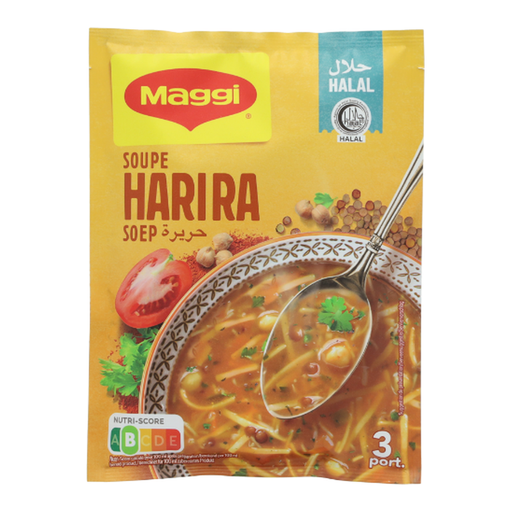 Image unavailable
This sachet recipe is better suited to a break when you have cooking equipment and enough time to follow the instructions.
Check the final volume, the serving size used for the nutritional values and the allergens listed on the packaging.
No. A figure on the ‘of which sugars’ line isn’t enough to justify this claim. The DGCCRF explains that ‘reduced sugar’ is a nutrition claim governed by EU regulations. When comparing two recipes, also check their nutritional values on the same basis for prepared soup.
First check the salt listed on the label and taste the prepared soup before adding any. Anses lists soups and broths among the foods that contribute to salt intake; the instructions for a Knorr recipe featured by Carrefour even say there’s no need to add salt.
Read the ingredients list, listed allergens and any ‘may contain’ warnings on the packaging of the product you’ve bought. Don’t assume another recipe, even from the same brand, contains the same ingredients.
It can make portioning easier, but the preparation method still matters. The products reviewed include both single-serve sachets and soups that need cooking. Check the instructions against the equipment and time you have available during your break.