Who are these options for?

People keeping an eye on their salt intake

You want to compare jars, tins and cartons on a like-for-like basis. France’s food safety agency, Anses, lists sauces and condiments among dietary sources of sodium. So, when making this choice, the ‘salt’ figure on the label matters more than the impression created by the recipe.

Households planning quick meals

You keep a ready-to-heat sauce handy to serve with pasta, while checking its salt content and pack size. Panzani and Barilla offer cooked tomato sauces for this purpose.

People who prefer to make their own sauce

You stock up on chopped tomatoes, tomato purée or plain tomato sauce so you can choose the herbs and the amount of salt you add. E.Leclerc stocks these different tomato bases, which are distinct from ready-made sauces.

What should you look for?

First decide whether you want a sauce that’s ready to serve or a base to cook with. Then compare the salt per 100 g within each category. Look for a reduced-salt claim only if it actually appears on the product.

What to consider What to check Who it’s for
Salt content Compare the ‘salt’ figures per 100 g for products of the same type, then factor in how much sauce you’ll use. I want to choose based on the declared salt content first, rather than rely on a general claim about the recipe; around 50% of consumers prioritise this.
Quick preparation Check that the sauce is ready to serve, how it should be prepared and whether the pack size suits your portions. On evenings when I don’t want to cook much, I’d rather open a ready-made sauce than prepare a tomato base; speed comes first for around 30% of consumers.
Seasoning to suit your taste Know the difference between chopped tomatoes, tomato purée and ready-made sauce; check the ingredients and ‘salt’ figure before seasoning. I’d rather start with a tomato base and decide how to season it myself, even if it takes longer in the kitchen; around 20% of consumers prioritise this control.

Mistakes to avoid

  • Assuming ‘natural’ or Nutri-Score A means ‘reduced salt’

    On their own, these labels don’t tell you how much salt a sauce contains or whether it carries a reduced-salt claim.

    First compare the ‘salt’ figures per 100 g for similar sauces. Only rely on a reduced-salt claim if it appears on the specific product you’re considering.

  • Comparing a ready-made sauce and tomato purée as if they were used in the same way

    A ready-made sauce is already seasoned, while tomato purée needs to be cooked into a sauce. Nor should you assume that a tomato base contains no added salt.

    Choose the level of preparation that suits you, then compare the salt content of products in the same category.

  • Relying on an old online grocery listing

    Auchan says the ingredients in some sauces may vary depending on the store selected for your online order and the date of purchase.

    Check the listing for the relevant store, then read the label on the product you receive for its ingredients, allergens and salt content.

  • Choosing a large jar without planning how to use it after opening

    Pack sizes vary between products, and a larger container won’t necessarily suit the amount your household uses.

    Choose a size that suits your portions and follow the storage instructions on the product.

    You may end up wasting some of the contents if you can’t use the opened jar in line with the instructions.

Brands to compare

Panzani

Panzani offers cooked tomato sauces to serve with pasta, including 210 g, 400 g and 650 g packs.

  • The brand describes its recipes as made with tomatoes, onions and herbs, and provides reheating instructions.
  • Check the salt content of the pack you choose: the ingredients in a ready-made sauce don’t prove that it contains less salt.

Barilla

Barilla offers a 400 g cooked tomato sauce, as well as other tomato sauce recipes.

  • The brand presents its cooked tomato sauce as a base or accompaniment for pasta.
  • Salt content varies by product. Auchan lists 0,78 g of salt per 100 g for a 200 g jar of Barilla organic tomato and basil sauce, but this figure doesn’t apply to other recipes.

Carrefour Classic'

Carrefour stocks a 420 g jar of Classic' cooked tomato sauce.

  • This pack size can be compared with other ready-made sauces based on the portions your household needs.
  • Check the nutrition information for the product on sale before drawing conclusions about its salt content.

ECO+ et Marque Repère chez E.Leclerc

E.Leclerc stocks both tomato bases to cook with and sauces that are ready to serve.

  • Chopped tomatoes and tomato purée let you make your own pasta sauce.
  • These products aren’t interchangeable. E.Leclerc lists 1,1 g of salt per 100 g for its 420 g jar of ECO+ Bolognese sauce. Compare it with sauces of the same type, not with plain tomato purée.

Auchan

Auchan stocks a range of jarred cooked tomato sauces, including Provençal-style varieties.

  • The product listings make it easy to tell the recipes and pack sizes apart.
  • Auchan says the ingredients in some products may vary depending on the store selected for your online order and the date of purchase; check the label on the product you choose.

Tomato bases on Joybuy

These tomato purées are suitable for making a pasta sauce that you can season yourself. They’re not a substitute for a ready-made cooked sauce. To compare salt content, check the nutrition information for each product.
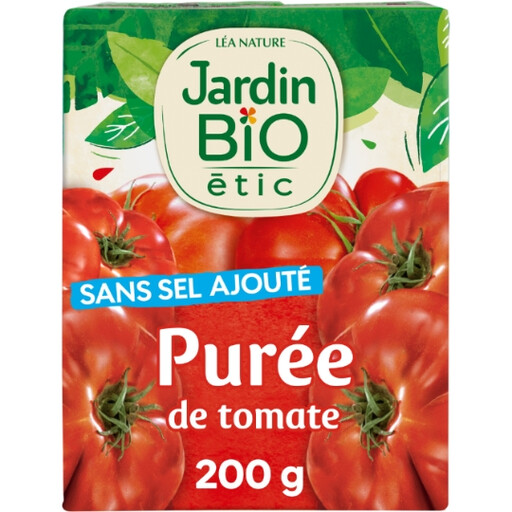
JARDIN BIO ETIC Organic Tomato Purée, 200 g

JARDIN BIO ETIC Organic Tomato Purée, 200 g

A 200 g pack of tomato purée for making and seasoning your own pasta sauce, rather than using a ready-made cooked sauce.

Check the ‘salt’ figure on the packaging if salt content is important to your choice.

View on Joybuy
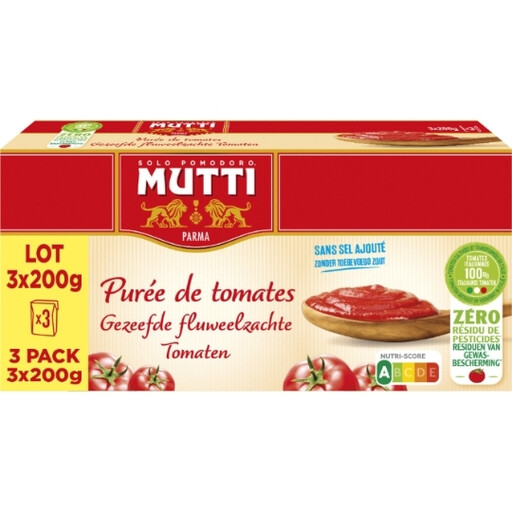
Mutti Tomato Puree Zero Pesticides, pack of 3 × 200 g

Mutti Tomato Puree Zero Pesticides, 3 × 200 g

A pack of three 200 g portions of tomato purée for making pasta sauce with your choice of seasoning.

Check the ingredients and the ‘salt’ figure on the packaging before using it as a base.

View on Joybuy

Frequently asked questions

Does a ‘reduced-salt’ sauce contain no salt?

No. A reduced-salt claim compares the product with a similar one; it doesn’t mean the sauce is salt-free. Check the salt per 100 g and how much sauce you plan to use.

How do you compare the salt content of two pasta sauces?

Read the ‘salt’ figures per 100 g for two sauces of the same type, then factor in the portion you’ll use. Anses lists sauces and condiments among dietary sources of sodium, so this check is worthwhile if salt is your main consideration.

Does a Nutri-Score A mean a sauce contains less salt?

No. Nutri-Score doesn’t replace the ‘salt’ figure when comparing two sauces on this basis. If a brand displays Nutri-Score A, check the salt content of that particular product separately.

What should you do with tomato sauce after opening?

Follow the storage and use instructions on the container, as these can vary depending on the recipe and packaging. When stocking your cupboard, also choose a pack size your household can use once it’s open.

Can the ingredients in a sauce bought online change?

Yes, depending on the product and store. Auchan says that the ingredients in some sauces may vary depending on the store selected for your online order and the date of purchase. Check the local listing and the packaging you receive before relying on an old ingredients list or nutrition figure.