Households keeping an eye on the salt in their sauce
If salt content is a key factor in your choice, compare the value per 100 g and read the ingredients for each recipe. Anses lists sauces and condiments among dietary sources of sodium.


For Sunday lunch, start by comparing the ‘salt’ value per 100 g for products of the same type. ‘No added salt’ does not mean that the salt content is zero. Then choose between a ready-made sauce, which needs less preparation, and a tomato base that you can season yourself. Don’t assume that the latter contains less salt.
If salt content is a key factor in your choice, compare the value per 100 g and read the ingredients for each recipe. Anses lists sauces and condiments among dietary sources of sodium.
A tomato base lets you choose which herbs, vegetables and other ingredients to add to your dish. However, check its own salt content before choosing it over a ready-made sauce.
Ready-made sauces can save you from preparing a separate base. Whether you’re choosing Panzani, Barilla or a supermarket own brand, check the exact recipe, pack size and ‘salt’ value rather than relying on the range name.
Start by comparing the salt content per 100 g for products of the same type, then decide whether you’d prefer a ready-to-use sauce or a base to cook with. Manger Bouger notes that nutritional information is given per 100 g or 100 ml, so use the same unit for your comparison.
| Criteria | What to check | Who it matters to |
|---|---|---|
| Salt content | The ‘salt’ value per 100 g for sauces of the same type, and whether the specific product says ‘no added salt’. | If I want to limit the salt in my sauce, I compare like-for-like quantities rather than relying on a claim on the front of the pack. Around 46% of consumers prioritise this measurable value. |
| Preparation and seasoning | The product type — tomato base or ready-made sauce — and the ingredients already added. | If I want to choose the herbs and spices for the meal myself, I’m happy to spend more time preparing the sauce. Around 27% of consumers put control over seasoning first. |
| Ingredients | The full ingredients list and any allergens highlighted for the product you’re considering. | If an ingredient isn’t suitable for my household, I need to be able to spot it before buying, even if the salt content is right for me. Around 18% of consumers make this their priority. |
| Meal size | The net weight, how much you’ll need for your guests and the storage instructions after opening. | To serve everyone without buying an unnecessarily large pack, I consider the number of portions and whether I can use any leftovers. Around 9% of consumers prioritise this practical consideration. |
A claim such as ‘no added salt’ doesn’t tell you on its own how much salt the product contains, what its other nutritional values are or what ingredients are in the sauce.
Compare the ‘salt’ value on a like-for-like basis, then check the sugars, fat and ingredients list for the recipes you’re considering.
Panzani’s Provençale recipe, listed by Carrefour France, includes salt in its ingredients. This information shouldn’t be applied to other recipes from the brand.
Read the nutritional information and ingredients for every sauce you’re considering, even if it’s mainly made from tomatoes.
Anses warns that some potassium-based salt substitutes may pose risks for certain groups.
Don’t treat these products as a simple seasoning swap. If this is relevant to you, ask a healthcare professional for advice suited to your circumstances.
The weight of the pack doesn’t tell you how much you’ll serve at the meal or how to store any leftover sauce.
Work out how much you’ll need for your guests and follow the storage instructions on the pack once it’s opened.
An oversized pack may leave you with unused sauce if you can’t use the leftovers according to the storage instructions.
These brands offer sauces or tomato bases worth considering, depending on the recipe. Their inclusion here doesn’t mean that every product in their ranges claims to have reduced salt.
Cooked tomato sauces to serve with pasta.
Tomato sauces, including the 400 g Tomates Cuisinées recipe, which Barilla France presents as a base or accompaniment.
A supermarket own-brand range with a variety of tomato-based sauces and pack sizes.
A selection from E.Leclerc that includes ready-made sauces and tomato bases.
A 560 g Baresa tomato sauce listed by Lidl France.
These products can be used as a base for a sauce to serve with Sunday pasta. You’ll need to distinguish between tomato purée, passata and sauce, and check the salt content on the pack of the variant you choose. They aren’t all ready-to-serve sauces or recipes marketed as reduced-salt.
 Image unavailable
This tomato purée is a good choice if you want to make and season your own pasta sauce. It isn’t a ready-made sauce.
Pack size: 500 g. Check the ‘salt’ value and storage instructions after opening on the pack you receive.
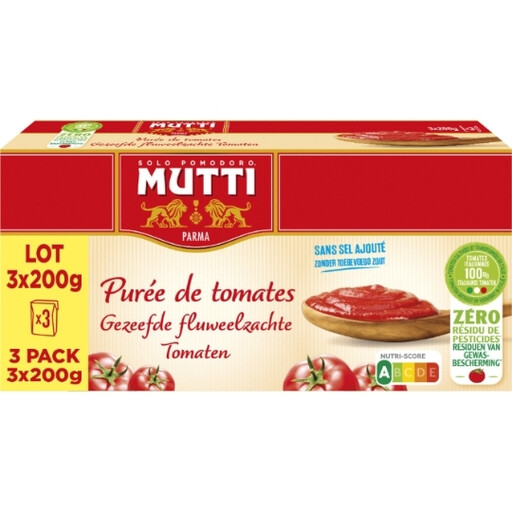 Image unavailable
This pack of tomato purée can be used to make a sauce, using as many units as you need for the meal. Each one is a base that you’ll need to add to.
Pack of 3 × 200 g. Before choosing this product based on its salt content, check the ingredients and ‘salt’ value on the pack: the available information about the recipe is contradictory.
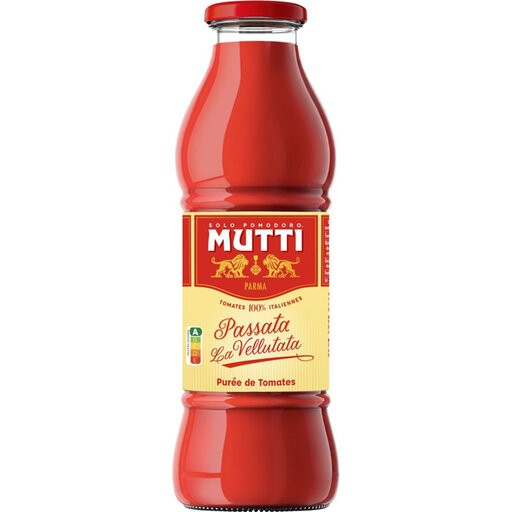 Image unavailable
This passata can be used as a base for a pasta sauce, which you can adapt to suit the meal.
Pack size: 700 g. Salt is listed among the ingredients. Compare the stated salt content on the pack with similar products.
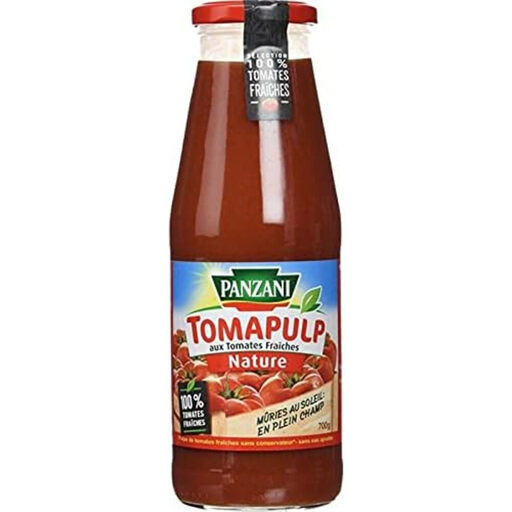 Image unavailable
This tomato sauce can be served with pasta or used as the base for a cooked sauce.
Pack size: 700 g. Salt is listed among the ingredients. Check the salt content on the pack before comparing it with other sauces.
Compare the ‘salt’ value per 100 g for sauces of the same type, rather than comparing the salt listed for portions or jars of different sizes. If the labels use different units, check the basis of measurement before drawing a conclusion. Manger Bouger says that nutritional information is given per 100 g or 100 ml.
No. This claim refers to salt being added, not necessarily to the finished product having zero salt. Check the ‘salt’ value and ingredients on the pack of the specific sauce you plan to use.
Not automatically. Anses notes that potassium-based salt substitutes may pose risks for some people. If this applies to you, ask a healthcare professional for advice suited to your circumstances before using one.
Read the full ingredients list and any allergens shown on the pack of the recipe you’ve chosen. A claim made for one sauce from a brand doesn’t necessarily apply to other recipes in its range.