If you’re looking for a lower-salt pasta sauce for camping at a festival, start by comparing the ‘salt’ value per 100 g: the two Prosain sauces with no added salt featured by the brand contain 0.03 g and 0.05 g per 100 g. The format also matters if you can’t refrigerate an opened jar. A classic ready-to-serve sauce can make preparation easier, but be sure to check the salt content of the specific product and format you choose.
Who is this choice for?
Anyone keeping an eye on salt content
You want to compare a specific figure rather than rely on the recipe name alone. Prosain lists 0.03 g of salt per 100 g for its Organic Basil sauce with no added salt, and 0.05 g per 100 g for its Organic Provençale sauce with no added salt.
Campers without refrigeration after opening
You’re planning a meal after which it may be difficult to keep an opened sauce chilled. In that case, how much you’ll use or share at the same meal matters just as much as the jar size.
Groups looking for a ready-to-serve sauce
You want a format you can share and would like to keep preparation to a minimum. However, check the salt content of the specific recipe and the storage instructions in case you don’t use the whole contents.
What should you look for?
For this meal, start by deciding what matters most to you: salt content, how to handle an opened jar or ease of preparation. A claim on the front of the pack is no substitute for checking the nutritional information and storage instructions.
| Criterion |
What to check |
Who is it for? |
| Salt content |
Compare the ‘salt’ value per 100 g for the specific recipes; ‘no added salt’ does not mean there is no salt. |
I want to choose my sauce based on how much salt it actually contains, rather than relying on a general claim. Around 42% of consumers would make this their top priority. |
| Format and storage |
Choose an amount that suits the meal and read the storage instructions for after opening. |
Without reliable refrigeration, I’d rather be able to finish or share an opened jar. This would be the top priority for around 33% of consumers. |
| Meal preparation |
Check whether the recipe is ready to serve or needs preparing, and whether you’re allowed to use the necessary equipment at the festival. |
If I’m serving several people and want to keep preparation to a minimum, I’d choose a ready-to-use sauce. Around 25% of consumers would put convenience first. |
Mistakes to avoid
-
Assuming ‘no preservatives’ means low in salt
These claims describe different things. Prosain lists 0.03 g and 0.05 g of salt per 100 g for the two sauces with no added salt mentioned here. Joybuy’s product listings for Panzani Provençale sauces in 400 g and 650 g formats list 0.86 g and 0.89 g per 100 g respectively.
To compare sauces, check the ‘salt’ value per 100 g for each format. Don’t try to infer it from the Nutri-Score or another claim.
-
Opening a large jar without a plan for leftovers
The instructions for the Prosain sauces mentioned here say to refrigerate them after opening. The Anses also recommends promptly returning perishable foods to the fridge after use.
Plan to finish or share the contents at the meal. If you keep any leftovers, follow the product’s storage instructions.
-
Relying on a camping stove without checking the rules
A sauce that needs preparing with your own equipment will only work for your planned meal if you’re allowed to use that equipment at the festival.
Check the festival rules before choosing a recipe that needs heating or a tomato base that needs preparing.
Sauce brands to know for this choice
Prosain
The brand offers two organic tomato sauces with no added salt, Basil and Provençale, in 200 g jars.
- According to Prosain, its Basil contains 0.03 g of salt per 100 g and its Provençale 0.05 g per 100 g. The brand says this salt comes from naturally occurring sodium.
- After opening, these sauces should be kept in the fridge, in line with the brand’s instructions.
Panzani
Panzani’s Provençale Sauce is a classic tomato sauce available in several formats.
- Joybuy’s product listings for the 400 g and 650 g formats make it easy to compare their salt content: 0.86 g and 0.89 g per 100 g respectively.
- Panzani’s ‘no preservatives’ claim does not tell you how much salt a particular format contains.
Barilla
The 400 g Napoletana is a tomato sauce that’s ready to serve with pasta after heating.
- Barilla France lists 0.96 g of salt per 100 g for this recipe, making it useful to compare with other sauces on the same basis.
- If salt content is your top priority, check this figure before choosing Napoletana for your meal.
Product to consider on Joybuy
This organic tomato purée can be used as the base for a pasta sauce. It isn’t a pre-seasoned sauce, so before choosing it for the festival, check the ‘salt’ value on the label and make sure you can prepare it using equipment that’s allowed on site.
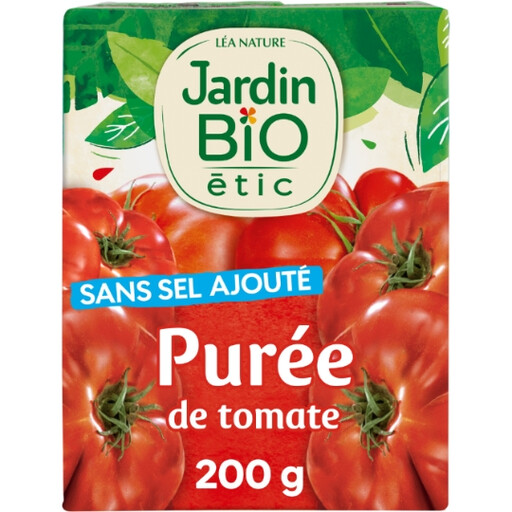 Image unavailable
JARDIN BIO ETIC Organic Tomato Purée 200 g
This format could suit you if you’re planning to make a sauce using tomato purée. Check the nutritional information and storage instructions on the jar, and plan to use all of it at the meal if you don’t have reliable refrigeration.
View on Joybuy
Frequently asked questions
Does ‘no added salt’ mean ‘salt-free’?
No. Prosain says the salt in its Organic Basil and Organic Provençale sauces with no added salt comes from naturally occurring sodium. Their stated salt contents are 0.03 g and 0.05 g per 100 g respectively. Check the ‘salt’ value to compare the recipe you’re buying.
Can you keep an opened jar of sauce in a tent?
Don’t rely on your tent to store a sauce whose label says to refrigerate it after opening. Prosain gives this instruction for the sauces mentioned here, and Joybuy’s listing for Panzani Provençale Sauce 650 g also says to keep it in the fridge. If you can’t keep it reliably chilled, plan to use or share the amount at the meal.
Are the Nutri-Score or ‘no preservatives’ claims enough to compare salt content?
No. To compare salt content, use the ‘salt’ value per 100 g for the specific product. Panzani describes its Provençale Sauce as having no preservatives and gives it a Nutri-Score A, while Joybuy’s listings for the 400 g and 650 g formats show 0.86 g and 0.89 g of salt per 100 g respectively.


