What should you check before buying?
First, decide between a ready-to-use sauce and a tomato base that you’ll season yourself. Either way, check the salt content of the specific product. Then choose a pack size and consider storage based on the pasta you’ll be taking with you.
Sauce with a salt-related claim
Worth considering: if reducing salt is your priority and the packaging lets you check the salt content and the full wording of the claim.
Check: how much you’ll use per portion. Don’t assume the salt content from the Nutri-Score or other details about the recipe.
Tomato base to season yourself
Worth considering: if you want to make the sauce yourself and choose the seasonings you add to the pasta.
The trade-off: you’ll need to prepare the recipe and check the salt content of both the base and any ingredients you add.
Ready-to-use tomato sauce
Worth considering: if a pre-seasoned recipe and a suitable pack size work for your plans.
Check: the salt content. Don’t assume a standard tomato sauce is the same as one labelled ‘reduced salt’.
| Criteria |
What to check |
Who is it for? |
| Salt |
Compare the ‘salt’ value per 100 g for products of the same type, and read any salt-related claim on the packaging. |
I want to choose my sauce based on a comparable salt value, rather than its appearance or recipe; around 29% of consumers put this check at the top of their list. |
| Pack size |
Match the pack size to the portions you’re planning and check the storage instructions for after opening. |
I want to prepare just the amount I need to take with me and avoid a jar if I can’t store the leftovers; this is a priority for around 36% of consumers. |
| Recipe |
Read the ingredients for the exact product and choose between a pre-seasoned sauce and a base you can customise. |
I want to choose the ingredients and seasoning for my pasta without making assumptions about the salt content; around 21% of consumers would make the recipe their priority. |
| Storage |
Follow the label instructions and make sure the food stays chilled if required. |
If my pasta needs to stay chilled until mealtime, how I transport it matters more than the convenience of the jar; storage would be the main concern for around 14% of consumers. |
Brands and retailers to consider
These examples can help you compare recipes and pack sizes. To choose based on salt, check the information for the specific product.
Panzani
Panzani offers its Tomates Cuisinées sauce in 210 g, 400 g and 650 g packs.
- These pack sizes make it easier to choose an amount that suits the portions you’re planning.
- The pack size and general recipe details don’t prove that the product you choose is reduced in salt, so check the label.
Barilla
Barilla offers a Tomates Cuisinées sauce in a 400 g pack.
- You can compare the stated pack size with the amount of pasta you’re preparing.
- If you’re choosing based on salt, check the nutritional information and claims on the packaging for this product.
Carrefour
Carrefour is a retailer whose listings for Panzani tomato sauces include ingredient details for some products.
- These lists can help you distinguish between recipes, including Provençale and fresh tomato sauce.
- An ingredient list showing salt doesn’t tell you how much the product contains. Check the nutritional information for the product on sale.
Tomato bases to season on Joybuy
These two 500 g tomato purées are options if you’d like to season the pasta yourself. Check the salt content and instructions for after opening on each pack. Their inclusion here doesn’t mean they carry a ‘reduced salt’ claim.
 Image unavailable
MUTTI Tomato Puree Zero Pesticides 500 g
This tomato purée can be used as the base for a pasta sauce that you season yourself.
Check the salt value and storage instructions for after opening on the packaging. The product name alone doesn’t mean it has a reduced salt content.
View on Joybuy
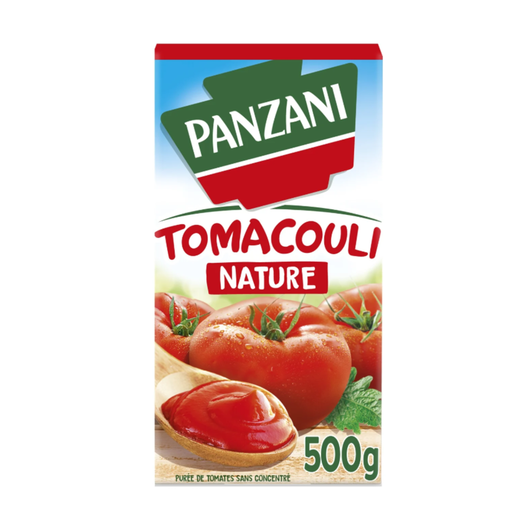 Image unavailable
Panzani Fresh Tomato Purée 500 g
This tomato purée is a good base for a sauce that you can season to your liking before your picnic.
Check the ‘salt’ value for the product on sale, then follow its storage instructions for after opening.
View on Joybuy
Frequently asked questions
Does a sauce with no preservatives or a good Nutri-Score necessarily contain less salt?
No. These details don’t prove that the salt content has been reduced. For the product you’re thinking of buying, read the ‘salt’ value on the nutrition panel and check any salt-related claim on the packaging.
How can I compare two tomato sauces for my pasta?
If they’re products of the same type, compare the salt content per 100 g, then consider how much sauce you’ll use. Read the ingredients too, so you can choose a recipe that suits your dish.
Can I make dressed pasta salad the day before a picnic?
Yes, as long as the ingredients and their storage instructions allow it, and you keep the dish chilled if it needs to be refrigerated. Anses recommends maintaining the cold chain and limiting the time perishable foods spend at room temperature, including while you’re travelling.
What should I check if a sauce is labelled ‘reduced salt’?
Read the full wording of the claim and check the salt content on the packaging, then compare it with products of the same type. Another sauce from the same brand, or a plain tomato base, won’t necessarily carry the same claim.


