People keeping an eye on the salt in their meal
If sauces, condiments or snacks are already on the barbecue menu, the salt content of the prepared soup can help you work out how this bowl fits in with the other food you’re serving.


When choosing a dehydrated soup for a barbecue where salt matters, compare the salt content per 100 ml of prepared soup, then check how much salt is in the bowl you plan to serve. Don’t assume a standard dehydrated soup is the same as one labelled ‘reduced salt’. If that claim is your main priority, check it on the exact product and consider whether another type of soup would suit your meal.
If sauces, condiments or snacks are already on the barbecue menu, the salt content of the prepared soup can help you work out how this bowl fits in with the other food you’re serving.
When you’re serving soup to several guests, the number of portions, amount of water and preparation time all matter. Don’t rely on the sachet weight alone.
Check the ingredients and any ‘may contain’ warnings for the flavour you’ve chosen. Information for a different recipe, even from the same brand, isn’t enough.
For a barbecue, first decide whether you want to prepare a dehydrated soup or would prefer another option if a ‘reduced salt’ claim is essential. Whichever you choose, compare nutritional values for soup that’s ready to eat, using the amount you’ll actually serve.
Worth considering: if a sachet and preparation for one or more bowls work for your meal plans.
Bear in mind: a standard recipe won’t necessarily carry a reduced-salt claim. Check its salt content after reconstitution.
Worth considering: if you’re looking for a product explicitly labelled ‘reduced salt’ and this format works for serving.
Bear in mind: it isn’t a direct substitute for a dehydrated sachet. Also check which category the reduced-salt claim applies to.
Worth considering: if you want to decide for yourself how much salt to add to your side dish.
Bear in mind: making and storing it requires different planning from using a sachet.
| What to consider | What to check | Who it matters to |
|---|---|---|
| Salt content | Compare the salt per 100 ml of soup prepared according to the instructions, then check the amount in the bowl you’ll serve. | When there’s already salty food at the barbecue, I want to know how much the soup adds to the meal. Around 50% of consumers would prioritise this. |
| Preparation and portions | Check how many bowls the chosen product makes, how much water to add and how long it takes to prepare. | To serve several guests without making mealtime more complicated, I prefer a format I can plan ahead for. Around 30% of consumers would put quick serving first. |
| Ingredients and allergens | Check the ingredients list, declared allergens and any ‘may contain’ warnings for the exact flavour. | If a guest needs to avoid certain ingredients, I choose a recipe based on its label rather than its name. Around 20% of consumers would make recipe suitability their main priority. |
A Nutri-Score or a suggestion not to add more salt doesn’t replace a nutritional claim. France’s Directorate General for Competition Policy, Consumer Affairs and Fraud Control points out that nutrition claims used on food are regulated.
Look for the exact claim on the relevant packaging and check the salt content of the prepared soup before comparing recipes.
Chilled or ready-to-serve soup carrying a reduced-salt claim isn’t prepared in the same way as a dehydrated product. You should also compare values for similar amounts of soup.
Before switching formats for your barbecue, check the product description, storage instructions and the serving size used for the nutritional information.
A vegetable or vermicelli soup may contain other ingredients and carry ‘may contain’ warnings. Ingredients can vary from one product to another.
Check the ingredients and warnings for the exact flavour you intend to serve to your guests.
Family-size dehydrated soups, including a tomato and vermicelli recipe listed by Auchan as serving four.
Individual instant soups and dehydrated recipes, including 20 cl formats listed by Carrefour and Auchan.
Dehydrated soups in a range of recipes and formats, including a minestrone listed by Auchan as making four bowls.
Own-brand dehydrated soups in instant or family-size sachets.
These three sachet soups are options if you’re looking for a dehydrated soup to prepare for your meal. Compare their nutritional information after preparation. Their inclusion here doesn’t mean they’re labelled ‘reduced salt’.
 Image unavailable
A pack of three sachets to consider if you’re planning individual portions. Compare the salt content of the prepared soup and check the ingredients for this recipe before serving.
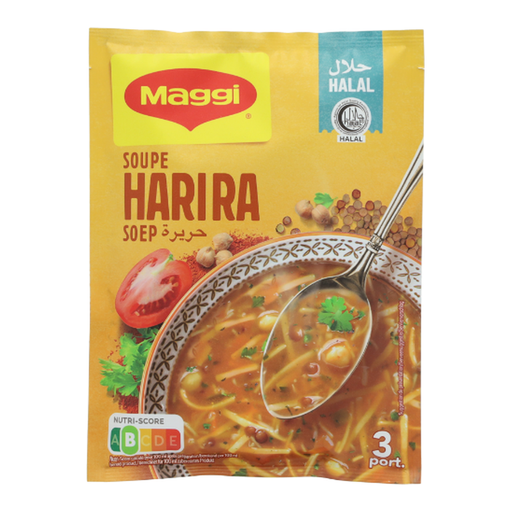 Image unavailable
A sachet to consider if you’d like to prepare soup to accompany your meal. Before comparing salt per bowl, check the water quantity, serving size used for the nutritional information and allergens on the packaging.
 Image unavailable
Another sachet to consider for soup you can prepare at mealtime. Check the preparation instructions and serving size on the packaging to compare the salt content of the bowl you’ll serve, and check the ingredients for this recipe too.
Compare the salt per 100 ml of soup prepared according to each pack’s instructions, then take into account the amount you’ll serve. A figure per 100 ml won’t necessarily match the amount in a whole bowl.
Yes. Nutrition claims on food are covered, among other things, by European Regulation (EC) No 1924/2006, as France’s Directorate General for Competition Policy, Consumer Affairs and Fraud Control points out. Check the claim on the exact product and the basis for comparison that accompanies it, rather than inferring it from the Nutri-Score or recipe name.
No. This claim may appear on soup in another format. If you’re considering chilled or ready-to-serve soup instead of a dehydrated sachet, check the product description, preparation instructions and storage requirements.
No. Check the ingredients and any possible traces for each recipe. Read the list and warnings on the packaging you’ve chosen, even if you’re already familiar with another flavour from the brand.
Don’t add it automatically. Prepare the soup according to the instructions first, then taste it. Manger Bouger advises limiting added salt and suggests using herbs, spices and seasonings to bring out the flavour of your dishes.