Families who compare fat content first
For lunch at home, your first priority is the amount of fat per 100 ml, ahead of a simple recipe or added nutrients.


To choose a lower-fat soya drink for lunch, compare the fat content per 100 ml of the exact products you’re considering, then look separately at sugars, protein and calcium. Sojasun states that its Calcium + Vitamin D version contains 1.8 g of fat and 120 mg of calcium per 100 ml, compared with 2.6 g of fat in its Nature version. A short ingredients list doesn’t necessarily mean a lower fat content. If the meal is being served in a school or other group catering setting, also bear in mind Anses’ recommendation not to serve soya-based foods there.
For lunch at home, your first priority is the amount of fat per 100 ml, ahead of a simple recipe or added nutrients.
You’re looking for a plain soya drink for cereal or a recipe, and checking the ingredients and sugars without assuming these tell you anything about the fat content.
You also compare protein and any added calcium, even if that means choosing a drink with a different fat content.
Start with the fat content, then choose between drinks based on what matters to you at lunchtime. The DGCCRF notes that nutrition information given per 100 ml makes it easier to compare pre-packed drinks.
| Criteria | What to check | Who it matters to |
|---|---|---|
| Fat | Compare the ‘fat’ line per 100 ml for the exact recipes you’re considering. | For a family lunch, I want to prioritise a lower fat content; around 42% of consumers would make this their main criterion. |
| Protein and calcium | Check the amounts of protein and calcium per 100 ml. Don’t assume a drink is fortified just because it contains ‘soya’. | If these nutrients matter more to me, I may accept a different fat content; around 33% of consumers would prioritise protein or calcium. |
| Sugars and ingredients | Check the ‘of which sugars’ line and the ingredients list, and check the fat content separately. | For cereal or a recipe, I prefer to look at the sugars and simplicity of the ingredients first; nearly 25% of consumers would make this their main priority. |
Carrefour’s product listing for Bjorg Soja Nature Sans Sucres Bio states that it contains 2.6 g of fat per 100 ml. A claim about sugars doesn’t tell you the fat content.
Compare the two lines separately on the packaging of the drink you choose.
Product listings for two different drinks state that Sojasun Calcium + Vitamin D contains 1.8 g of fat per 100 ml, while the Alpro drink featured by Carrefour contains 2.8 g.
If fat is your main priority, compare it first, then weigh up the recipes based on their calcium and other features.
Anses recommends not serving soya-based foods in group catering settings to limit exposure to isoflavones. This recommendation does not, by itself, describe the circumstances of a family lunch at home.
For a meal organised by a school canteen or leisure centre, plan to serve a different drink and follow the organisation’s guidance.
Once opened, a carton should be used according to the storage instructions on its packaging.
Choose a pack size that suits how you’ll use it, and check the carton’s instructions before putting it away after opening.
These products offer different options. Always compare specific variants rather than drawing conclusions based on the brand name alone.
The brand’s product listings let you compare its Nature drink with its Calcium + Vitamin D version.
The soya drink featured by Carrefour mentions calcium and vitamins.
The Soja Nature Sans Sucres Bio product is a good option to compare if you’re focusing on sugars and ingredients.
The plain soya drink featured by Auchan is another product to compare using its own nutritional values.
This selection features a multipack of Alpro Soya Barista. If you’re comparing it with the nutritional information above, use the values shown for this exact variant: figures for a different Alpro drink won’t necessarily apply.
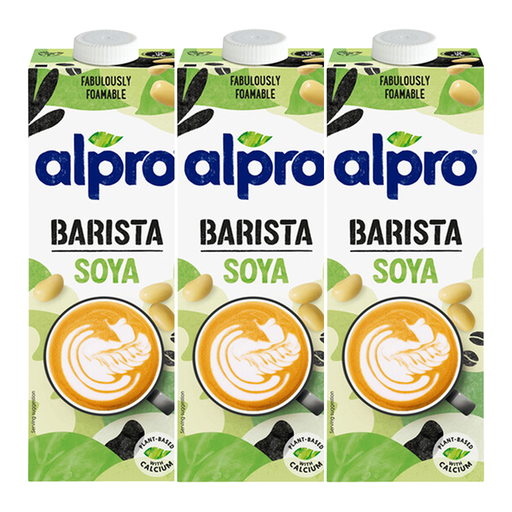 Image unavailable
A soya drink to consider for cereal or lunch recipes. The pack contains three 1 L cartons. Check the fat, sugars and calcium on the label for this variant, rather than using figures for a different Alpro product.
Read the ‘fat’ line per 100 ml on each drink. The DGCCRF says that presenting nutrition information this way makes comparison easier; a ‘no sugars’ or ‘organic’ claim is no substitute for checking it.
Sojasun states that its Calcium + Vitamin D drink contains 1.8 g of fat and 120 mg of calcium per 100 ml. Check these values on the exact carton before comparing it with other products.
For a meal provided as part of group catering, Anses recommends not serving soya-based foods to limit exposure to isoflavones. This recommendation is not, by itself, a ban on a family meal at home. Follow the organisation’s guidance for group catering.
A soya-based drink isn’t suitable for anyone with a soya allergy. Read the ingredients list and allergen information on the exact packaging, especially if you’re switching to a different product.
Follow the storage instructions and use-by period after opening shown on the carton you buy. Check them for each product rather than relying on the instructions for a different one.