Couples keeping an eye on fat content
You want to be able to check a specific fat content before choosing dessert, rather than guessing from the flavour alone.


For a lower-fat Valentine’s Day dessert, choose a tub that lists its fat content with the unit: Carrefour states 0% for its Extra lemon sorbet, Auchan less than 0.5 g per 100 g for its lemon sorbet, and Carte d’Or 0.5 g per 100 ml for its Sicilian Lemon sorbet. Values per 100 g and per 100 ml cannot be compared directly. Check the sugars, allergens and pack size too before choosing sorbet over ice cream.
You want to be able to check a specific fat content before choosing dessert, rather than guessing from the flavour alone.
You’re thinking of serving lemon sorbet from a tub and want to compare the sugars as well as the serving size.
You need to check the ingredients and any ‘may contain’ information for the product you buy, even when it’s a fruit sorbet.
Start with the fat content and its unit, then compare the sugars and serving instructions. European Regulation (EC) No 1924/2006 reserves the claim ‘low fat’ for foods containing no more than 3 g of fat per 100 g if solid, or 1.5 g per 100 ml if liquid.
| What to check | Check | Who is it for? |
|---|---|---|
| Fat | Check the value and its unit: per 100 g or per 100 ml. Don’t convert one to the other unless you have the information needed to make a comparison. | If my main aim is to reduce fat, I want a verifiable value rather than relying on the word ‘sorbet’; around 50% of consumers would make this their top priority. |
| Sugars | Compare the ‘fat’ and ‘of which sugars’ lines using the same measurement basis. | For a fruity dessert, I also want to know how much sugar the recipe contains before choosing; around 30% of consumers would put this trade-off first. |
| Sharing and allergens | Check the allergens and any possible traces, the net quantity and the storage instructions for the specific tub. | When sharing dessert, I need to check that it’s suitable for everyone and plan how to serve it; around 20% of consumers would prioritise these precautions. |
The name of the dessert alone doesn’t tell you its fat content. European Regulation (EC) No 1924/2006 sets different thresholds depending on whether the value is given per 100 g or per 100 ml.
Look for the ‘fat’ line and keep the unit in mind when assessing a specific product.
Carrefour states 0% fat, but 30 g of carbohydrates per 100 g for its Extra lemon sorbet. Auchan states less than 0.5 g of fat and 24 g of sugars per 100 g for its lemon sorbet.
Check fat, carbohydrates and sugars separately, rather than treating these three values as equivalent.
The products reviewed include warnings about possible traces of allergens, so a lemon recipe won’t necessarily meet everyone’s needs.
If this affects someone you’re serving, check the ingredients and any ‘may contain’ information on the product packaging.
Carrefour lists an Extra lemon sorbet with 0% fat and an Extra vanilla ice cream with 8.7 g of fat per 100 g. Compare these products, but don’t assume their values apply to the whole range.
Auchan offers a 663 g lemon-flavoured sorbet, listed as containing less than 0.5 g of fat per 100 g.
Carte d’Or Sicilian Lemon sorbet comes in a 900 ml tub and contains 0.5 g of fat per 100 ml.
Häagen-Dazs describes its Strawberries & Cream product as an ice cream made with ingredients including cream, milk, sugar and eggs.
Ben & Jerry’s offers a range of ice cream tubs in different flavours, including mini tubs.
These sorbets are worth considering if you fancy a fruity dessert for Valentine’s Day. If you’re specifically looking for a tub of ice cream, check the packaging for each product before buying; the flavour and stated quantity alone won’t tell you what type of pack it comes in.
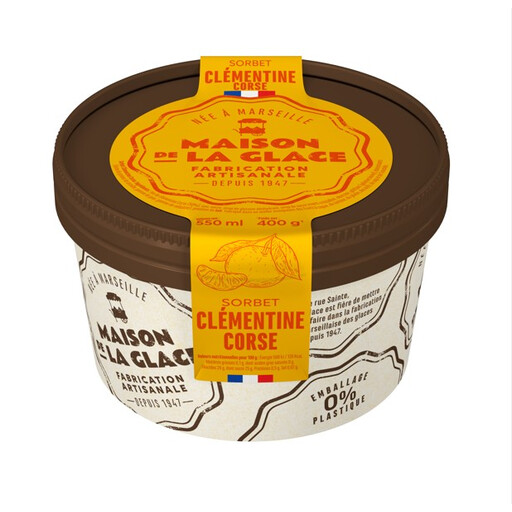 Image unavailable
Worth considering if you’d prefer clementine to lemon for a fruity dessert. The title states 380 g, while another listing gives 550 ml. Check the net quantity and packaging before planning your portions.
If someone you’re serving has an allergy, also check the product you buy for any ‘may contain’ information.
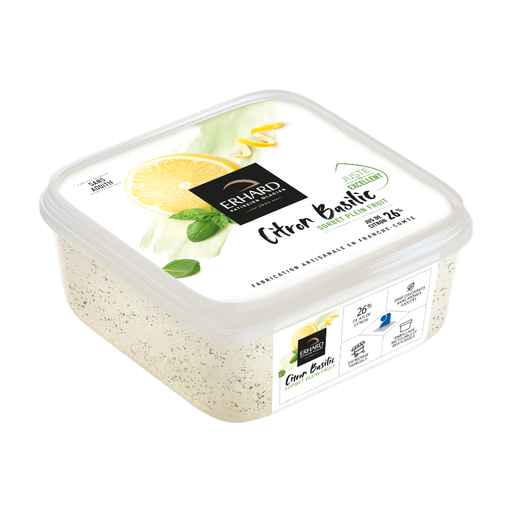 Image unavailable
The lemon and basil flavour is a good option if you’re looking to serve a fruity sorbet. Check that the packaging suits the tub you’re looking for, then read the nutritional information and allergen details for the specific product.
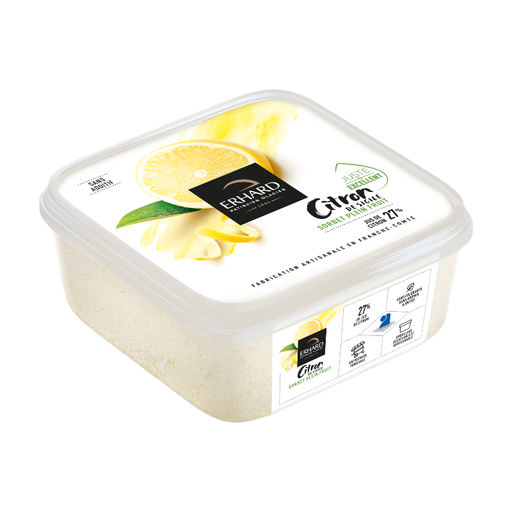 Image unavailable
This product is for anyone looking for Sicilian lemon sorbet. Before buying it for a dessert served from a tub, check the packaging, as well as the fat, sugar and allergen information on the label.
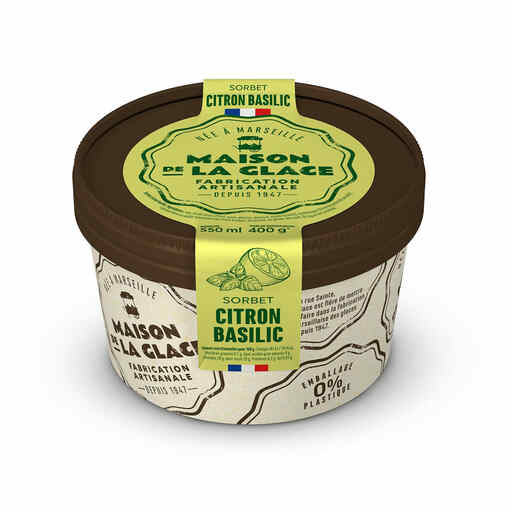 Image unavailable
This flavour could be a good choice if you’d like a fruity dessert combining lemon and basil. Check the packaging, then look at the fat content and its unit, as well as the ‘of which sugars’ line on the label, before comparing this sorbet with the tubs reviewed.
It’s a claim subject to specific thresholds. Under European Regulation (EC) No 1924/2006, a solid food must contain no more than 3 g of fat per 100 g, or a liquid food no more than 1.5 g per 100 ml. Check the value and unit for the product you’re considering, rather than relying on its name.
No. Fat content doesn’t tell you how much sugar a product contains. Auchan lists less than 0.5 g of fat and 24 g of sugars per 100 g for its lemon sorbet; check both lines on the nutritional information separately.
First, check the ingredients and any ‘may contain’ information on the packaging of the product you’re serving. The lemon sorbets reviewed list various possible traces, including milk or nuts depending on the product. The lemon flavour alone doesn’t mean these allergens are absent.
Follow the temperature and storage instructions on the packaging of the product you buy. The products reviewed specify storage at −18 °C and state that thawed products should not be refrozen.